Showing posts with label Undergrad. Show all posts

20170731

[HKUSU Undergrad] The Price Paid After the Struggles

The Price Paid After the Struggles
Translated by pseudol, written by Deborah Tsoi [Undergrad May 2017, HKUSU]
Original: https://drive.google.com/file/d/0B4U2Gdqux68-ZTZZa2t0SzE3RUk/view 

Hong Kong 1956 riots
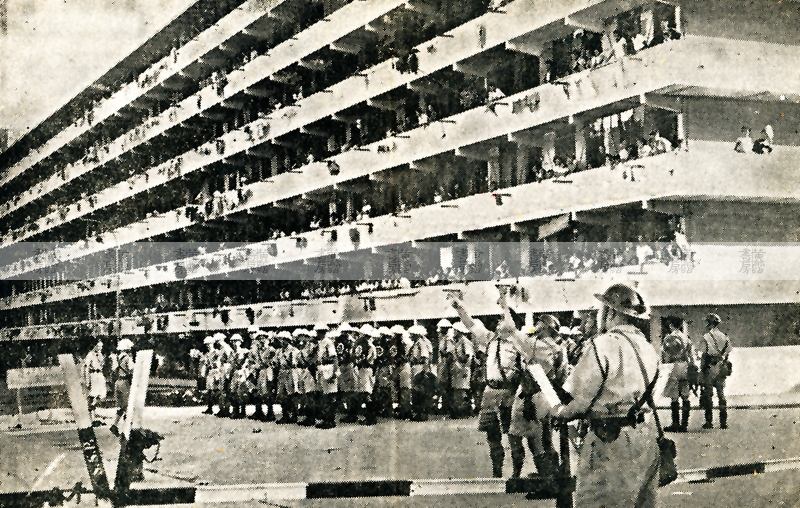
hkmemory.org; 1956 riots
On 1956 Double Ten Day (the National Day of the Republic of China), some rightists, supported by Kuomintang spies, rioted after their flags were destroyed by officers of the Resettlement Department. Crimes including arson and robbery, rape and murder were committed. More than 300 people were injured, including Fritz Ernst, the vice-consul of Switzerland in Hong Kong, and his wife. This was the deadliest riot in the history of Hong Kong.

1967 Riot
Apple Daily; 1967 riot
In May 1967, a labour strike was staged in an artificial flower factory in San Po Kong. Police opened fire on workers which sparked off rioting. The leftists, instigated by China’s Cultural Revolution, confronted the British Hong Kong Government by planting real and fake bombs all over Hong Kong: 1167 in total. At least 52 people died, including 10 police officers. More than 802 people were injured, of whom 212 were police. 1936 people were prosecuted for offences committed during the rioting.

1994 Whitehead Disturbance
A hunger strike launched by Vietnamese boat people in protest against the territory’s repatriation policy degenerated into rioting and acts of arson. A joint operation was carried out to clear the camp, with more than 100 officers and helicopters from Government Flying Service deployed. 500 tear gas canisters were fired by police and correctional officers who met strong resistance during the crackdown.

2000 Hei Ling Chau Disturbance
Around 400 local and Vietnamese inmates were involved in a gang fight at Hei Ling Chau Drug Addiction Treatment Centre. They threw hard objects at police and correctional officers and attempted to set fire to the prison. Tear gas was deployed to quell the disturbance. Multiple injuries were caused. About 20 persons involved were convicted of rioting and received prison sentences ranging from 2 to 10 years.


The court cases following the Umbrella Movement in late 2014 and the Mong Kok Incident in early 2016 have not yet ended. Demonstrators in the Umbrella Movement were charged in succession, having been arrested one by one and some are now facing heavy sentences. This is undoubtedly a year of discouragement and frustration. Charged and convicted protesters face imprisonment and the loss of freedoms. Instead of showing empathy, many people took positions against the protesters. Surely, they had to pay the price for their unlawful actions. However, what kind of attitude should we adopt? How should we look at them? Court judgments do not mean in any way that the rule of law and justice are upheld. Conversely, the courts can become a political tool. Biased and exaggerated news reports may not reflect reality, but give rise to misunderstandings which intensify echo chamber effect and social polarisation. When commenting on protesters, I believe members of the public should take their motives, circumstances and the social context into account to make a fair judgement.

After the Umbrella Movement
Just one day after the Chief Executive Election, a new chapter of political persecution was effected. All nine Occupy Central founders - Benny Tai Yiu-ting, Chan Kin-man and Reverend Chu Yiu-ming, lawmakers Tanya Chan and Shiu Ka-chun, the Democratic Party’s Lee Wing-tat, former leader of the Hong Kong Federation of Students Eason Chung Yiu-wah, Tommy Cheung Sau-yin and League of Social Democrats vice-chairman Raphael Wong Ho-ming - were charged with the common law crime of committing public nuisance. The maximum penalty for that offence is a seven-year term of imprisonment. The sentence for the common law offence is heavier than those for of public nuisance under the Summary Offences Ordinance and unlawful assembly under the Public Order Ordinance. The Civic Party’s Alan Leong suspects charging the nine for the common law offence is a political decision based on the higher maximum penalty. Some others also said that so doing aimed at evading the sensitive issue of freedom of assembly.

2016 Mong Kok Civil Unrest
Key words: Hawkers, Illegality, Glass, Bricks, Arson, Rioters, Severe punishment, Deterrence
Many people felt that while the protesters’ actions were too violent and threatened others’ safety, it was unforgivable for the police to fire warning shots. Therefore, they blamed both the police and protesters equally. The charges against 91 protesters in total included rioting, arson, unlawful assembly, assault on police officers, possession of offensive weapons and public nuisance. Several participants were convicted. One of them was sentenced to nine-month imprisonment for assaulting police and resisting arrest. Three (including one student from the University of Hong Kong) received a three-year prison sentence for rioting. Another will spend four years and nine months in jail for arson. Hongkongers were charged and convicted of rioting for the first time since rioting was made an offence in the 1970s.
The Mong Kok civil unrest was classified as a riot. Many people have questioned the heaviness of the sentences. After taking into account the background of the defendant, reasons of the mitigation plea and motives for committing the crime, could the judge impose deterrent sentences?

Motives behind the struggle
Judge Sham Siu-man said in his judgment that “Violence is violence and there is no difference. Should lenient sentences be imposed to those who expressed discontent with the government? Should they be imposed to those with loftier ideals even though the level of violence was the same?” It's impossible to generalise when discussing the various acts of violence: they cannot be viewed in black and white terms. If the court does not take motives and intentions into consideration when meting out a penalty, what is the point of making a plea in mitigation?

There is no doubt that the Umbrella Movement was a civil disobedience movement. Participants placed great emphasis on the long-term interests of the public in their fight for social justice. They hoped to force the regime to face public opinion and give a more democratic proposal on universal suffrage through practising non-violent disobedience. However, among those tens of thousands of participants, not all of them fully supported the philosophy of civil disobedience. Instead, many protesters were motivated to act by the firing of 78 tear gas canisters and so wished to collaborate with the students to face down the political machine. Their reasons changed with the environment. They had no choices to commit crimes but were unwilling to resign themselves to fate. The forcefulness of Leung Chun-ying encouraged more and more people to join the Umbrella Movement.

In the Mong Kok civil unrest, the motives of protesters were even more complicated.

Dissatisfied with the government’s crackdown on hawkers, some responded to the appeal made by political organisations and went to the scene to lend their support. Some took to the streets up in arms over the police firing of warning shots. Some bore longer grudges against the style of policing in Hong Kong while some were dissatisfied with the government. Unlike the relatively planned and organised Umbrella Movement, the Mong Kok Civil Unrest was more spontaneous and lacked proper organisation. The flames of violence flared up as conflicts escalated. Frankly, many of the participants were driven by emotion as they threw bricks and glass bottles. They relied on sheer luck to avoid arrest. However, even though we cannot articulate every protester's motive, they had in common a fight, not for personal gain, but for societal interests. Their actions, which attempted to protect other protesters, were altruistic.
Judge Anthony Kwok, who was responsible for the rioting case, stated that this riot was more serious than the Whitehead Disturbance. The obstinate insistence of the police was key in turning the mayhem in Mong Kok into a riot and added fuel to the fire. The clashes were completely out of control. The police hoped to clear the hawkers at an early stage and spoiled the pleasure of fishball lovers by deploying a Police Tactical Unit. Plainclothes officers brandished batons and used pepper spray against those protesting the clearout. In consequence, the protesters sought revenge by throwing objects at the scene. However, in the case of the Whitehead Disturbance, the lawyer for the first defendant in the Mong Kok clashes said, “Vietnamese boat people used self-made weapons to attack another group of refugees. Their acts were apparently premeditated.” The two cases were completely different in terms of motive.

Conclusion: How should we look at the protesters?
The court’s ruling is out of public control. However, instead of sneering, severing ties with the persons involved and rubbing salt into protesters’ wounds, I believe the public should sympathise with them and understand the difficulties of our society. A helping hand should be lent to those peers behind bars. 

Perhaps to many, protesters embracing the rule of “non-violence” is crucial. Yet, what is more important than to think about their reasons for taking risks?  It took time for protesters’ sentiments to develop. 

Persecution by the police in previous social movements, the suppression tactics of the regime in various controversies and the failure of "peaceful, rational and non-violent" protest movements culminated in the use of violence. These arguments do not aim to absolve those who cause harm to others, but to point out that the public should think and question whether the assumption that "as long as violent behaviours are involved, things become definitely evil" is correct. The degree of acceptance of various behaviours changes over time and in different contexts. Some people agreed the act of throwing bottles was shocking and disconcerting. However, does that not imply that the firing of shots by the police unlocked Pandora's box by promoting the use of violence? I believe people with a conscience would not make heartless and harsh comments after reflection.

In the future, the Hong Kong communist regime will seek to put the participants of the Umbrella Movement and the protesters of the Mong Kok Civil Unrest in jail. I beseech every Hongkonger not to blame the protesters. This extra burden of blame should not be added to their lot: rather, more support should be provided.

20150223

Chan Ya-ming: Lau Nai-keung - Forerunner of Hong Kong Independence

Lau Nai-keung - Forerunner of Hong Kong Independence 
Translated by Chen-t'ang 鎮棠, Written by Chan Ya-ming (former editor in The Undergrad, HKUSU)
Original: http://localpresshk.com/2015/02/forerunner-of-hong-kong-independence/ 

My friend sent me the remarks of Lau Nai-keung a while ago, but I almost forgot to write about this because of the plan of withdrawal from HKFS. And, I almost forgot to thank Lau Nai-keung, the CPPCC deputy, for bringing this up. We are not the only cohort of The Undergrad which mentioned "Hong Kong independence" (HKI). It is not unusual to see previous Undergrad members writing about HKI.

But have you every imagined Lau Nai-keung was also part of the "previous Undergrad members"? In 1969, Lau was the then assistant editor-in-chief, Chan Yuen-ying (the current Director of Journalism and Media Studies Centre, HKU [Translator's note: political stance - pro-China]) was the Editor-in-chief, and guess who is the publication secretary? Yes, the one who spends his lunar new year in jail, Rafael Hui (spelt as Raphael then). Quite unimaginable even now.

An article in 1969 The Undergrad, "From Refugees to the Independence of Hong Kong", wrote,
So-called intellectuals immediately rejected and said "it's impossible" when they hear HKI. But let us ask ourselves: this "impossible" might mean - technically it would be the best if it happens, but there are many technical difficulties, which are impossible to overcome. One might stop such imagination. Such view is but unrealistic self-deception.
Such perspective is so precise, and still valid, as it mentioned the mentality of Hongkongers towards HKI. And it continued, "If Hong Kong has to be connected with China, it is just an emotional need. It brings more harm than good, and independence is the best." This is what now the localists support - "HK-China Segregation", and such idea was in discussion four decades ago.

The author of this article signed his name as Wah Sau [Translator's note: A Cantonese idiom 狼過華秀隻狗 roughly means "More fierce than the dog of Wah Sau", a phrase to describe a person's aggressiveness and fierceness.]. Of course we cannot determine whether he wrote this article or not. But if he is the assistant editor-in-chief, then it had something to do with Lau if this article goes to print. Actually, it is no big deal to mention HKI. The Undergrad had much more radical views before, and one needs not to react so strongly to this.

As a forerunner of mentioning HKI in 1969 The Undergrad, Lau is now often mentioning The Undergrad on Ta Kung Pao or Wen Wei Po. He actually mentioned it four decades ago, and is it something new for him?

Although Lau said "to HKI supporters, the government has to be tough 'orally and physically'", kind of bringing white terror, that cohort of The Undergrad members enlightened the latter members on the courage and imagination of mentioning HKI. They had contributed a lot. I must thank Mr. Lau Nai-keung for his contribution in mentioning HKI! Please let him know that I have expressed my sincere gratitude!

20150216

[Undergrad/HKUSU] Chan Ya-ming: The Final Generation of Hongkongers

The Final Generation of Hongkongers
Translated by HKCT Editorial Team, Written by Chan Ya-ming (陳雅明)
Original: http://www.passiontimes.hk/article/01-30-2015/20873 

If there are people who still want to live their lives, then they should dare to speak, to laugh or to cry, to be angry, to criticise and to beat.
In this damned place, they combatted the damned era!
Lu Xun

Lu Xun once said the Chinese history can be split into two dynasties: One is an era when people crave to slaves but fail to do so; another is an era that people can temporarily be slaves. That is to say, in the past few thousand years, being slaves is part of China's history. Affecting by the history, Chinese can only be slaves somehow. There are many kinds of Chinese in Hong Kong as such, and some even forgot their identities as human beings when they are too indulged in the roles.

Half of the history of Hong Kong is also about being slaves. Youngsters in Hong Kong no longer want to continue this pathetic path, so they scream for self-determination and attempt to start a new page in history. Youngsters in Hong Kong opt to embrace the rights one should have as an ordinary person, but the regime has turned them down without the slightest hope left. Those who act are arrested; those who speak are lambasted publicly. I couldn't have imagined the world has degenerated as such, and it is out of my expectation that the lambasting will fall on The Undergrad [Translator's note: it is the magazine produced by HKUSU].

CY Leung criticised The Undergrad and made open the names of our Editorial Board. It is similar to the "struggle session" during the Cultural Revolution, creating white terror apparently. After the Umbrella Revolution, CY Leung did not reflect upon the relationship between him and the youngsters, but rather, he provoked us again and again — asking us to further our career outside Hong Kong, and now lambasting The Undergrad by using tactics and thoughts from the Cultural Revolution. Starting a comprehensive political suppression and ideological control, CY Leung "tackles" all of the existing youth issues.

Since the founding of The Undergrad in 1952, the magazine is accommodating and inclusive. Opinions towards the future of Hong Kong have often been treated as radical. In the late 1960s, there were already articles discussing the Hong Kong Independence (HKI); and in the early 1970s, an article, on the contrary, said the complete solution to Hong Kong is to go for socialism completely. These students are now well-known leftists. Did the Governor at the time criticise them in public? In the late 1960s, there were articles criticising the problems found in the colonial administration, and Governor Sir Trench replied the editorial board in a decently-written letter, entirely different from what CY Leung did these days. No wonder some youngsters reminisce about the colonial era once in a while.

CY Leung does not show the demeanour a politician supposed to have, but rather take things out of context. J.Y. wrote "HK Independence from A Military Perspective", and CY mentioned it during the Policy Address 2015 press conference, saying this article describes how can Hong Kong set up an army just like Singapore. Either Leung did not read it seriously, or he read it and distorted it deliberately. If he did read it not in a casual manner, he can certainly get the conclusion: none of all "army-building options" is viable at the moment.

The Editorial Board did not write it for conspiring the movement of HKI, but rather, we found no discussion on this topic. Even one does not agree with the stance of HKI, there should be freedom of discussing HKI. But articles without the value of "name-and-shame" will not be mentioned by CY Leung. To The Undergrad, the freedom of speech is more important than one's political stance. It is certainly a surprise for all of us that the Chief Executive of HK can be this narrow-minded not to tolerate a word of a student magazine.

It is a pseudo-statement when leftist mouthpieces accuse The Undergrad of supporting HKI. The Undergrad is only a campus media, with political discourse or news reports at most. We explore in different thoughts and no action has been taken. How can this construct the implementation of HKI? We are not like some officials, who receive foreign capital. We have no support nor connection to "external powers". Thus how do we possibly "conspire the movement of HKI"?

George Orwell sees through these tactics adopted by the authoritarians, who aim to fool the people with lies one after another. It is no news for the authoritarians to utilise sophistry and "newspeak", like "War is peace, freedom is slavery, ignorance is strength" in order to make believe. Sophistry is prevalent since Leung sworn in. Now that The Undergrad merely discuss the possibility of HKI without any action, but have already been accused of conspiring it. It incarnates the newspeak of HKSARG that talking about HKI is equal to conspiring the movement of HKI. These are but silly illogical sophistry, which you can immediately crack it with a few steps of analysis. No offence, but it is rather dim-witted for those who fall for these lamb excuses.

People who brown-nose the CCP will ask people to show their loyalty by answering the "correctly" on the matter of HKI. Some pan-dems are more than eager to show that they are "clean", and said they have nothing to do with HKI. "Before answering questions, one should understand the keywords in the question" — that is something a secondary school student can easily manage.

When faced such interrogation, it is not wise to "sever ties as soon as possible". Why don't we ask our dearest CY Leung or Andrew Fung in return of their definition of HKI? And what is in their minds towards Taiwan current status? An independent rule from China? If they regard Taiwan not as an independent place, then undoubtedly The Undergrad stands for no HKI notion.

If to them HKI means to have its own army, they should know that The Undergrad does not have such proposal as well. But If HKI to them, means to have certain kind of political system and democratic election without the manipulation from the CCP (such as civil nomination), then YES, The Undergrad has supported this from the very beginning. The key is: Aren't pan-dems pursuing a democratic election which CCP couldn't rig? Our September 2014 edition, with the main theme of "The Democracy and Independence of Hong Kong", was written partly because some leftist mouthpieces frame "civil nomination" as "HKI"; the pan-dems and some newspapers were afraid of tags of HKI, and so they severed ties with localism.

In the eyes of CCP, elections it couldn't rig will be considered as trends of HKI. If pan-dems are still avoiding the topic of HKI, any proposal of "genuine universal suffrage" will be considered as "supporting HKI". When CY actively mentioned HKI, it is timely to ask him whether nomination counts as supports to HKI. But the pan-dems just do not prompt that question. If CY says "No", it would be just right as the civil not nomination will be clarified as irrelevant to HKI. Case solved. If CY says "Yes", his "HKI" is merely nothing but civil nomination. What on earth, in this way would "HKI" scary you away? Nothing, right?

The Hong Kong Nation Discourse (also translated as Hong Kong Nationalism) or the issue of HKI is only discussed within some small circles. Some may not even dare to think about it, and HKI is definitely not a mainstream idea. The one who put HKI to headlines of mainstream media is CY Leung. He has stimulated the imagination of HKI to Hongkongers and wrongly assumed that he has his own freedom of speech to say whatever he likes to whoever he is to blame. But he seems to forget he himself as a CE, acting as an authority will bring about political consequences as a result of his actions. Dominating the political agenda and suppressing opposition voice will be likely to happen.

The Undergrad might activate few drops of discussion, but CY Leung is capable of triggering a wave of support towards HKI once he says the opposite. After his criticism against The Undergrad, the topic of HKI has suddenly become a mainstream topic on everybody's tongue. Some may even chant slogans such as "Brilliant is Leung Chun-ying; replace Xi Jinping", and hail CY Leung as the "Father of Independence". I am afraid the only person in Hong Kong who is capable of implementing HKI would be CY himself.

Meanwhile, some pro-China minions betray Hongkongers to curry favours with its masters by giving some ridiculous remarks. They suggested that before the legislation of Article 23, Basic Law, the State Security Law should be tried or implemented partially in Hong Kong. It is predictable that if a Chinese Law is introduced, the other will follow and then a trend will be formed. In this case, befor 2047, we will have no choice but to live with "Chinese-style socialsim" in Hong Kong.

Such speeches are not merely gibberish from small officials, but were endorsed by Tung Chee-hwa, the Vice-Chairman of NPC. Tung said, "Legal grounds are there for the introduction of Chinese law to Hong Kong". Before 1997, the national leader maysay, "Well water does not interfere with river water, and the vice versa". Nowadays, some traitors are ruining Hong Kong by "pouring sewage into the well".

Launching the White Paper, making the August 31st Decision in NPCSC, criticising the "conspiracy of HKI" in Policy Address and introducing "State Security Law" in Hong Kong — these are all as Mao referred to "contradictions between ourselves and the enemy". CY Leung and his minions are dedicated to launch a political struggle, to suppress all opposition voices, and even, at the expense of One Country, Two Systems.

After the Umbrella Revolution, a question was asked online: After this, how can young Hongkongers carry on their lives? And the answer to that was "Endure it or commit suicide." When one has been enlightened, and yet no path can be seen, he suffers even more. This generation has lost the patience to tolerate this can't-be-more-ridiculous system as the last generation did, and they all intend to live a life with dignity. But now are there alternatives other than seeking for an afterlife?

In "In Memorial of Liu Ho-chen", Lu Xun mentioned that Liu was a student of the Peking Women's College of Education majoring in English and was shot dead at the age of 22 due to the petition to the Beiyang government during early years of ROC. Lu Xun said, she was a youngster who died for China, instead of surviving with shame. For youngsters with ideals and aspirations, they do not turn a blind eye to the tyrannic regime. Witnessing HKSARG getting more lunatic, our generation of the umbrella era will not step back. Somehow it gives me the feeling that it is CY's intention to turn us all Liu Ho-chen. Correct me if I am wrong.

At the end of the article, Lu Xun said "Those aimless survivors might see light in the tunnel of the colour of blood, but real hero(in)es will be more dedicated and march forward." The time is on the side of youngsters. The fate of Hong Kong and youngsters are intertwined and interconnected. If the youngsters step back, then there will not be another generation for Hong Kong. It is time we decide for our own fate, the fate as a human-being. Arise and fight for Hong Kong!


Related content:
[Undergrad/HKUSU] Chan Ya-ming: The Scream of Our Generation
[Undergrad/HKUSU] Keyvin Wong: Localism: Hongkongers' Only Salvation
[Undergrad/HKUSU] J.Y.: HK Independence from A Military Perspective

20140922

[Undergrad/HKUSU] China is Nobody's Master: Ming Chan

China is Nobody's Master
Translated by Vivian L., Written by 陳雅明 (Ming Chan)
Original: http://www.vjmedia.com.hk/articles/2014/09/17/85319


“Don't despair,
not even over the fact that you don't despair.
Just when everything seems over with, new forces come marching up,
and precisely that means that you are alive.
”
— Franz Kafka, Diaries of Franz Kafka

On the last day of August 2014, we were all jolted awake from a daze of stress and anxiety. Life was as usual, but a shadow loomed large in the sky. On a closer look, people had turned into hideously large bugs. Distraught with despair, they hid in the shadows waiting for life to trickle away. Such is the despair I had felt on that day, not unlike the imagery in Franz Kafka's The Metamorphosis.

This is an era of hope and of despair. So much is about to happen, a historic revolution is upon us—yet nothing is going to happen, or so it seems. We had hoped that one day, we would wake up to a different Hong Kong where we could enjoy real freedom; we had hoped that one day, we would gather in the Civic Square [Translator's note: The area in front of the Central Government Offices was dubbed “civic square” by student activists after the national education protest in 2012. The government calls it the Forecourt of East Wing.] to celebrate the triumph of democracy; we had hoped that we Hongkongers could decide our own fate. Yet the world does not go without a fair share of absurdity—in a world dictated by an oppressive regime, no less. Any effort to resist oppression would be rendered minute and inconsequential. The clear-headed knows what needs to be done but having their hands tightly tied, they swallow their pride. The indifferent continues life in blissful ignorance, albeit only deceptively, existing rather than living. In a world such as this, how may Hongkongers imagine a future for themselves?

It would seem the chronicles of Hong Kong is nearing its end. Will Hong Kong's narrative, which started as a small village in 1842, end in 2047 when China's promise of “one country, two systems” ceases?  From a small fishing village to an international metropolis, Hong Kong has been proven an extraordinary example of a modern society. Will our generation see Hong Kong stoops to an ordinary city of the People's Republic? Will the Pearl of the Orient turn to dust in our hands? After WWII, the surge of immigrants who took refuge in Hong Kong's safety and stability had given the city an abundant supply of new blood. Born and raised in Hong Kong, they were the first generation of Hong Kong natives who planted their roots here and called the city their only home—a home that they strived to change for the better. Since the 1970s, the younger generation of Hongkongers had ditched the refugee mentality of their parents' generation. They began thinking about Hong Kong's future: they participated in social movement and demanded political reforms under colonial rule while Hong Kong as a civil society began to take shape. From 1980 onwards, democracy became a common cause for Hongkongers both young and old.

However, as talks of Hong Kong's future ensued between Britain and China, 1980s was also a time when many in the pro-democracy camp misled Hong Kong into the path of “democratic return of sovereignty” where the fate of Hong Kong was believed to be in lockstep with that of China—no democracy for Hong Kong without a democratic China. Blinded by the unification of Greater China ideology, they mistrusted Beijing and hailed the “one country, two systems” policy as the utopian ideal for a self-ruling Hong Kong, only to have 30 years wasted on a fruitless journey. When Beijing blew the introduction of direct elections in the 1988 Legislative Council election, leaders of the democratic movement should have known democratisation did not sit well with the Chinese government. When the tragedy struck at Tiananmen Square in 1989, they, of all people, should have realised such a brutal regime that had the blood of innocent students' on its hands was not to be trusted. In dire circumstances, one may find it plausible to trust a woman of the street. Yet in absolutely no circumstances should one put his trust in the Chinese communists. After all this time, some who used to promote the democratic return ideology now accused Beijing of ditching democratisation promise. It is but a futile effort. A look at the Chinese communist party history would tell anyone that the jockey for power among party leaders almost always comes in the expense of ordinary people. Those who were naive enough to advocate a democratic return were but obliging pawns in China's connivance.

If the democratic return advocates have a change of heart now, they are either incredibly stupid or incredibly good at self-deception. In fact, it is not 'stupid' that can describe their bewildering action. They are simply contented with limited democratisation within the current systems where they now benefit. Their passion for a democratic Hong Kong was quenched by the paltry concession they have gained over the years of fighting for democracy they no longer believe in. Now that China has irrevocably ruled out a true democracy, Hongkongers must wipe away our despair with utmost clarity: democratic return is no longer an option; we must declare its utter failure and reject the notion altogether. The majority of the young proponents of democratic return idea back then have become veterans of the pan-democratic camp now. Although we have little hope of these old-timers having the ambitions they once had, we wish they could do as Confucius had taught, “In his old age, ... he should abstain from acquisitiveness”. Precious time has been wasted on the democratic return bull-crap. If politicians cave in to “acquisitiveness” and allow the phoney universal suffrage proposal to be passed for whatever interests in exchange, history will remember them as the culprits who ruined Hong Kong's democratic process. When the election plan tailored to Beijing's taste get vetoed, Hongkongers would be happy to see them pack up all their democratic return nonsense and make way for newcomers. Their times have passed. So long and good riddance!

Right now, we need to fend off all passive pessimism and blind optimism. We need to assess the current situation and review our history. Nobel laureate Albert Camus said in his Nobel prize in Literature 1957 Banquet Speech, “Each generation doubtless feels called upon to reform the world. Mine knows that it will not reform it, but its task is perhaps even greater. It consists in preventing the world from destroying itself.”

We need not follow the footsteps of our previous generation on our road to a democratic Hong Kong. Rather, it is our tasks to seek a new way and shoulder new responsibilities. No one knows whether the history of Hong Kong will end in the year 2047, but the duty to prevent our beloved city from destruction lies in our generation. Democracy is more than the pursuit of universal values, or an extra line of protection. The quest for democracy matters to the lives and future of generations of Hongkongers to come.

In 1982, China announced it will take back the sovereignty of Hong Kong in 1997. At the time, Hongkongers overwhelmingly opposed to the handover. But then Chinese leader Deng Xiaoping cooked up an alternative reality where the people of Hong Kong desired unification with China. China also objected Britain's idea of Hong Kong as a “three-legged stool” and the proposal to include the people of Hong Kong in deciding its future, demeaning Hongkongers at every turn. 1984, the year of the signing of the unequal treaty Sino-British Joint Declaration, is arguably the most disgracing year in the history of Hong Kong. 2014, 30 years after the joint declaration, Beijing is attempting to demean Hongkongers one more time by forcing a phony universal suffrage proposal upon us. For 30 years, Hongkongers have suffered enough absurdity and humiliation from Beijing. From this day on, Hongkongers shall stand to defend themselves. Even we may not get back the democracy and freedom we so well deserve, we must rise and fend for our dignity. We must reject this Beijing scheme to control our future. Any legislator who gives the green light to Beijing's proposal is an enemy of Hong Kong. They will be condemned for years to come.

Some in the pro-establishment camp argued that Beijing's decision is final and irreversible, and for the sake of the whole society, we should accept the proposal. These people have been far too comfortable being flunkies of Beijing for too long. Beijing is a god to them. Beijing's decision is the truth above all else.

The same goes for the advocates of democratic return and the occupy Central leaders. All of their assertions have been made on the premise that Beijing's authority is not to be challenged. No wonder democratic movement has long been plagued with persistent irresolution and aimless manoeuvring, which would only result in, at last, the whole campaign going to ruin.

Compared to Beijing's denial of a free election, we are more disappointed with the occupy Central movement headed by Benny Tai and Co.  We are not disappointed with Beijing's ruling because we never held expectation. But with the occupiers, we are fraught with disappointment because we have had high hopes for the occupy movement.

Only days after China decided to curb free elections in Hong Kong's next leadership election, Benny Tai has backed down from his enthusiasm in the civil disobedience movement. Conceding failure before even trying to fight, Tai declared in an interview that the occupy movement would be unable to alter political reality.

The demise of the occupy movement may have dashed our hopes and exacerbate the grim outlook ahead of us, but it accentuated that any future rebellion adopting the occupiers' kind of “peacefulness” will be in vain. It also showed us how the democratic return proponents, Occupy Central trio all fall to their knees before Beijing — just as the pro-Beijing flunkies do — like a slave worships his master. It is ludicrous how one can claim to be pro-democracy on one hand and practises slavery on the other. It is like having a person who has no personal integrity nor the ability to determine what's best for himself and others clamouring for democracy. It's just wrong. China seems overbearing and formidable, not because it is a nation of stature, but because many have “fallen to their knees”.

Now, the democratic movement in Hong Kong lacks focus as the occupy campaign withers away and successors have yet to gather momentum.  Right now, Hong Kong needs a new direction. The democratic return ideology ought to make way for the “Hong Kong democratic independence” movement. It is a concoction of Hongkongers' longing for democracy and the demand for independence. During their fight for democracy through the years, the democratic return advocates rarely had a vision for an independent Hong Kong. They had pushed for decolonisation but never independence. Instead, they had relied on a totalitarian regime that is China to realise its promise to give Hong Kong democracy. This is downright absurdity. It is an absurdity called “one country, two systems”. The “Hong Kong democratic independence” movement declares that China is no master of Hong Kong. Hong Kong deserves the right to determine its own fate. In the face of absurdity, we choose not flight nor surrender. Camus believed that continuing to resist absurdity for as long as one shall live is the only way to freedom.

There was once a story that goes like this:
A primary one student asks his grandfather, “The teacher handed us each a red scarf to wear today. She said the red scarves were made of blood. She told us to cherish it. But why does it only cost 50 cents to buy one in the store?” His grandfather answers, “Your teacher said so because the Party had said so. You say such things to survive. But no matter, in a month, you and your parents will move to Hong Kong and then you will be free.”

1949 marked the point when Hong Kong and China went separate ways. During the Cold War, it was for freedom that countless Germans from East Germany risked their lives to climb over the Berlin Wall into West Berlin. It has been for freedom that Chinese from north of the border have crossed Shenzhen River into Hong Kong. Here, we refuse lies and speak the truth. Here, we can live with dignity. Now, our city has come to a pivotal moment. We cannot let our home go to pot. If we fail now, we fail the future—the future that belongs to the children of our time.

At the end of Kafka's Metamorphosis, Gregor, the protagonist who has transformed into a large bug, dies. Despite his condition and the great despair it brings him, Gregor has struggled to live as he finds solace in his family. But eventually, his family grows so disgusted of him that they abandon him. His sister ends up resenting her brother and calls him a monster. Gregor has died of abandonment. Hong Kong may be more like Gregor than any one of us.


Ming Chan
Assistant Editor-in-chief, Undergrad, HKUSU