Showing posts with label Justice. Show all posts

20150902

Yukikm: Is Hong Kong worse than Qing?

Is Hong Kong worse than Qing?
Translated by Chen-t'ang 鎮棠, written by Yukikm, edited by Vivian L.
Original: http://polymerhk.com/articles/2015/08/24/20005/
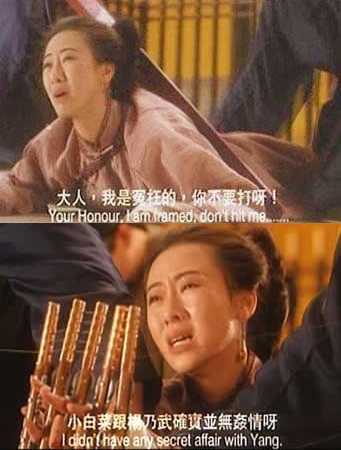
(Little Cabbage and Yang Nai-wu in Chinese Torture Chamber Story)
In late Qing, in the year of 1873, 12th October marked the beginning of the redress of a famous case of injustice in late imperial Chinese history as the drum of magistrate of Yuhang County rung. The case went through all levels of court in the imperial justice system, originating from the county level, then to prefectural level (also known as fu), and brought all the way up to the Chief Justice, the provincial level court and the Justice Department. Seven times the courts dismissed the case, and it was only because of the direct intervention of Empress Dowager that the case was redressed after she commissioned some important ministers to oversee the matter. At the end, a large number of officials involved in the misjudgement were removed. The incident was later known as the famous case of "Yang Nai-wu and Little Cabbage" (alternatively transliterated as Yang Nai-wu and Hsiao Pai Tsai).

Nicknamed Little Cabbage, Pi Hsiu-ku was married to tofu seller Ko Pin-lien at the age of 16. The couple once rented a house that belonged to Yang Nai-wu, who taught Little Cabbage to read and write. Therefore the neighbours had rumoured that they had been having an affair. In fact, Yang was deeply in love with his wife, so the rumour was indeed unfounded. Subsequently, Ko and Little Cabbage moved out, and Yang had not seen Little Cabbage since. Later, Ko got sick and died, but Ko’s mother suspected he was poisoned, and went to the county's magistrate, Liu Hsi-tung, who had held a personal grudge against Yang. Though according to the coroner's report Ko did not die of intoxication, and Yang had an alibi at the time of Ko’s death, Liu simply dismissed those evidences, and insisted Yang and Little Cabbage killed Ko because of their affair. Liu even falsified "evidences" and physically coerced Little Cabbage into confessing to the crime (as Yang was an imperial scholar whose title excluded him from being punished by the court, Liu plotted to have Yang’s title removed, so that he could to force a confession out of Yang with his own means).

Without a confession from Yang, Liu handed down his sentence nonetheless. He then sent the verdict denouncing both Yang and Little Cabbage as guilty to the chief of Hangchow, Chen Lu. Chen was a soldier who contributed in the suppression of the Taiping Rebellion, and was prejudiced against scholars. He thought that Yang’s behaviour was out of line by having too much to say about current affairs. Therefore, Chen took great pains including physical torture to force a confession out of Yang. He finally concluded the case as a lovers’ quarrel went sour where Yang allegedly "murdered the husband to get the wife". Little Cabbage was sentenced to be killed by slow slicing, and Yang was to be beheaded. When the case was sent to the upper court for approval, Chief Justice Kuai He-sun and governor of Chekiang Yang Chang-chün, who were in the same faction with Liu and Chen, approved the ruling despite they were dubious, because overturning Liu and Chen’s decision would have caused harm in Liu and Chan’s careers. Perhaps, officials collusion is something that is as old as time. And it should be no stranger to today’s society, where thuggish and corrupt cops were well protected by the HKSARG.

Luckily, the fourth estate was there — independent from influence of the Qing regime, Shun Pao, also known in English as Shanghai News played a pivot role in holding the authorities in check. The English language newspaper had been following Yang and Little Cabbage’s story from the very beginning and had found a lot of instances of injustice during the trials. This had given Yang's family slightest glimmer of hope, thus they went from pillar to post to petition Yang’s case. Hu Xue-yan, a rich merchant, was sympathetic to Yang’s situation, so he funded Yang's family to appeal. What's worth mentioning is Hu was in General Tso's faction, whose member included Chen Lu. Despite sharing the same affiliation with the prime antagonist in the case, Hu still showed solidarity with Yang’s family through action. What a great difference when it's compared to the so-called rich men in Hong Kong. With the necessary resources provided by Hu, Yang's family went to Peking to petition for Yang’s innocence. After all, Qing was not as bad as the Communists who brutally suppress petitioners "to maintain stability". Meanwhile, Emperor Tung-chi died. Kuang-hsü ascended to the throne and granted clemency to all. But since Yang's case had been brought to Peking, it was excluded from the pardon and was held back "as the case was serious".

But Wang Shu-ruei from the Justice Department thought that those magistrates/officials were procrastinating deliberately, so that the two defendants—who had suffered severe injuries from repeated torture—would die in jail, giving them another closed case that would serve as a merit on their report cards. Same as the magistrates now in Hong Kong, counting their career by the number of cases closed. Wang reported his concern to the Empress Dowager, who agreed with Wang. She then appointed Hu Ruei-lan, the Chekiang Minister for Education, to rehear the case. Hu continued to use severe corporal punishment on Yang and Little Cabbage. All of Little Cabbage’s fingers were shattered, and Yang's legs were broken. And they continued to be forced to confess. Hu Ruei-lan was a learned scholar in Confucianism, but apparently he had little, if not no, knowledge in the justice system – not unlike the "Yi Jin graduates" in the case of Hong Kong’s law enforcement officers.
To be a policeman, one has to at least pass the HKDSE exam, or join the Project Yi Jin, a project for students with less...
Posted by Hong Kong Columns - Translated on Tuesday, 10 March 2015
On one hand, Hu submitted a faked testimony polished in his favour to the Imperial Court, on the other hand, he also submitted the original testimony to credit himself as being "fair". When Shanghai News gathered and published both versions of the testimony, readers and the authorities were stunned by the absurdity.

After the wide coverage of Shanghai News, many scholars and local officials submitted a joint petition raising the obvious doubts of the case. The seven trials held on the imperial order had been a hoax. The Peking Investigating Censor Pien Pao-chüan also impeached Hu Ruei-lan and Yang Chang-chün in accusation of the unfair trials. At last, Empress Dowager decided to commission an interdepartmental panel consisting of the Justice Department, the Censorate and the Supreme Court to hear the case. Ko's corpse was excavated and re-examined, upon which no sign of intoxication was found, showing that the initial "evidences" had been fabricated by Liu.

Back in the Imperial Court, ministers were divided: some thought officials involved in the shenanigans shall be severely punished; while others thought that the Imperial Court shall not sacrifice a large number of its elites merely because of two civilians (Wow, such patronising authoritarian crap! Just like some officials in Hong Kong who think they are high-and-mighty, but never think for a moment who’s paying their paychecks). Finally, it was Empress Dowager who decided to depose officials involved in great number—a rarity in Qing history.

The last few decades of Qing bore resemblance to present-day Hong Kong—dominated by an authoritarian regime, collusion abound and rule of law under constant threat. Yet a century ago there were still Shanghai News revealing the truth, upholding justice for the society. And now in Hong Kong, mainstream media "castrate themselves" by ceding the power to criticise the authority or are even jump at the opportunity to be the government’s mouthpiece. Journalists have to distort the truth to save their jobs. The fact that those Qing officials were mindful of public outrage and spoke against their colleagues stood in stark contrast with the elites in our city today. Now the HKSARG simply ignored public opinion, and felt good while protecting each other. While rich men in Qing would stand up against injustice, rich men in Hong Kong are but bloodsucking vampires who profit off of deceiving civilians. Hongkongers seem to have grown numb about injustice in the society. Perhaps we are in a state where progress actually moved backwards, making today's Hongkongers worse than the people in Qing, who could tell right from wrong. Are Hongkongers worse in insisting on justice when compared to people back in Qing?

(This article mainly transliterate names in Wade-Giles as it happened before 1949.)

20140918

Wing Wing: "Flunkies of British" and "Noble Chinese Citizens"

"Flunkies of British" and "Noble Chinese Citizens"
Translated by Chen-t'ang 鎮棠, Edited by Vivian L., Written by 翼雙飛 (Wing Wing)
Original: http://www.passiontimes.hk/article/09-18-2014/18844 

(Photo: PassionTimes)

A few days ago, I saw a piece of news on CableTV: There is a shortage of regular ambulances in China, so there are many "illegal ambulances" sending patients to the hospital. These ambulances are owned by private operators, and passengers have to call them and PAY for their service. By saying "sending", I mean, these ambulances are merely metal boxes on four wheels with hardly any life-saving equipment. It also reported a deadly incident where the gas pipe of an "illegal ambulance" was broken, leaking carbon monoxide and killing all four passengers on board.

Many Chinese often say, "We China have stood up!", and criticise HKers: "You don't see yourselves as Chinese, but often mention Britain and so on... Haha! You are all flunkies of British people!" True indeed? We "flunkies" enjoyed one of the best ambulance service in the world under British rule. We do not need to bribe ambulancemen before using an ambulance. Patients would not have their oxygen pipes removed and be kicked out of the hospital if they could not afford the fees. We do not need to pay "red packets" to doctors and nurses before having doctors' and nurses' care.

True, before 1997, the British were somewhat privileged, but they also satisfied the basic needs of grassroots. Hawker centre, Dai-pai-dongs (cooked-food stalls), and shopping centres in housing estates used to sell food and daily necessities at affordable prices. Those public facilities were also places where grassroots gathered. Public housing estates built in the colonial era had sufficient spaces, adequate ventilation and good daylight-capturing, making homes comfy. Since the 1970s, six years of free education had started in HK, and was expanded to nine years in 1980s. No matter how poor you are, as long as you excel in school, there are all sorts of public funds, subsides and scholarships to help you along. Eventually you can be successful.

Even the rights of poorest people among the "flunkies of British people" were respected. With the living environment and basic needs were well cared for, people could move upward and be socially mobile. But what about these "Noble Chinese Citizens"? They have to bribe their way to an ambulance when their lives are in jeopardy; rich people cannot get hold of safe infant formula in China for their young; those who protect their homes will be ran over by bulldozers because they are "obstacles to development".

Whatever names they have for us, be it "flunkies", "dogs", or "bastards" -- a fact is still a fact: who would rather be a "Noble Chinese Citizen" if they can choose on their own?

20140820

Astrophel Lim: Reflections on 817: Anti-Occupy Central Is But Lies Within Lies

Reflections on 817: Anti-Occupy Central Is But Lies Within Lies
Translated by Vivian L., Written by 林非 (Astrophel Lim)
Original: http://astrophellic.wordpress.com/2014/08/18/謊言在謊言之上-817-黑筆記事/ 

How many turned out in Sunday's (Aug 17) Anti-Occupy Central march? Organiser Robert Chow Yung spoke his heart afterwards: Numbers don't matter. Such a contrast with Chow's previous bluff claiming to stage a rally with "the biggest turnout in record history". Promotional gimmicks, after all.

From the morning run for democracy to the afternoon march against Occupy Central, the anti-Occupy campaign was a mimicry to turn the Occupiers' weapons against themselves, played out at its finest. The pan-democrats said they represent Hong Kong people's will? Look, we do too! We speak for an even bigger majority!

On the surface, Chow's mass campaigning is just a replica of what the pan-democrats have been doing all along. In reality, the support from the dense array of native-place societies, united front associations and pro-Beijing companies that were showered upon the anti-Occupy campaign is simply out of the pan-democrats' league. Public transports that used to shy away from political advertisements have now made way for the anti-Occupy promotion. Double standard in broad daylight! In fact, it is an efficient tactic on the part of the pro-government camp. Just lobby a few movers and shakers in the corporate circle and have them use their own resources to mobilise their vast number of employees, and the rest is easy. Soliciting the support from these big players proves much more cost effective than working up the average Joes and Janes. Because more often than not, intangible benefits are enough to win over people of power and stature. On a similar note, earlier when there was an outcry among Hong Kong's young accountants because of China's new law that put their jobs on the line, a couple of "solemn pledges" from some of the big names would have suffice to calm public sentiments.

Hong Kong's collective karma: The bystanders' crack of doom


Doing business has always been Hongkongers' priority. Their eyes are perpetually fixed on the carrot on the stick but--it pains one to admit--never on dignity of being human nor the question of justice in society. If justice had been our priority, the Law Society would not have been headed by the likes of Ambrose Lam in the first place. It took Lam's outrageous statement demeaning the entire legal profession for the society to pass a vote of no confidence against its president for the first time in 108 years. But why would that have been a "first" to begin with? Even when their jobs were in jeopardy because of China's fickle rules, have our bean counters learned their lesson yet? Have they decided to stand up for justice now? Society rewards members of professional services with stature and respect, only to falsely assume the recipients to possess the knowledge, aspiration and vision that match up to their name. The one thing Hong Kong is in grave need of is ideological aspiration: a rock-solid ideology for societal development and the base for its discussion. Many would be quick to abandon one's principles and beliefs for petty favours. Other so-called "scholars" and "professors" would not think twice to use their knowledge to manipulate and connive--ones such as Ho Lok-sum and Francis Lui Ting-ming.

So three groups of people formed the participants of the anti-Occupy Central rally: the average Joes who were mobilised by their superiors, the big players who stand to profit from the game, and the simpletons who had no real interest in whatever that is going on and had came only for the paltry charity. All they care could be as simple as a ticket to a meal, a visa to come shopping, or an alternative form of "tourism". In essence, these groups of people may not be at all different. All it takes for them to sell out their principles and beliefs could be trivial and minute for few would think much beyond the surface of things. To many who took part in the march, the equation might have been straightforward: they get a free meal, Hongkongers get to have the supposedly good "one person, one vote" universal suffrage—win-win. Or is it so?

In reality, if this vote, granted under the current electoral framework, gives the voters no real choices, what good is "having the vote"? North Korea has a universal suffrage election too, but would anyone say its people is granted free will to choose their leaders? Can the principle of "universal suffrage" be realised simply with "one person, one vote"? To the average Hongkongers, these things prove too much of a strain to process, and probably don't have a place in their households as people cannot see how these things could "make your spouse loves you more" [link in Chinese only].

Many participants of the anti-Occupy Central march had come under the pretence of "native-place societies", some were shipped to the march in buses hired by the organisers, still others told reporters flat out they had came to "shop". Among the "natives" of these native-place societies were members of the Hong Kong's ethnic minority. Many South Asians in Hong Kong may be living hand to mouth, a condition that might have prompted them to go to any lengths to make a little money (besides, going on a march is not against the law). On the other hand, it was the mainland Chinese who keep saying "blood is thicker than water" that contributed to such a scheme to sabotage Hong Kong's future for petty favours such as "shopping". These "individual cases" keep popping up, relentlessly undermining Hong Kong's de facto system. Even if dissidents shout at the top of their lungs, "Hong Kong people wants democracy," it would be like being in a dark room and looking for a black cat that no one can be certain whether it's there. Don't get me wrong, I'm not saying mainland Chinese don't want democracy. In a society where a pall of corrupt air hung over people's heads, should it surprise anyone that reason would be a singularity?

You said nothing when houses are torn down, nothing when tap water smells like sewage, yet when Hongkongers argue over universal suffrage you rush over to protest against it? pic.twitter.com/mP4r9kgKAD 
— PervertedPepper (@remonwangxt) August 17, 2014

The stupidity demonstrated by anti-Occupy Central probably shows us what an Ebola outbreak would look like in Hong Kong. A long standing political non-participation has deprived Hongkongers of the will to hold on to an ideology and the ability to envision on a societal perspective. What makes a better society? What makes something good or bad, right or wrong? None of these matters to the city dwellers. In this respect such mentality is not much different to the Chinese north of the border, "I no care who is president. I live good I'm happy."

When they see the chengguan (China's much-hated local cops) beating up innocent people, their perception of the problem ends at violence being wrong, failing to recognise the larger phenomenon behind the brutality. Similarly, when the pro-democracy camp put forward the Occupy Central movement, they only see the "occupy" part of the equation, without understanding the "why" behind.

Hongkongers like to abuse the notion of "neutrality" [link in Chinese only]. But in effect, playing the "neutral" party often is just the same as sitting on the sidelines while Gian bullies Nobi.

Gian bullies Nobi. Whose side are you on?
(Source: https://www.facebook.com/nagee.tw/photos/a.10151409298917312.1073741829.353390642311/10151970990337312/?type=1; Translation by HKCT)


What has been dominating the pro-democracy discourse over the years are none other than terms like "value", "ideology", "justice", "fairness" parroted by Hongkongers without them actually taking root in people's lives. This is why "one person, one vote" can take the place of the principle of universal suffrage; a hollow slogan "for peace and universal suffrage" can mask Beijing's intention the screen out "unfavourable" candidates; a black thumbs down for "oppose violence" can wipe away the brutal violence of the system that favours the privileged class, and accuse the repressed of being violent.


Lies within lies


The actual figure of the anti-Occupy day turnout is of no significance. Rather, the anti-Occupy movement signifies that our government has relinquished the principle of "political neutrality" when virtually the whole administration has rallied to the movement. And to the core organisers and advocates of the campaign, the success of the march serves as their bargaining chips to seek rewards from Beijing.

In fact, no matter the actual turnout, it will just be reduced to a figure on a page. Whether it is July 1st or August 17th, Beijing officials would not have come to witness the scene in person anyway. They would have to rely on "middlemen" to deliver the message. And it's only natural that these middlemen would play a little trickery to scrape more favours within the power hierarchy. Be it a hundred thousand or two hundred thousand, China will not budge. You say the pro-establishment camp has gone to extreme lengths to "appeal" to march-goers? Yet we are all certain of one thing, even if they get hold of the truest figure, everyone knows the numbers would have been inflated. But anyhow, the figure is not to be mistook for any real public opinions but a demonstration of force. They would not have cared. As far as political operation is concerned, the existence of a "march" is enough to adorn their own narratives. So when news of the event arrives at the Chinese officials, the number would have easily been magnified to hundreds of thousand of citizens took to the street "on their own accord".

In the eyes of the communist party, what is our humble existence to match wits with the great master of fraudulence? Speaking of art of practising fraud, our humble existence is perhaps nothing more than a witless preschooler compared to the master. Beijing officials are clear how the figure was conjured up. The march was but "an example to the public of Hong Kong" and "a means to elicit internal conflict among the people of Hong Kong". But why? What for? Even Beijing itself can't make head or tail of the whole conundrum.  Once again, Democratic Party is in dialogues with Beijing's man. When the current atmosphere suggests a "50-50 split between pro-democracy and pro-Beijing camps" and "whoever has the gold makes the rule", even the strongest of characters would find it hard to stand their ground.

Robert Chow and his centrist band of campaigners, the Hong Kong government, and the Chinese officials are all sure of the actual state of affairs, and they are sure these people mobilised by the campaign did not come because of an ideological aspiration, and they are sure what the campaign rallied for would do more harm than good. They all knew from the bottom of their hearts. But for the sake of their own interests both political and monetary, none of these should matter. In fact, it comes as no surprise that the whole generation of 1950s and 60s should think like this. Like Chow, his must have known that his project has done Hong Kong more harm than good. If he had truly believed what he is advocating for, if his gut told him a genuine universal suffrage that is fair and open would be possible under the rule of the Chinese commies, and that Hong Kong would be headed for a brighter future, why then, is his holding on for dear life to his British passport? [Translation note: In an earlier interview, Chow had denied holding a British passport, but admitted having the right of abode in Britain, which he claimed to be working with his lawyer to renounce.] 

On the same token, why are the families and children of Chief Executive Leung Chun-ying and Chief Secretary Carrie Lam Cheng Yuet-ngor stuck in Britain and deprived of such hopeful future in Hong Kong? So they all have told blatant lies without batting an eye because of what that they stand to benefit from the injustice and dirty politics they sustain. Yes, they have known all this time they are breeding injustice. If it's any consolation, let us be reminded that to do wrong with the knowledge of being in the wrong is an unpardonable sin. In essence, their sins are no different to that of the Nazis during World War II. Behind the impressive slogans and the extermination camps that were set outside of German soil, the Nazis made sure Germans bore no witness to their cruelty.

Ever since the handover, Hong Kong has inevitably found itself en route to a grim future. This is due, for one, to China's invasion and colonisation of the city; for other, the cynical ignorance and fixation on sops on the part of Hongkongers. Since its early days, the post-handover HKSAR has had a bad track record. From the Provisional Legislative Council and the dissolution of two municipal councils during the first years, to the sleazy tactics to mobilise people against people, officials rallying for a political course "in a personal capacity", and public money and devices being used to spread a propaganda of today, all indications are that the downward spiral our city is already on will only go on.

Many born in the 1950s and 60s regard politics as something to be avoided. They seek no knowledge nor involvement in such affairs. With a fixation on petty interests and an indifferent attitude, they were happy amassing fortunes in the last twenty years of colonial times. Today's top men in the power hierarchy do not earn their seats with astute abilities nor a singular vision, but by skills that comprise abandoning one's principles and trimming one's sails to the wind. This aspiration to "climb the ladder" has not failed to recruit supporters from the new generation, many of whom make up the proponents of the conservative camps.

In an environment as such, the post-80s generation is doomed to be a peculiar kind. They have had the final glimpse of prosperity and grace of Hong Kong under colonial rule. They have also witnessed the descend from grace into calamity. They are the victims in a society increasingly disparate between classes, forgotten and outcast. No one knows how long this age of darkness is going to last. But the days of the Chinese commies might not be long. And who's to say the Chinese who are just as shortsighted might not overthrow the Chinese government? Populate with people who lack the capability to reason, and who are more concerned with clique membership than with proper judgement, where will this nation be headed? These are not things one can be optimistic about.

To quote ST Chow: "The percentage vote share of the pan-democrats has gone from 66.12% in 1998 to 56.24% in 2012. Eliminating the votes secured by 'non-allies' League of Social Democrats and People Power, the pan-democrats register a lowly 41.55%." And we can expect the percentage to sink even lower. In the face of the opponent's robust network to mobilise an infinite supply of people and resources, and their own sinking vote share, the pan-democrats are more pathetic than the polar bears that had died of exhaustion trying to swim their way to an ice floe—at least the bears tried.

20140708

Do Chan: Paul Kwong - a Living Example of a False Prophet

Paul Kwong - a Living Example of a False Prophet
Translated by Vivian L., Written by 陳到 (Do Chan)
Original: http://www.passiontimes.hk/article/07-08-2014/17597

Archbishop Paul Kwong of Hong Kong Anglican Church (aka Sheng Kung Hui) gave a sermon at St. Paul's Church on 6th July, which was also a Confirmation celebration and theological education Sunday.

In honour of the tradition where the bishop blesses the baptised to follow the example of Jesus Christ in the Confirmation celebration, Kwong mentioned more than once that Christians should always ask themselves, "What Would Jesus Do?" (WWJD). But on what Jesus would do in the face of Hong Kong's current political climate, he took a firm stand, "I do not believe Jesus would have thrown objects in LegCo, nor would He have berated the government officials, nor would He have used irrational and violent means to express Himself."

Kwong continued to claim that the Jesus depicted in the Gospels was very "consistent": Jesus was "gentle and humbled" when He was condemned before Pilate, silent like a lamb waiting to be slaughtered. Those who came out to protest had "no peace within, nor do they have the wisdom to think straight," Kwong argued, "that's why you see so much irrational responses, some are even worried that they will no longer be allowed to protest next year." The greatest bullsh*t of all was when he taunted those arrested after July 1 overnight sit-in to "bring along their maids". The way I would like to respond to his sermon is that the Archbishop just demonstrated how to be a false prophet.

False prophets preach "the other gospels"

Kwong said Christians should always ask themselves what Jesus would do, but he himself has little knowledge of the Jesus as the Bible records. "Jesus Cleanses of the Temple" is a story well-known even to non-believers. And what He did was in no way close to being "gentle"; Has Jesus ever berated anyone? The Bible has records of Jesus looking at those who were spying on Him in anger, Jesus rebuking His disciples, and Jesus publicly berating the Pharisees and Sadducees as "brood of vipers". Jesus would be the last person to be gentle when injustice is before Him. Kwong's depiction of Jesus as a man of little words is a shameless distortion of the Lord's image into one that fits his own pro-government leaning. Such a person is no man of God. Kwong must confess his sins and repent, otherwise may he never ascend into Heaven no matter how tall his bishop's mitre is.

False prophets heralds "false peace"

First let's take a look at passage in scripture (Ezekiel 13:8-16):
"Therefore this is what the Sovereign LORD says: ... My hand will be against the prophets who see false visions and utter lying divinations. ... Because they lead my people astray, saying, 'Peace,' when there is no peace, ... The wall is gone and so are those who whitewashed it, those prophets of Israel who prophesied to Jerusalem and saw visions of peace for her when there was no peace,  declares the Sovereign LORD."

The scripture passage mentions those false prophets who misled others by saying, "Peace," when there was no peace. Kwong's sermon was a perfect example of false prophecy. He spoke of how Hong Kong is beset by a host of problems, but what he did was teach his parishioners to have peace, and slander the protesters as having no peace within. This is not and never will be the teaching of the Holy Scripture. The Bible does not instruct people to be ostriches that profess "spiritual victories" but are ignorant of the dangers of the outside world. The Bible has always been a book of truth. The role of a prophet is to warn people of the consequences of sins, and that people should turn away from their sins and do what pleases God. Calling upon Christians to be "gentle and humble" when facing serious issues is essentially telling Christians to keep their mouths shut and stay away from politics and from the truth. But with China trampling on all aspects of the city's life, it's only natural for Hongkongers to cry for help, and to fight back in self defence. But Kwong, on the other hand, brush people off and says, "Suck it up, it'll all end soon." A pastor like this, even one is too many for our own good.

Towards the end of his sermon, Kwong reverberated, "We as Christians should follow the example of Christ, so that people see that we are different," stressing that Christians should remain silent like the meek and gentle Jesus he had depicted.

I agree in all certainty that Christians should follow Christ's example to become like Jesus, so that people see that we are different, which is just the reason why we should follow His steps to stand up against injustice and sacrifice for the greater good.

[Translator note: Paul Kwong was appointed as a member of the Chinese People's Political Consultative Conference, China's political advisory body, in 2013.] 

20140313

Mingpao: Is HK still the HK we knew? 王維基的遭遇 使許多人對香港陌生起來

Is HK still the HK we knew? 王維基的遭遇 使許多人對香港陌生起來
Translated and Written by Ming Pao


2014/3/13
【明報專訊】HONG KONG TELEVISION NETWORK (HKTV) chairman Ricky Wong, a man who never gives up easily, said he had "come to a dead end" after his company had been informed by the Communications Authority that, if it wanted to provide TV programmes for an audience of more than 5,000 households with known addresses, it must have a free-to-air or pay-TV licence, or it might violate the Broadcasting Ordinance.

香港電視網絡(簡稱港視)收到通訊事務管理局通知,若港視提供的節目超過5000個「指明處所」組成的觀眾接收,就必須領取免費電視或收費電視牌照,否則可能牴觸《廣播條例》。就此,一向鍥而不捨的港視主席王維基慨嘆已經「走投無路」。

Wong's plans to start his TV business have suffered one setback after another. Last year, the government came to a decision regarding the award of new free-to-air TV licences. While HKTV had allocated more resources to its projects and was better prepared than the other applicants, the government rejected its application and refused to explain the decision. HKTV then acquired from a subsidiary of China Mobile its mobile-TV licence, which was generally regarded as a new breath of life for the company. However, shortly afterwards, China Mobile announced that it was conducting an internal inquiry into the deal between its subsidiary and HKTV, giving rise to doubts as to the validity of HKTV's acquisition of the mobile-TV licence. And then Television Broadcasts (TVB) declared that, with effect from July 6, it would terminate an agreement to lease to HKTV six hilltop transmission stations. As a result, HKTV's plan to launch mobile-TV services on July 1 became even more uncertain.

王維基爭取做電視業務,可謂一波三折。去年政府審批新增免費電視牌照,雖然港視投入的資源較多,準備較充分,政府並未授予牌照,也拒絕提供決定的理據;其後,港視從國企中移動一家子公司,收購得流動電視業務,使人認為港視「敗部復活」,不過,未幾中移動母公司發出公告,就這宗涉及子公司的交易啟動內部調查,此一轉折,使人對港視取得流動電視牌照會否存在變數,已有疑問;之後,無綫電視預告今年7月6日起,終止租用6個山頂發射站給港視,港視能否如期在7月1日啟播,存在陰影。

And now HKTV is faced with a regulation problem. According to the Communications Authority, it has given a "friendly reminder" to HKTV saying that if the company's transmission system enables it to provide instantaneously mobile-TV services for an audience of more than 5,000 households with known addresses, it must first of all possess a free-to-air or pay-TV licence. It is true that the Broadcasting Ordinance says a company must have a TV licence if it wants to provide TV services for "an audience of more than 5,000 specified premises". However, when years ago the mobile-TV licence issue was being discussed in the Legislative Council, the papers submitted by the government stated clearly that it did not propose to amend the Broadcasting Ordinance and bring mobile-TV services under its regulation.

今次,港視遇到的問題涉及監管。通訊局形容,現在是「善意提醒」港視,若港視建議的傳送制式使本港超過5000個指明處所組成的觀眾,即時接收其流動電視服務,則在開展營運業務之前,須先取得免費電視或收費電視牌照。《廣播條例》確有「超過5000個指明處所」所組成的觀眾接收,均須領有電視牌照的規定,不過,關於流動電視牌照,當年在立法會討論時,政府提交的文件,表明不建議修訂《廣播條例》以規管流動電視牌照。

Now the Communications Authority is applying the ordinance to HKTV's mobile-TV services. This is a de facto policy change. Moreover, as Wong has pointed out, when mobile-TV services were provided by China Mobile's subsidiary, whose transmissions could reach 90 percent of the population, the government did not attempt to impose any regulations; however, with Wong's acquisition of the mobile-TV licence, the government is taking steps to bind his hands with the Broadcasting Ordinance. Wong believes the government is applying the law differently to different people.

現在,通訊局實際上把流動電視牌照納入廣播條例規管範圍,這是政策轉變。另外,王維基提到,以往中移動子公司擁有有關牌照時,廣播範圍覆蓋本港九成人口,當時政府未提出要規管,他收購牌照後,政府卻要監管,認為法律因人而異。

Hong Kong has traditionally upheld the principle of equality before the law. What is happening to Wong and HKTV is foreign to our experience. Today's Hong Kong is no longer the Hong Kong that so many of us knew so well. To put it simply, we see in the HKTV case the rule of man. The rule of law appears to have slipped far, far away.

本港一貫執法不會因人而異,若以此檢視目前王維基與港視的處境,他們的遭遇,會使許多人對香港的認知,變得很陌生,超乎港人熟悉的經驗,簡單而言,使人看到人治的影子,法治好像飄行去遠了。

The many hurdles put in Wong's way show that the powers that be are making every effort to prevent the expansion of the TV industry. And the measures they have taken are so unreasonable that one cannot but wonder: What is happening to Hong Kong? This is a question which we believe many people are asking.

從王維基的遭遇,使人看到他被一股力量千方百計地封殺開拓電視業務,所顯露的蠻橫手段,香港到底發生什麼事?相信會是許多、許多人的疑問。

(Photo added by Chen-t'ang, source from Delight Media Hong Kong)