Showing posts with label Qing. Show all posts

20160212

The Fishball, the Favoured Belief, the Fool

The Fishball, the Favoured Belief, the Fool
Translated by Chen-t'ang 鎮棠, written by Tsang Fan-yam Philip
Original: https://www.facebook.com/VanVan417/posts/10153609247323096 
[Translator's note: Deep Chinese history knowledge required; will try to explain but cannot explain that much]
(Drawn by DamnkidYK)
The current unrest is similar to Peking back in late Ming Dynasty.
As a Ming general, Yuan Chonghuan was fighting in the Battle of Ningyuan against the Manchus, later known as the ruler of Qing Dynasty. The Manchus and its troops suffered. Nurhaci, the chieftain of Manchu, read and inspired by the Romance of the Three Kingdoms, so he started to spread rumours of Yuan conspriring a revolt as he held lots of soldiers. And people believed it.

Chongzhen Emperor of Ming fell into this trap, so he grabbed Yuan to jail, and sliced him slowly. Peking residents believed that he was conspiring a revolt, so they ate his flesh after slicing.

Yuan was not a flawless general, but he was competent and the pride for Cantonese people. A few bright man came out through the unreasonably difficult imperial examination, including Sun Chengzong, Xiong Tingbi and Yuan Chonghuan, and became generals on the frontier against the Manchus' aggression.

Ming's administration was highly centralized. The emperor worried real generals would be dangerous threats as they held lots of troops. So with imperial exam, only literary officials can lead the troops, but most of them cannot lead a troop.

But there are always exceptions in history. Sun Chengzong went through all key frontier checkpoints and learnt all the details about the frontier; Xiong Tingbi was familiar with the troops, and good at archery with both hands. It was rare to see a literary man to be so good at martial arts.

As for Yuan, he loved military things but did not know martial arts. His qualities were "not peaceful, irrational, violent ans swearing".

Within 5 years, he took Liaodong peninsula back -- not peaceful; he directly asked for funding for troops from the emperor directly instead of departments -- irrational; on his own idea, he killed Mao Wenlong, another general -- violent; his Cantonese maritime troops often chanted "Diu La Ma, Ding Ngang Soeng" (Screw his mom, carry on!) -- swearing.
Ring a bell of localists or valorous protesters?

I heard many people's remarks, like "policemen are men too", "localists are messing around" or "both sides have faults too".
Ring a bell of the rumours in Peking?
Much worse actually, at least Peking residents would not say "Manchus troops are men too", given their brutal records. 

These people do not read news, and bark around when something happened. They do not know what is "unrestricted warfare", editor-in-chief being chopped on streets nor booksellers being kidnapped, not to mention the confrontation between the police and the public.
Is this much alike the fool in Peking?
Pan-democrats are not reliable at all, they are just like the secretaries of Defense Department, who do not know about the actual situation nor allow new blooms to show their talents.
The localists now have their channels for promotion, and the government has their mouthpieces too. On the same battlefield, we are the master of the keyboard, and we have to choose our stance.
To be honest, those who remain silent and neutral are selfish. As Dante said, "The darkest places in hell are reserved for those who maintain their neutrality in times of moral crisis."
We have to keep it short and simple and screw the government persistently. We have to stand firm on our posts, and we shall have our future.
===
魚蛋、輿論、愚民
現今的亂象,與明末的北京城很相似。
袁崇煥在寧遠前線間關百戰,對抗滿清,清兵焦頭爛額。清主皇太極看了《三國演義》,從「群英會蔣幹中計」一回得到啟示,派人四出造謠,於是北京城謠言四起,群眾認為袁崇煥手握重兵,要反了。
崇禎果然中計,抓了袁崇煥下獄,將他凌遲處死。北京市民也相信袁崇煥造反,一人一口生啖其肉。
袁崇煥是有相當瑕疵的將領,但也相當能打,難得一見的大將,是廣東人的榮耀。明末曾經有幾顆奪目的新星,孫承宗、熊廷弼、袁崇煥,他們經過極不合理的考試選拔制度,通過一連串文考,終於成為邊防將領,抵禦滿清南侵。
明朝高度中央集權,皇帝害怕武將握兵權,構成威脅,於是通過考試制度,讓文官才能帶兵,能爬到高層的都是不會帶兵的文官。
但是也有例外,孫承宗「伏劍游塞下」,萬曆三十二年進士;熊廷弼「有膽知兵,善左右射」,萬曆二十六年進士,讀書人中左右手也能開弓,絕無僅有。
袁崇煥熱愛軍事,不懂武藝,萬曆四十七年進士。他的特點是:不和平、不理性、暴力、粗口。
他反守為攻,五年平遼,是不和平;他無視兵部戶部,直接向皇帝要錢作餉,是不理性;他擅殺皮島守將毛文龍,是暴力;他的廣東水師,陣上總是「丟那媽,頂硬上」的呼喊,是為粗口。
很像今天本土派、勇武派的風格。
今天早上聽到很多指摘,「警察都係人」、「本土派搞事」、「兩邊都有錯」。
這很像北京城裡的謠言。
其實是更不堪,北京愚民再謊謬,不會說「清兵亦人也」。
平時不看新聞,有事百犬吠聲。沒有「超限戰」的概念,不知道報紙編輯當街俾人斬,不覺得賣書賣到被綁架是很嚴重,扑爆頭也不相信警民之間已經是「敵我矛盾」。
有沒有覺得自己就像北京城的愚民?
泛民也完全不可信賴,他們就像明末的兵部尚書一樣:王在晉,將不知兵;梁廷棟,挾數行私;張鳳翼,怯不敢戰;楊嗣昌,扼殺新晉。
現今本土派有一個優勢,就是有自己的平台,有渠道作文宣。然而政府也有牠的喉舌。在這一個戰場上,你我也身處最前線。我們手握鍵盤,要幫雞蛋,要幫高牆,全由我們選擇。
沉默與中立的,在這個時勢而言,老實講,很自私,如但丁所言:"The darkest places in hell are reserved for those who maintain their neutrality in times of moral crisis."
我們必須用易懂、簡潔、清晰的文字去diu7政府,並且堅持到底,在抗爭的每個崗位克盡己任,我們才有明天。

20150902

Yukikm: Is Hong Kong worse than Qing?

Is Hong Kong worse than Qing?
Translated by Chen-t'ang 鎮棠, written by Yukikm, edited by Vivian L.
Original: http://polymerhk.com/articles/2015/08/24/20005/

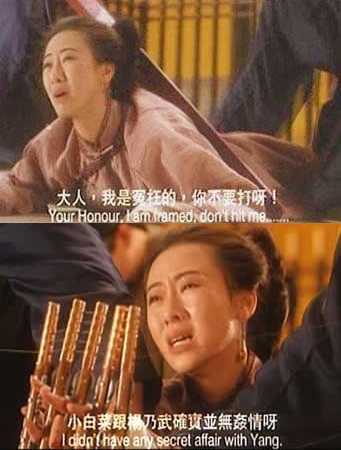
(Little Cabbage and Yang Nai-wu in Chinese Torture Chamber Story)
In late Qing, in the year of 1873, 12th October marked the beginning of the redress of a famous case of injustice in late imperial Chinese history as the drum of magistrate of Yuhang County rung. The case went through all levels of court in the imperial justice system, originating from the county level, then to prefectural level (also known as fu), and brought all the way up to the Chief Justice, the provincial level court and the Justice Department. Seven times the courts dismissed the case, and it was only because of the direct intervention of Empress Dowager that the case was redressed after she commissioned some important ministers to oversee the matter. At the end, a large number of officials involved in the misjudgement were removed. The incident was later known as the famous case of "Yang Nai-wu and Little Cabbage" (alternatively transliterated as Yang Nai-wu and Hsiao Pai Tsai).

Nicknamed Little Cabbage, Pi Hsiu-ku was married to tofu seller Ko Pin-lien at the age of 16. The couple once rented a house that belonged to Yang Nai-wu, who taught Little Cabbage to read and write. Therefore the neighbours had rumoured that they had been having an affair. In fact, Yang was deeply in love with his wife, so the rumour was indeed unfounded. Subsequently, Ko and Little Cabbage moved out, and Yang had not seen Little Cabbage since. Later, Ko got sick and died, but Ko’s mother suspected he was poisoned, and went to the county's magistrate, Liu Hsi-tung, who had held a personal grudge against Yang. Though according to the coroner's report Ko did not die of intoxication, and Yang had an alibi at the time of Ko’s death, Liu simply dismissed those evidences, and insisted Yang and Little Cabbage killed Ko because of their affair. Liu even falsified "evidences" and physically coerced Little Cabbage into confessing to the crime (as Yang was an imperial scholar whose title excluded him from being punished by the court, Liu plotted to have Yang’s title removed, so that he could to force a confession out of Yang with his own means).

Without a confession from Yang, Liu handed down his sentence nonetheless. He then sent the verdict denouncing both Yang and Little Cabbage as guilty to the chief of Hangchow, Chen Lu. Chen was a soldier who contributed in the suppression of the Taiping Rebellion, and was prejudiced against scholars. He thought that Yang’s behaviour was out of line by having too much to say about current affairs. Therefore, Chen took great pains including physical torture to force a confession out of Yang. He finally concluded the case as a lovers’ quarrel went sour where Yang allegedly "murdered the husband to get the wife". Little Cabbage was sentenced to be killed by slow slicing, and Yang was to be beheaded. When the case was sent to the upper court for approval, Chief Justice Kuai He-sun and governor of Chekiang Yang Chang-chün, who were in the same faction with Liu and Chen, approved the ruling despite they were dubious, because overturning Liu and Chen’s decision would have caused harm in Liu and Chan’s careers. Perhaps, officials collusion is something that is as old as time. And it should be no stranger to today’s society, where thuggish and corrupt cops were well protected by the HKSARG.

Luckily, the fourth estate was there — independent from influence of the Qing regime, Shun Pao, also known in English as Shanghai News played a pivot role in holding the authorities in check. The English language newspaper had been following Yang and Little Cabbage’s story from the very beginning and had found a lot of instances of injustice during the trials. This had given Yang's family slightest glimmer of hope, thus they went from pillar to post to petition Yang’s case. Hu Xue-yan, a rich merchant, was sympathetic to Yang’s situation, so he funded Yang's family to appeal. What's worth mentioning is Hu was in General Tso's faction, whose member included Chen Lu. Despite sharing the same affiliation with the prime antagonist in the case, Hu still showed solidarity with Yang’s family through action. What a great difference when it's compared to the so-called rich men in Hong Kong. With the necessary resources provided by Hu, Yang's family went to Peking to petition for Yang’s innocence. After all, Qing was not as bad as the Communists who brutally suppress petitioners "to maintain stability". Meanwhile, Emperor Tung-chi died. Kuang-hsü ascended to the throne and granted clemency to all. But since Yang's case had been brought to Peking, it was excluded from the pardon and was held back "as the case was serious".

But Wang Shu-ruei from the Justice Department thought that those magistrates/officials were procrastinating deliberately, so that the two defendants—who had suffered severe injuries from repeated torture—would die in jail, giving them another closed case that would serve as a merit on their report cards. Same as the magistrates now in Hong Kong, counting their career by the number of cases closed. Wang reported his concern to the Empress Dowager, who agreed with Wang. She then appointed Hu Ruei-lan, the Chekiang Minister for Education, to rehear the case. Hu continued to use severe corporal punishment on Yang and Little Cabbage. All of Little Cabbage’s fingers were shattered, and Yang's legs were broken. And they continued to be forced to confess. Hu Ruei-lan was a learned scholar in Confucianism, but apparently he had little, if not no, knowledge in the justice system – not unlike the "Yi Jin graduates" in the case of Hong Kong’s law enforcement officers.
To be a policeman, one has to at least pass the HKDSE exam, or join the Project Yi Jin, a project for students with less...
Posted by Hong Kong Columns - Translated on Tuesday, 10 March 2015
On one hand, Hu submitted a faked testimony polished in his favour to the Imperial Court, on the other hand, he also submitted the original testimony to credit himself as being "fair". When Shanghai News gathered and published both versions of the testimony, readers and the authorities were stunned by the absurdity.

After the wide coverage of Shanghai News, many scholars and local officials submitted a joint petition raising the obvious doubts of the case. The seven trials held on the imperial order had been a hoax. The Peking Investigating Censor Pien Pao-chüan also impeached Hu Ruei-lan and Yang Chang-chün in accusation of the unfair trials. At last, Empress Dowager decided to commission an interdepartmental panel consisting of the Justice Department, the Censorate and the Supreme Court to hear the case. Ko's corpse was excavated and re-examined, upon which no sign of intoxication was found, showing that the initial "evidences" had been fabricated by Liu.

Back in the Imperial Court, ministers were divided: some thought officials involved in the shenanigans shall be severely punished; while others thought that the Imperial Court shall not sacrifice a large number of its elites merely because of two civilians (Wow, such patronising authoritarian crap! Just like some officials in Hong Kong who think they are high-and-mighty, but never think for a moment who’s paying their paychecks). Finally, it was Empress Dowager who decided to depose officials involved in great number—a rarity in Qing history.

The last few decades of Qing bore resemblance to present-day Hong Kong—dominated by an authoritarian regime, collusion abound and rule of law under constant threat. Yet a century ago there were still Shanghai News revealing the truth, upholding justice for the society. And now in Hong Kong, mainstream media "castrate themselves" by ceding the power to criticise the authority or are even jump at the opportunity to be the government’s mouthpiece. Journalists have to distort the truth to save their jobs. The fact that those Qing officials were mindful of public outrage and spoke against their colleagues stood in stark contrast with the elites in our city today. Now the HKSARG simply ignored public opinion, and felt good while protecting each other. While rich men in Qing would stand up against injustice, rich men in Hong Kong are but bloodsucking vampires who profit off of deceiving civilians. Hongkongers seem to have grown numb about injustice in the society. Perhaps we are in a state where progress actually moved backwards, making today's Hongkongers worse than the people in Qing, who could tell right from wrong. Are Hongkongers worse in insisting on justice when compared to people back in Qing?

(This article mainly transliterate names in Wade-Giles as it happened before 1949.)