Showing posts with label Cultural revolution. Show all posts

20151202

Atsuna: Hong Kong Is Experiencing a Cultural Revolution

Hong Kong Is Experiencing a Cultural Revolution
Translated by Chen-t'ang 鎮棠, edited by Gordon C., written by Atsuna
Original: www.passiontimes.hk/article/11-30-2015/27181 

A 15-vote distance: Teacher Jenny Leung Wing-sze lost to a DAB member in the District Council (DC) Election. Life as a secondary school teacher is already hard, especially when the education sector is so mainlandised. But to be so brave to contest in this election, it is only the love she possesses for her home that enabled her to make such a big sacrifice.

Yet, when the battle ended, in some restaurants, when some neighbours heard that she failed, their response was to exclaim, “Serves her right!” I can even imagine the joyous expressions they might have when they would sing “Congratulations and Celebrations”, filled with schadenfreude.

So you thought this must have been the rantings of some uneducated grumpy old fart? I do have some middle-aged colleagues, who might not have a high qualification, but still decent people. But once I heard them slamming, “That is right! Arrest those who mess around! Occupying the streets and they shall all go to hell!” I am utterly shocked that a decent person like her could turn into such a dragon to a stranger. Those who are willing to sleep on streets and be arrested for Hong Kong are more sinned than criminals in their eyes.

Aleksandras Štromas, a Lithuanian dissident, once said, socialism is “a moral rather than an economic or social concept” (Štromas et al., 2003. Totalitarianism and the Prospects for World Order). The Chinese Communist Party has long given up socialism and become a thorough follower of national capitalism, but is still good at carrying out “thought reforms” and forcing their beliefs onto Hongkongers.

(Apple Daily)
Usually, those who think about politics deeply are the minority – especially in a society like Hong Kong (where people seldom read seriously). The majority of the people do have a conscience, but they are too gullible to propaganda. They might be angry once about the Tian'anmen Massacre, but they would also condemn the Occupy Movement, because their moral values are often skewed, thanks to TVB. When CCP has mainstream media in its grip, they form new “moral values”. They will whitewash the corruption and lies above, and smear those who dare to challenge the authority. Freedom fighters are seen as inexcusable rabble rousers in those elderly's eyes – as the hatred sowed on mice in cats' eyes. No wonder they are so angry about the Occupy Movement.

What they did in the Cultural Revolution was also based on moral concept. They claimed that what they criticised are evils and villains. In such a distorted value system, decent and honest people simply had no room to survive, as they had to either leave the country, or die. Lian Yizheng, a columnist on HKEJ, said there are different “rod-and-carrot” systems in the political and economic environment in China, Hong Kong and Taiwan. Whereas some might not survive if they cannot accommodate this, some might receive carrot when they know how to live well, like how hypocrites are the champion in Mainland Chinese politics. So Hong Kong, Taiwan and China are indeed three different peoples, each with their own cultural heritage.

Xi Jinping shows his preference to Mao, and some even said he is having a small
(nowTV News; Chan Ching-sum)
“Cultural Revolution”. But Hong Kong is under another cultural revolution too! HKSARG spares no efforts to promote “China-Hong Kong integration”. At the end, they want to assimilate the “rod-and-carrot” systems of Hong Kong and China. Gradually, Hong Kong becomes not so talent-oriented; it is those who are shameless enough who are receiving carrots. Lo Chung-mau, who had a thesis credibility crisis, was challenging the “academic standard” of Johannes Chan. Thugs and scoundrels like Chan Ching-sum, Leticia Lee and Man Shek are the ones who rise to fame/notoriety. People seem not to know how bastard those officials are,
(MemeHK)
but fire at those who dare to challenge the authority. This is the “new values” of Hong Kong. But how many people know that our very own “rod-and-carrot” system, the foundation upon which they made a life for themselves, is eroding?

20150304

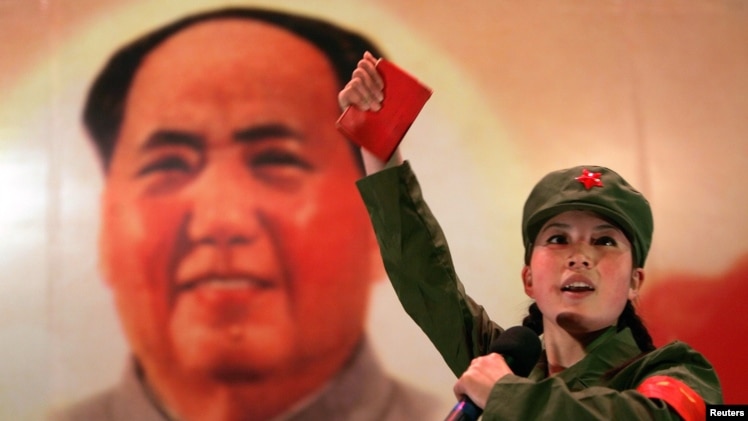
Siu Kiu: Modern Chinese History Should Be Called the Era of "Red Peril"

Modern Chinese History Should Be Called the Era of "Red Peril"
Translated by Chen-t'ang 鎮棠, Edited by Kathy Griffin, Written by Siu Kiu (蕭喬)
Original: http://www.passiontimes.hk/article/03-01-2015/21448/ 
(Source: Reuters/VOA)
When the Communist regime is someday overturned, its years of rule may come to be regarded as the "Red Peril" in Chinese history.

This is not simply an opinion about the Communist regime, it is a fact. One of the localist slogans has been "to build a culture nation" in Hong Kong. But why "culture"? You have to look at the country across our border. The idea of building a "nation state" belongs in the last century. Now that the Cold War is over and we have seen the outcomes of countries dictated by the Communists, "building a culture nation" seems a more appropriate goal.

China was culturally dead at the moment when the Communists "founded" the PRC in 1949. From 1949 to 1978, all of China was immersed in an era of "extreme Communism". Extreme politicisation was prevalent, embodied by the push to uphold Marxism-Leninism or Maoism, combat Confucianism, pursue collectivism and economic equality, the Cultural Revolution, all sorts of political struggle. These activities in the name of a single political ideology strongly affected each and every aspect of life in China, including politics, the economy, society and culture. Even Confucianism, which had prevailed for thousands years of Chinese history, permeating social relationships from the family to the state, was completely denied and rejected. "Father is dear, mother is dear, but not as dear as Chairman Mao" was a popular slogan during the Cultural Revolution. China became (and still is) culturally dead.

How did the old China "disappear" from the world? We could make a satirical comparison with its neighbouring countries. In Japan, we can find many things that we would regard as “Japanese” in the qualities, traditions and architectures there. Kinkaku-ji or the Apartment of Tokugawa Ieyasu, for example, has been retained for its significant cultural heritage. Japanese soft power is embodied in the kimono, the traditional clothing of the country, which is seen as a symbol of elegance and decency in the eyes of foreigners. Japanese pop music culture is also still part of the global mainstream. In fact, the genuine strength of the country lies in its cultural influence. The rise of Japanese culture happened during the economic miracle era of the 1950s to 1970s. Similarly, Korean culture thrives in Korea (and beyond). You can "find the culture of the country in that country".

Do not think this is a matter of course. In a Communist country, the culture of the country can be completely eliminated. And this is what happened (and still is happening) in China. The current China is not a Sinitic China, but a foreign Communism regime, drawing its breath from Russian or foreign culture. In this China, all forms of traditional culture have been destroyed, including ethics, especially during the Cultural Revolution. The Chinese you see today retain the faces of Chinese, but they do not act as they would have in the past. A culture is defined not only by its tangible parts, such as the Lunar New Year (which is now called "Spring Festival"), but also its intangibles, such as one's cultivation. We have seen the qualities that are deep down Japanese - bushido, and the considerate character - especially in the Fukushima nuclear disaster. This is the collective character underpinning the culture of the nation. But what about Chinese? They are no longer cultivated and civilised as they were in the past. They only carry the selfish gene, and Confucian values no longer exist in their minds.

You can barely argue with Chinese people, as you are not on the same channel. A Chinese citizen might say, "I have my own reasons", "Political power grows out of the barrel of a gun", "Money talks", or "We have our own culture". In Hong Kong, we have a different culture – we do not eat dogs, they do.  They have re-interpretation for each and every word. Socialism, "with Chinese characteristics"; Rule of Law (法治), in China would be "governing the country according to law" (依法治国) and so on. Chinese culture has long vanished to thin air, leaving "Chinese-style" culture. It is not difficult to see who is more dependent on whom for safe food when it comes to grey goods smugglers. But they will say, "Without us buying things from you, you, Hong Kong, are dead." So when we talk about the issue of Hong Kong Independence as a nation, we have reason to support this idea of "build a culture nation".

The Chinese today are pathetic. Who is to blame? Probably the "Red Peril" of Communism, but really, the Chinese people themselves. Hong Kong is fortunate enough to have been taken by the British, so we could be slightly removed from the historical tragedy. The current China has nothing to do with Chinese culture anymore. Genuine Chinese culture, however, has been restored in our neighbouring countries. We can see influences of the Tang dynasty in Japan, the Ming dynasty in South Korea, the Qing dynasty in Taiwan, and the Song dynasty in Vietnam. When an ethnic Chinese (huaren) region wants to build its own nation and aim for real strength, it does not have to think this comes solely from rely solely  economic strength or military prowess – it can also come from a cultural foundation. Hong Kong has such a foundation and it should cherish it, or we will fall to the Red Peril.

20150228

Wing Wing: Destroyers of Ancient Civilisation

Destroyers of Ancient Civilisation
Translated by Chen-t'ang 鎮棠, Edited by Vivian L., Written by 翼雙飛 (Wing Wing)
Original: http://www.passiontimes.hk/article/02-27-2015/21438 


ISIS terrorists released a video on YouTube on 26 Feb, saying that the Prophet Mohammed ordered them to get rid of the statues and relics in the Mosul Museum in Iraq. Statues  and artefacts with 3,000 years of history were smashed with sledgehammers and electric drill; broken pieces shattered over the floor. Over 100,000 manuscripts and books were burnt, Observer reported.

Countless relics, monuments and books had been destroyed by tyrants and warfare throughout the history of mankind. If you look at examples in Chinese history, the oldest is probably Qin Shihuang's "burning of books and burying of scholars"; Cultural Revolution is another winner if you look at more recent times. In the Cemetery of Confucius, not a single piece of ancient stone tablet is currently intact -- all has once seen varying degrees of sabotage. But those are the lucky ones -- you can still somehow restore the carvings by putting the pieces together. But many other historical artefacts have suffered a fate far worse: thanks to the Cultural Revolution, many ancient architecture, antiquities and books have virtually vanished into thin air.

When a person dies, one's intellect ceases to exist; what's left of one's existence is one's works, where one's thoughts and ideas are carried through to generations beyond his own. Among all creatures, human beings are the only species who consciously keep artefacts that were passed down by their ancestors, and who are willing to even risk their lives for the sake of preserving these embodiment of humankind's wisdom. People hid books at the risk of their lives during the Cultural Revolution; and now there are "protectors of ancient civilisation" who dedicate themselves in saving manuscripts and antique in Syria.

Human beings are different from animals because we do not only aim at fulfilling physiological needs, we strive for esteem and self-actualisation, in Maslow's words. We pass on books written by our ancestors, as they are meaningful for our children. We pass on artworks that portrayed our times to our children who then pass on to children of their own, so that they can appreciate and understand the times of their fathers and mothers. We maintain and protect exquisite architectures, as they are built by our ancestors, and our offspring can learn from them. Without them carrying our wisdom, how can knowledge be accumulated? How can history be remembered?

You might wonder, ISIS is far away from Hong Kong; the Cultural Revolution is already half a century ago -- how do these things matter us? Yes, they certainly do--because the exact same thing is happening in Hong Kong. In the MTR Shatin-Central Link construction site at To Kwa Wan, excavation unearthed an ancient well and numerous historical artefacts dated back to Song (960-1279) and Yuan (1276-1368) dynasties. But MTR has rejected the in-situ conservation proposal to keep the monuments exactly where they are located because of the extra cost and time incurred to preserve the site while the construction continues. MTR also admitted to having destroyed four wells and over two hundred relics so far. Although the Antique and Monument Office (AMO) said they have recorded before the destruction of such monuments, they failed to notify the public until such incident was reported. How meaningful or not meaningful are those monument? AMO might not even know, because we will never be able to restore the destroyed monuments.

Too many invaluable monuments had been destroyed, and what we can do is to sigh. If we did the same mistake, if we care only about "money" and "progress", so much that we rob our future generations of irreplaceable pieces of history only to build a new railway line, how then would we face our next generation?

20150226

Atsuna: Why Do Chinese Suffer From Global Discrimination?

Why Do Chinese Suffer From Global Discrimination?
Translated by Chen-t'ang 鎮棠, Written by Atsuna
Original: http://www.passiontimes.hk/article/02-25-2015/21402 

(Reads: Arrogant locusts; not considerate, get lost!)
(Source: aTV)
Chinese people are good at “the pot calling the kettle black”.

Such country (which “rule by law” is above all) is more than eager to teach Hongkongers “rule of law”. The party is above the country; politics supersedes everything in China; yet they are criticising Hong Kong being ‘over-politicised’. The incident of Eugenia Ye, the failed proposed social secretary of Smarties (HKUSU), was criticised as ‘politicising universities’; combatting smugglers in Shatin and Tuen Mun was criticised as ‘political stance superseding rationality’. Later, condemnations towards urination or defecation might be criticised as being too ‘politicised’.

It would be too troublesome if everything has to be politicised. But CCP treats Hong Kong as a colony (though dare not to admit), and HKSARG plans to betray Hong Kong under its manipulation, being politicises is actually a way to protect ourselves. Chinese people felt otherwise, because the Newspeak of CCP does not only abbreviate things, but also distort meaning of words. "Wenming" (文明) is not being civilised, but rather not to be “locusts”; "lingdao" (領導) has nothing to do with leadership, but chiefs who can earn extra benefits and bribes; so, “politicised” does not really matter to political stances, but rather, a synonym of “discriminating we Chinese”.

There are a lot of rich people, and they are not stingy at all. But they might wonder, “Why am I hailed in China when I spend a lot, but despised in anywhere else?” Some rules are implicated when you want to earn money in China – the core one being “having guanxi”. If you want to have guanxi, you flatter your superior. They are well-trained as they are guanxi masters when they drink a lot. Hongkongers lose in this aspect. But when they are out of such jungle of money, they know few about the real world.

They don’t know why Tibet is poor but westerners still welcome Dalai Lama; why Japanese are always reporting the adulterated food; why Hongkongers are not accommodating enough to allow them to urinate and defecate. They live in a country where normal logic does not work. When you are censored in every aspect, all common sense are no longer common. Democracy, human rights, rule of law, public hygiene, transaction are not almsgiving – they might have heard of these but might not understand. So they cover up their ignorance with void reasons. So even if China rises, they might be the most susceptible Hercules. If you disagree with them or say something they can’t understand, “it’s discrimination”.

In the Shatin anti-smuggler protest, Ms Chen from Shenzhen said that those who oppose smugglers are “angry teens” (fenqing 憤青), and those who oppose Individual Visit Scheme are miso-affluent. She does not know the GDP per capita of China is 7 000 USD, but that of Hong Kong is 38 000 USD. During the Umbrella Revolution, Chinese ate their melon seeds inside the “GFW” and said “these are schemes by foreign forces”. You have to know, ignorant people like to express their views too, but they just don’t know what they are talking about.

20141119

Yoyo Ko: Japanese and Chinese

Japanese and Chinese
Translated by Karen L., Written by 高慧然 (Yoyo Ko)
Original:http://hk.apple.nextmedia.com/supplement/columnist/%E9%AB%98%E6%85%A7%E7%84%B6/art/20141118/18938294 

I have received several letters from my readers since the publication of my article Japanese Is Indeed Different. Polarised as they are – Little do some question its side towards Japanese respect on lives, while others sailed into my opinion of the ignorance of Japanese cruelty on Chinese back in the day.

It is commonly known that most of the Chinese are killed by Chinese themselves, so does the brutality they are subjected to. 

As for the how, it can be traced far back to the Song state during the Spring and Autumn Period. By the time, commoners exchange their children for that of the others as a source of food, whereas in our modern history, nearly 100 years ago, there were blood-soaked steamed buns recorded by Lu Xun. [Translator's note: Lu Xun, a leading figure of modern Chinese literature, described in his work Medicine that people at the time believed steamed buns which were soaked with human blood could save lives. That is why some traded them for money.] If we look closer, examples one after another are there in front of us since the establishment of the Red China in 1949. 

Affirmatively speaking, to me, Chinese is never ever a nationality which knows how to respect.

There is a significant difference on the nature between Japanese and Chinese. It is not that Japanese will necessarily be nice to the others, but they will, to themselves. Chinese, in the opposite, they make 100% sure to treat their people badly.

"Even a vicious tiger will not eat its cubs" was an old Chinese saying. Yet ironically enough, Chinese had evolved to feel at ease digesting others' children and to comfort themselves, "at least we’re not having our own kid."  

You should not rest on the conclusion that Chinese has abandoned such beastly behaviour. Instead, they have transformed it – some sell contaminated milk formula, some sell poisoned vegetables, some sell gutter oil. 

For the sake of economic development, today's Chinese demonstrate devastation on the land, water and air leaving no chance of survival for next generations. Isn't it another form of utilization to satisfy their appetite by consuming the future?

This is not a normal Japanese would ever do.

20140906

Wing Wing: To Indulge Not in Fantasy

To Indulge Not in Fantasy
Translated by Karen L., Written by 翼雙飛 (Wing Wing)
Original: http://www.passiontimes.hk/article/09-02-2014/18642 


This morning, I saw people changing their icons into yellow ribbon images, AGAIN. It turned out to be Civil Human Rights Front's yellow ribbon event, appealing citizens of Hong Kong to express their demand of real democracy.

Doesn’t this move provide you the sense of déjà vu?

If we have to count, there possibly are not less ribbon events we've seen. Yellow ones, blue ones, black ones, and so forth. It's not rare for people to put on ribbon when it comes to expressing or fighting for something. But it’s only restricted to this, changing the colours at most.

I could understand how good it might feel. Under such delusion of sense of fulfillment, these ribbon fanatics have thought themselves being effortful. Here, let me remind you an inconvenient truth, if you're one of them unfortunately or regarding this just fine, that there has not been a single right successfully fought for by ribbons alone.

The honorific Mahatma Gandhi, who is frequently on the so-called activists' lips, is famous of his earnest hunger strikes and the launch of the Non-cooperation movement. Even that Indians were severely beaten; it didn't obstruct their determination continuing the Salt March. This, is the courage one has for struggles.

What if, Gandhi organised some sort of yellow ribbon events instead putting on ribbons on every Indian, to express their demand of real democracy? What if they kept paying salt tax and being obedient under Britain's regime? What if they lived normally listening to every word Britain had said? As such, would there be real democracy today?  

British would say "Okay. Well, I see… And purely as a reminder, it's already the time for taxes."

Have "casting magic through beautiful ribbon dance", "singing from the heart converts stubborn minds" or "a drop of tears brings miracle" ever been placed the centre of your political opinion towards Hong Kong's situation nowadays?

For the yes people, diagnosis of such condition is ascribed that too much you've been exposed to fantasy animes. As time goes by, to you, surrealism has become more real than reality itself. Kamikaze Kaitou Jeanne, Mermaid Melody Pichi Pichi Pitch and Sailor Moon all come to life, so are their plots.


(Source: deidara-akatsuki.moeblog)


Apart from pinning on the Standing Committee's unreasonable framework on Hong Kong's universal suffrage, there are plenty of creative legal alternative suggestions given online. One of them even advised people to open bank accounts collectively, however, the picture must not be romantic enough to compete with the marvelous blend of numerous symbolic ribbons, united-theme songs and soul touching tears in a peaceful assembly.

This is exactly what the case will be. Yet remember, we're all simply mortal creatures. Going opposite of down-to-earth suits the ones with super power, not us. The miracles are eventually miracles, and they also don't come along with "feel-good" measure.

To fight for something else next time, please adopt REAL actions. It has to be that influential to which the regime can no longer turn a blind eye or a deaf ear to. Again, the ironfisted government will not get rusty if we compromise.

Now, welcome back to the real world.

20140625

Gnimmm: No Holds Barred Even Cosplaying in Red Guards' Costume

No Holds Barred Even Cosplaying in Red Guards' Costume
Translated by Karen L., Edited by Chen-t'ang 鎮棠, Written by Gnimmm
Original: http://www.vjmedia.com.hk/articles/2014/06/21/76008 

During World War II, rising Nazi in Germany had been committing crimes against humanity – the holocaust. Their costume, symbol and slogans has become taboos in Europe since the war was over. 

Facing the sin, German has made sincere apologies to the public for what they had done, insisting not to dwell with mistakes anymore and confining themselves to their moral rules. You won’t find yourself hearing any German making Nazis jokes. You won’t find portrait of Adolf Hitler hanging on the Brandenburg Gate. Distinct difference can be observed between Germany and those countries escaping from the past.


文化大革命
                                                                A graduation photo of some mainland Chinese graduates

It is an innocent idea of us assuming every student from mainland China was brainwashed given that their Chairman Mao’s figure is there reminding every second of the history. Those intellectuals moving from mainland China to Hong Kong acquaint the CCP’s bloodstained history as well as its achievements – the unstoppable ability to outperform most of the countries economically in 60 years, even the Great Britain in old times. The monitored Internet network combined with the shielded flow of information in mainland China is not sophisticated enough to block everything within the defensive wall. It is by no means graduates would have not known that the beloved personage Mao Zedong in their country was a ruffian and that communist party is a dreadfully extreme cult.

Some graduates in mainland China celebrated their graduation cosplaying themselves as Red Guards and class enemies in the struggle session. It’s an unlikely postulation towards their ignorance of Cultural Revolution and Tiananmen Square protests. Instead, a dégagé value would make more sense – let bygones be bygones. 

Pursuing the China dream, it is to know which way the wind blows. Thought of “Why so serious with the Red Guards’ outfit?” emblematise an interpretation of this dream, even if it’s a profoundly barbaric reminder to victims of the massacre. Those graduates on the photos surely do not settle in the classification of rare occurrence disrespecting the ones who suffered, but worse, their ideology as accomplices is in accord with the entire China's spirit – denying explicitly the carnage they brought.

CCP agitates patriotism, stirring waves of attacks on Japanese-based companies. The Chinese, virtually, is a exact opposite existence of rootlessness. It is to be expected that one having no ties with one's country and one without wisdom would not accept the country's attainments along with its blames, not to mention facing the history.

To them, the ten-year cultural catastrophe is the matter of their grandparents' generation; Tian'anmen Massacre is the matter of their parents' generation; today's China dominates the world in their generation, therefore what happened in the previous generations stay in the previous generations. Ancient history or today's community arouse no interest and concern in them, no matter it's Tang Dynasty's fascinating progress or the serious pollution problems nowadays.

Their national identities, even compared with Hongkongers, are vaguer. It's every man for himself in their minds, extending the western definition of individualism. This is how they are not feeling ashamed in Red Guards’ outfit. The weight of history and consciousness of the sense of shame are absent, and only money composes their lives.

That is why Chinese, if not all, aims to flee from China for a better future -- a secured livelihood and moneyhood.

Mao Zedong's Portrait hanging on Tian'anmen is an ignominious and bizarre presence to foreigners. But it's rather normal like any other decoration, no difference with a curtain on a certain wall to mainland Chinese. 

Amid Asian countries, Japanese would gnash their teeth over its nationality failures; Korean is a face-saving nationality, even sometimes it means to having unfair advantages; though the merry smile on those mainland Chinese graduates in red-star caps tells their numbness of their own land.

These must have been the "unworldly" picture of their minds:
The reflecting glory disperses as drifting clouds
Grudge comes to naught as soap bubbles
None of my business anyways
We’re men without a country