Showing posts with label COVID-19. Show all posts

20210104

HKCT Review 2020: Coronavirus outbreak

HKCT Review 2020: Coronavirus outbreak (w/ David Hui's remarks)


Do you still remember the scenes where elderly queuing outside pharmacies in cold mornings just to get masks? 22 January marked the first case in Hong Kong - a 39yo infected male entered Hong Kong from Wuhan (https://www.info.gov.hk/gia/general/202001/22/P2020012200982.htm). Hong Kong has since entered an era of fear and lack of confidence after people in different camps have lost trust in the government. 

David Hui, a CUHK microbiologist and government adviser, said Hong Kong did very well in the first and second wave, as people were worried and drastically reduced dining out. The government and companies allow work from home, but things turned sour since the third wave when aircrew and sailors were not tested at all. As at 31 Dec, 144 people succumbed to the decade's public health archenemy. Most lives taken were the elderly.

FIRST WAVE


On 26 January, 3 days after the first case of coronavirus infection was recorded in Hong Kong, the government decided to turn Fai Ming Estate in Fan Ling into a quarantine facility without consulting the neighbourhood. CE Carrie Lam pledged on 28 January "not to use public rental housing flats to take up residents in the coming year as a quarantine facility" but on 8 February she backpedalled. So neighbouring residents blocked the entrance to the estate, preventing government vehicles from entering, and Molotov cocktails were thrown to the estate concourse. A dozen citizens in neighbouring residential estates were later arrested (https://www.facebook.com/hkcolumn/posts/2559881620895888), and the government's arrangement was withdrawn eventually - Chun Yeung Estate in Fo Tan was used instead. On the following 2 days, 3 bombs were discovered in various locations, which was believed to be a warning demanding the government to shut down Hong Kong's borders to contain the epidemic (https://www.facebook.com/hkcolumn/posts/2561273080756742). Suspected explosives were discovered again on 2 February on a train arriving at Lo Wu Station (https://www.facebook.com/hkcolumn/posts/2565378910346159). Nobody was injured in any of the suspected bombings. On 7 March, 17 people were arrested, among them 6 were charged, among others, with conspiring to cause an explosion of a nature likely to endanger life or to cause serious injury to property. It was learnt that police had refused to let the defendants meet their lawyers, and forced them to provide their mobile phones' passwords and buildings' access codes, and 2 of the defendants had suffered such injuries during their arrest that they could not attend the hearing (https://www.facebook.com/hkcolumn/posts/2596633890553994).

On 1 February, a similar protest broke out in Mei Foo against the government's plan to use the Heritage Lodge in Jao Tsung-I Academy as a quarantine centre, which was dispersed and then continued on following days with residents calling for a general strike and border shutdown. A number of arrests were made on those days (https://www.facebook.com/hkcolumn/posts/2565400593677324). Also on 1 February, the Hospital Authority Employees Alliance (HAEA) passed a motion with a landslide majority to stage a strike against the government's handling of the coronavirus epidemic, marking probably the first strike ever by medics in Hong Kong. More than 9,000 employees pledged to participate in a 5-day strike plan which started on 3 February (https://www.facebook.com/hkcolumn/posts/2564548970429153). The HAEA also demanded CE Carrie Lam's presence in negotiations as well as a full border shutdown.

The government then announced the closure of some border crossings with mainland China, leaving 3 border control points open, stressing that mainland tourists would not be banned from entering Hong Kong and the enhanced measures were not related to the HAEA's strike plan (https://www.facebook.com/hkcolumn/posts/2566045026946214). Over 7,000 hospital workers took part in the strike, which was close to 10% of all HA staff (https://www.facebook.com/hkcolumn/posts/2566848136865903). On 5 February, with medics exerting pressure, CE Carrie Lam announced 14-day mandatory quarantine for anyone arriving in Hong Kong from China (https://www.facebook.com/hkcolumn/posts/2567645330119517). The strike ended on its 5th day on 7 February, as the majority of the workers voted to end the strike and resume working (https://www.facebook.com/hkcolumn/posts/2569249709959079). Throughout the 5-day strike, the government had never taken part in any negotiations despite repeated meeting requests by the HAEA. Worse still, hospital workers who had gone on strike later received letters from the HA on 26 February warning them of a possible salary cut for the period of the strike, which was referred to as "absence from duty"/AWOL (https://www.facebook.com/hkcolumn/posts/2587512371466146). The HA also requested lists of absent medics at public hospitals allegedly for statistical purposes, although it claimed those who had joined the strike would not be terminated (https://www.facebook.com/hkcolumn/posts/2585672738316776). [At last, Hospital Authority decides to deduct the paid salary of "AWOL staff" from 3-7 February. (https://www.facebook.com/hkcolumn/posts/2816942718523109)]

During the HAEA's strike, isolated protests broke out on 4 February at multiple locations, including Tseung Kwan O, Sha Tin and Tin Shui Wai, demanding the government to close all borders. Police deployed large amounts of tear gas, rubber bullets and pepper spray, and arrested several protesters (https://www.facebook.com/hkcolumn/posts/2566950246855692). Then, on 9 February, hundreds of residents protested against the government's plans to turn existing facilities into quarantine centres in Sai Kung, Tai Po and Fo Tan respectively (https://www.facebook.com/hkcolumn/posts/2571028919781158). In Sai Kung, a large group of riot police was deployed and subdued the protesters violently (https://www.facebook.com/hkcolumn/posts/2570763183141065). A similar protest with clashes with the police took place in Wong Tai Sin on 12 February, as protesters demonstrated against a government plan to designate a public clinic in the district for possible COVID-19 patients and later blocked a road. Police arrested a few protesters and a district councillor, and barred reporters from filming their action (https://www.facebook.com/hkcolumn/posts/2573546579529392). More of such protests with hundreds of demonstrators sprung up in various districts, including Tin Shui Wai, Tai Po, Aberdeen, and Kennedy Town on 15 February as the government planned to set up multiple designated clinics to deal with COVID-19 patients. Fuelled by resentment against police resulting from months of political events, the demonstrators clashed with the police, but were subdued by riot police using pepper spray and dozens were brought away (https://www.facebook.com/hkcolumn/posts/2575819085968808).


Diamond Princess, a cruise ship parked in Japan, was found seriously plagued as many passengers were infected. With the help of the Chinese embassy in Japan, Hong Kong government arranged about 208 passengers back in 3 batches by chartered flights in late February (https://www.info.gov.hk/gia/general/202002/23/P2020022300055.htm). Those who decide to return were quarantined in Chun Yeung Estate for 2 weeks, and those who decide to treat in Japan were in hospitals there.

Since the first case in the city was identified on 23 January, the first wave of coronavirus outbreak lasted until mid-March with 149 counts of cases. 

SECOND WAVE

On 16 March, Hong Kong began to see what Dr Chuang Shuk-kwan described on that day's press conference as the second wave of coronavirus outbreak, as almost all the newly recorded cases were people who are believed to have been infected while they were outside the city. During that time, a lot of students returned from overseas amid the outbreak in Europe, the UK and the US. Hong Kong saw 26 consecutive days with double-digit confirmed cases, among which 103 cases were associated with the bar cluster.

In April, daily confirmed cases went down to single-digit and eventually zero. More and more activities resumed to normal. On 1 May, Dr Chuang Shuk-kwan described the situation as "slightly under control, but the risk is still there". In June, many social distancing measures were relaxed, including the gathering ban. Restaurants immediately received more bookings for Father's Day. It was also during the same period (8 June) when the government decided to grant quarantine exemption to sailors; as of 24 Jul, at least 10,000 sailors had entered Hong Kong without quarantine.


In May and September, the government arranged to distribute CuMask+ by postmen and at post offices (https://www.info.gov.hk/gia/general/202009/11/P2020091100764.htm). There were also rounds of wage subsidies under Employment Support Scheme disbursed (https://www.info.gov.hk/gia/general/202006/12/P2020061200902.htm).

THIRD WAVE

In mid-July, Hong Kong began to see a sharp increase in daily confirmed cases. On hindsight, government advisers believed sailors and pilots exempted from quarantine orders were the cause of the third wave in Hong Kong. The number of confirmed cases exceeded 100 for 12 consecutive cases with various clusters in the city. 12 elderly homes were affected unfortunately, with a total of over 200 staff members and residents infected. With 77 associated cases in a single location, Kwai Tsing Container Terminals was the largest cluster during the third wave. Over 4,000 infections and 100 deaths were recorded during the third wave. Tsz Wan Shan became one of the most impacted areas in Hong Kong. Some other clusters, such as "Celebrating handover" banquet in Mong Kok, were to blame too.


On 1 September, the Universal Community Testing Programme (UCTP) was launched to provide free tests to all Hong Kong citizens for 2 weeks (https://www.info.gov.hk/gia/general/202008/28/P2020082800837.htm). Prior to the launch, Mainland nucleic acid test support teams arrived in August to assist in the preparatory work to ramp up testing capability; there were widely supported by the pro-Beijing camp but the responses of pro-democracy councillors were lukewarm. There were rumours claiming the Government will transport the DNA data of the public to the Mainland during virus testing, which the government described as "absolutely unfounded" (https://www.facebook.com/hkcolumn/posts/2714332915450757). Carrie Lam stressed that she doesn't want to see any negative stance on the UCTP ahead of the implementation (https://www.facebook.com/hkcolumn/photos/a.1489251731292221/2733716920179023/). The UCTP, which cost $530 million to carry out tests for over 1.78 million participants, found 32 positive patients and has a 0.002% positive test rate. However, the positive rates of mild symptoms patients at GOPCs and private GPs are 0.5% and 0.8%, which are higher than 0.002% a lot. HKU microbiologist Yuen Kwok-yung once commented, "the focus and direction were wrong, and the key should be virus tests for people with mild symptoms" (https://www.facebook.com/hkcolumn/posts/2774258196124895).

On 15 September, Hong Kong recorded the first zero confirmed daily case since the third wave started in July, and the social distancing measures were relaxed subsequently (https://www.facebook.com/hkcolumn/photos/a.1446445815572813/2752074215009960).

David Hui and Yuen Kwok-yung said the taxi driver infected on 5 July may have carried people exempted from quarantine, who brought the virus to the community. HKU and PolyU research team found out in genetic sequencing that the virus strain in the patients in this wave is similar to that in Kazakhstan and the Philippines. However, the government insists that exempted persons are not the loophole in the battle against COVID-19.

David Hui said in early June, Transport and Housing Bureau and Commercial and Economic Development Bureau decided to let sailors in without quarantine - this was totally off the table from the expert committee. Those sailors may be here for 2-3 days, but exactly they can spread the virus into the community in these 2-3 days.

This wave also marked the highest single-day case growth record - 149 cases on 30 July.

FOURTH WAVE

In October and November, the number of daily confirmed cases seemed to be under control, but the local transmission chains were never completely cut off. Clusters associated with bars and staycation clusters were identified. 

On 11 November, the government announced the establishment of a travel bubble between Hong Kong and Singapore, which would be operated on a dedicated flight basis and will depart on 22 November. After observing a series of preventive measures, passengers from both sides would be exempted from the quarantine arrangement upon arrival, and their travel purpose and itinerary would not be restricted. However, in view of the growth of confirmed cases in Hong Kong, the arrangement was put on hold before it commenced (https://www.facebook.com/hkcolumn/posts/2812087335675314). As we write at the end of this year, the measure remains on the backburner.


In late November, a dance club cluster was the epicentre of the outbreak. On 20 November, 9 cases were related to Starlight Dance Club in Wan Chai. Eventually, over 720 cases were linked to this cluster. Other big clusters included construction sites of LOHAS Park/Kai Tak and Fong Shu Chuen Day Activity Centre/homes for the disabled. Some housing estates were found to have clusters of cases with unknown sources, causing fears that the coronavirus may have been transmitted via the building's waste pipes. Residents living in particular blocks of Kwai Shing West Estate, Richland Gardens, Shek Lei (II) Estate, Choi Wan Estate, etc. are required to go through mandatory testing and follow stay home orders.

David Hui said the source should be in mid-September, where some Nepali with HKID card were visited by others during quarantine when they are not supposed to. Visitors brought the virus to the community after infection. The virus made their way into China Secret and other bars. When there is a dance club cluster, the virus has permeated into different housing estates, Hui said.

In achieving zero infections, Hui also supported real-name phone registration, which is imposed in China, to track people's whereabouts. Harsher measures are required, such as lockdowns or curfews, but that must lead to many criticisms, such as affecting businesses. In the future, Hui hopes more people to vaccinate. When over 70% people are vaccinated, there will be herd immunity. He expects at least by the end of 2021 or the start of 2022 that there will be enough people with antibody. Therefore in 2021, wearing a mask is still needed, said Hui.

20201228

Morning, 25 Dec: Prof Yuen & Medical Professors Urge Vaccination Programme to be Implemented in Priority


Original: https://news.mingpao.com/ins/%E6%96%87%E6%91%98/article/20201225/s00022/1608561098759/%E5%BB%A3%E6%B3%9B%E6%8E%A5%E7%A8%AE%E4%BB%97%E4%BF%A1%E4%BB%BB-%E8%BF%85%E9%80%9F%E9%96%8B%E5%B1%95%E9%A1%AF%E6%B1%BA%E5%BF%83%EF%BC%88%E6%96%87-%E9%BE%8D%E6%8C%AF%E9%82%A6-%E8%B6%99%E6%99%9E%E6%8F%9A-%E8%96%9B%E9%81%94-%E8%A2%81%E5%9C%8B%E5%8B%87%EF%BC%89 
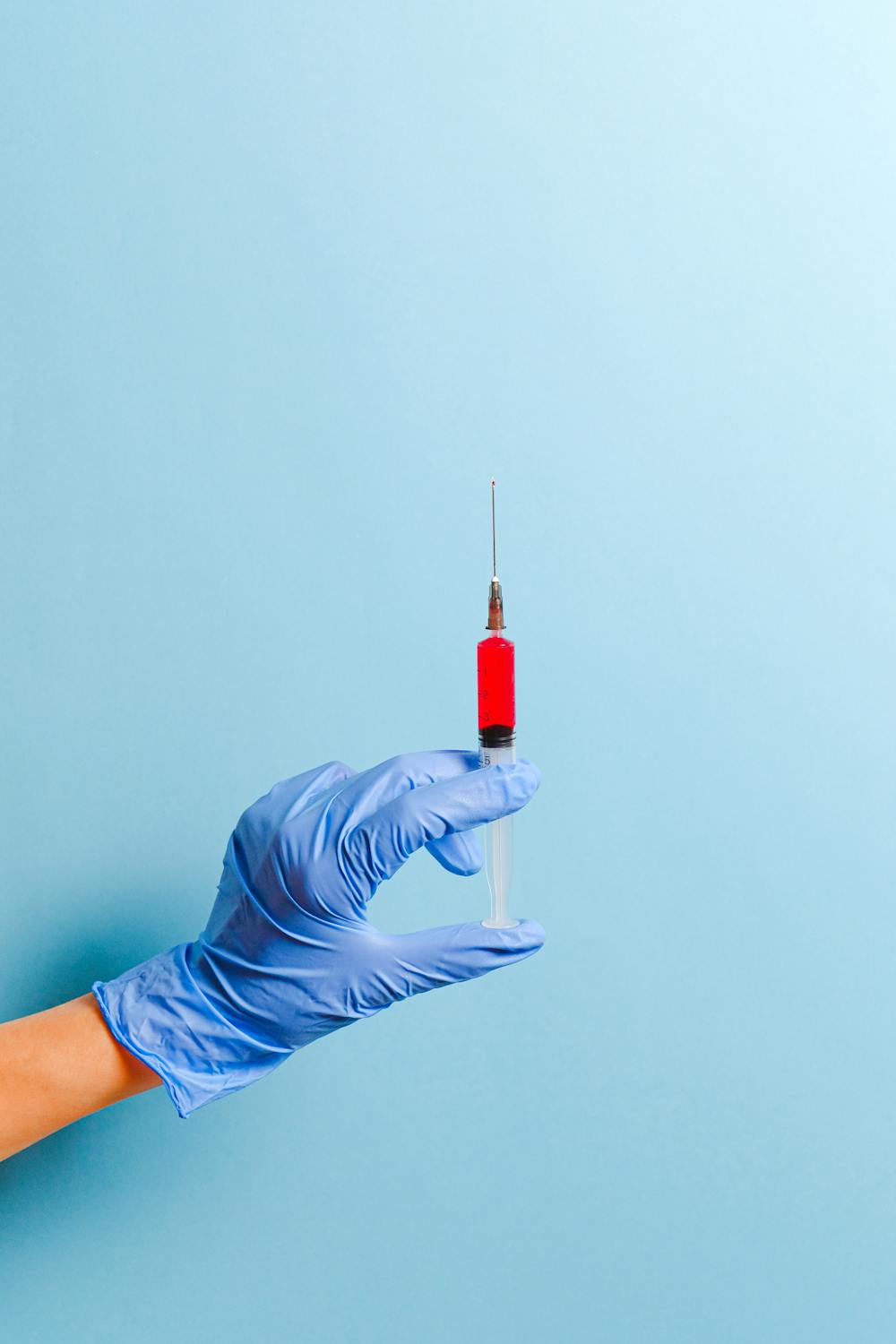
(Anna Shvets/Pexels)


[Summary]
The government has purchased three vaccines and expects that vaccination can commence as soon as early next year.

Professor Yuen Kwok-yung, together with 3 other medical professors, said that preliminary experiments have shown that the three vaccines can induce the right amount of neutralising antibodies to prevent symptomatic infections or serious complications, but may not be able to prevent asymptomatic infections, reduce the release of viruses from the upper respiratory tract, and therefore the patient may still infect other people. Also, the duration of protection and the amount of booster are yet to be proven.

The article mentions that China's Sinovac Biotech vaccine has the least side effects among the three vaccines in the phase I and II clinical studies, but the immune response is weaker and the protection time is expected to be shorter.

Shanghai Fosun and Pfizer/BioNTech vaccines have better protection and are relatively safe, and the chemical composition is simple, so it is easier for the laboratory to do quality assurance analysis.

The vaccines developed by AstraZeneca and Oxford University need to be carefully monitored because of two cases of transverse myelitis side effects, and it is believed that the vaccines of Kexin and Fosun and BioNTech should be used first; health care workers, the elderly, the chronically ill, border control personnel and people in high-risk occupations should be given priority.

The article also pointed out that the universal vaccination program is a matter of urgency and must be carried out quickly, extensively and openly, with transparent and open information, while respecting the wishes of the public and giving them the opportunity to choose freely.

20200511

Julian Turan: Children and Teenagers’ Blood Shed on Hong Kong Street at Mother’s Day Night

Children and Teenagers’ Blood Shed on Hong Kong Street at Mother’s Day Night
By Julian Turan


For the children of some mothers, what they have gone through tonight might be an unforgettable trauma in life that any parent wants to see the least: brutal arrests of their children covered in blood. 

Protests have started in the afternoon across Hong Kong but the crackdown intensified as night fell. Multitude of shop owners wished the ease of the coronavirus pandemic would bring customers to revive their businesses from critical conditions. However their wishes have perished tonight as Mongkok, one of the most vibrant commercial districts featuring all types of retailers in the city, became the epicentre of the Mother's Day protest.

Beside a mass arrest of more than 100 pedestrians in one of the most popular street for shopping, Sai Yeung Choi street South, it was shocking to witness how many young people, literally children and teenagers were arrested violently by Hong Kong Police tonight. 

The arrest of children started from a 13yo boy at Gateway shopping mall in the afternoon. He claimed to be reporting as an aspired journalist but subsequently pinned on the floor. It took around 100 riot police with batons and rifles in hands to arrest a boy, as passers-by gathered with shock and discontent expressed.

After 20:00, as police stormed the streets of Mongkok, a trendy shopping area favoured by most young people. More boys and girls in their teenage were seen fiercely pinned on the floor in their necks, spines and tailbones by raiding riot police and arrested. Some of them even covered in blood as reporters observed. 
Children walking with their mothers were not immune from the mass arrest. A woman in her 50s was peppersprayed directly in the face after telling policemen she was the mother of the boy they held. In the interviewed that I did with her, she said it was supposed to be a wonderful Mother’s Day after-dinner-walk. Instead of a Mother’s Day gift she was expecting from her son, she witnessed her son held captured by the riot police raiding right from the street corner. “As a mother, of course, I would simply tell them (the police) that it was a mistaken arrest, that he was my son!” She added.

Another mother (in yellow circle in this photo) was seen weeping as begging the police to release 2 of her daughters, aged 12 and 14 who were just out for desserts after dinner. The bitterness of witnessing her daughters being captured tore her heart at the festive night. 

Carrie Lam, as a mother of 2 who she sent to the UK long time ago, claimed she has always stood on the side Hong Kong young people and would unreservedly fight for their futures. As she saw children’s blood shedded on the streets of Hong Kong and heard mothers’ wails as the consequence of her commands to the police force, can she fall asleep tonight?

*This writer is a guest reporter from Mad Dog Daily of Hong Kong and an alumnus from the Moscow State Institute of International Relations

(Photo/Citizen News)

20200320

Yuen Kwok-yung, D Lung: Pandemic Originated from Wuhan; Lesson from 17 Years Ago Forsaken

Pandemic Originated from Wuhan; Lesson from 17 Years Ago Forsaken
on 18 Mar 2020 (Ming Pao Daily); translated by JL@HKCT, written by Yuen Kwok-yung, David Christopher Lung
Original: link 

Winter of Jihai (2019), a virus began in Wuhan. Comes spring of Gengzi (2020), an epidemic broke out in Hubei. Within China, there were 80,000 confirmed cases, and 3,000 deaths. People were confined in their homes and the epidemic only began slowing down towards the end of the month, yet the virus had leaked to the world outside before it could be stopped. In March, it was a pandemic, only it was announced too late by the World Health Organization (WHO). Countries lacked measures and reserves, and the pandemic swept across the globe. Singapore, Hong Kong, Macau, and Taiwan were spared from the pandemic with continuous sprinkles of overseas imported cases and small groups, but have not yet fallen.


This pandemic came from a virus, shaped like a crown (corōna in Latin), hence named Coronavirus. Since 2015, WHO has avoided using names of people, places, animals, food, culture, occupation, etc., to name illnesses. For this one, the “year” was used for differentiation, COVID-19. In the naming of viruses, International Committee on Taxonomy of Viruses (ICTV) analyses only the genome sequencing meticulously and disregards the other aspects. Since the genome sequence of this Coronavirus was “not novel enough”, it belongs in the same sisterhood with the SARS Coronavirus, also known as SARS 2.0 (SARS-CoV-2). Local and international media call it the Wuhan Coronavirus or Wuhan Pneumonia, simple and straight-forward, which is not incorrect.

Much controversy has resulted in society regarding the name of this pandemic. In fact, the illness was named by WHO, while the virus was named by ICTV. Nicknames are conventional, as long as they are clear and understood. In scientific discussions or academic exchanges, COVID-19 or SARS-CoV-2 must be used. In daily public communications or media wordings, Wuhan Coronavirus or Wuhan Pneumonia are both conventional, easy to understand, and great for communication purposes.

The Pandemic of Gengzi, an Origin in Wuhan

Around 75% of the newly discovered infectious diseases originated from wild animals. Among the few that could infect mammals is the Coronavirus, whose ancestral virus originated from bats or avians. Both have the ability to fly thousands of miles to the place the virus was first discovered, therefore the naming of a virus would also include its place of origin. To investigate the origin of a virus, the correct and objective way is to isolate the virus from the animal host. Unfortunately, since Huanan Seafood Wholesale Market was eradicated early on, the wild animals in the market were already gone by the time researchers had arrived to collect samples. The identities of the natural host and the intermediate host became a mystery. According to the locals, the wild animals sold within the Market came from all over China, Southeast Asia, and Africa (smuggled) to be distributed from there. The ancestral virus of the Wuhan Coronavirus cannot be determined.

Using genome sequencing to determine its origin, a bat Coronavirus stand (RaTG13) was found to be extremely similar to the Wuhan Coronavirus, with a sequencing similarity of 96%, therefore it is believed to be the ancestral virus stand of this Wuhan Coronavirus. This particular virus strand was obtained and isolated from Yunnan bats (Rhinolophus sinicus), and bats are believed to be the natural host of this Wuhan Coronavirus. Epidemiology clearly indicated Huanan Seafood Wholesale Market as the amplification epicentre, where there was a huge possibility that the virus had cross-infected between the natural host and the intermediate host, and then mutated within the intermediate host to adapt to the human body, followed by human-to-human infections.

The identity of the intermediate host remains unknown, but genome sequencing indicated that the Spike Receptor-binding domain of the Wuhan Coronavirus has a 90% similarity to that of the pangolin Coronavirus strand. Although the pangolin could not be confirmed as the intermediate host, it is highly possible that this pangolin Coronavirus strand donated Spike Receptor-binding domain DNA (or even the entire sequence) to the bat Coronavirus strand. Though gene shuffling recombination, the novel Coronavirus was born.

Wild Animal Market, the Origin of Innumerable Viruses

The 2003 SARS virus originated from Heyuan, became an epidemic in Guangdong, and passed to Hong Kong. The SARS Coronavirus was found in civets, and China clearly banned the trading of wild animals afterwards. 17 years on, the wild animal market has run amuck. The Chinese have outright forgotten the lessons from SARS and have allowed a live wild animal market to exist within the centre of a highly developed city, with wild animals being cooked and eaten in brought daylight – simply astonishing. The faeces of the animals within a live wild animal market contain a large amount of germs and viruses. With a crowded environment, vile hygiene, and a mix of wild animal species, gene shuffling and mutation could easily occur in viruses, therefore these markets must be banned.

Reform of the wet markets should be a focus of epidemic prevention. The mainland Chinese and Hong Kong governments must quickly improve these environments by enhancing ventilation and pest control. Before the complete elimination of live-animal markets, animal faeces must be well handled to minimise the chances of gene shuffling in viruses.

The online rumour that the virus originated from the US was absolutely groundless, delusional. Stop spreading the falsity before we expose ourselves to ridicule. To remain calm before a pandemic, informational transparency is of the utmost importance. With calm and objective analysis, refrain from parroting others and spreading hearsay. Not strictly enforcing the closure of all wild animal markets after SARS was a grave mistake. In order to defeat an illness, one must own up to the mistakes and face the truths. Stop committing the same mistakes and putting the blame onto others. The Wuhan Coronavirus was a product of the inferior culture of the Chinese people: excessive hunting and ingesting wild animals, inhumane treatment of animals, disrespecting lives. Continuing to devour wild animals for human desires, the deep-rooted bad habits of the Chinese people are the real origin of the virus. With this attitude, in a dozen years, SARS 3.0 is bound to happen.

(Dr Lung graduated in 2004 from the University of Hong Kong, Faculty of Medicine with distinction in Medicine. He currently works in the Hong Kong Children’s Hospital, where he built up the microbiology team and lab. Yuen Kwok-yung is a Professor and Chair of Infectious Diseases of the Department of Microbiology of the University of Hong Kong)
***
00:07 19 Mar: Yuen Kwok-yung & Disciple Withdraw & Apologise over Article "Pandemic Originated from Wuhan; Lesson from 17 Years Ago Forsaken"

Ming Pao Daily, which printed the article written by renowned biologist Yuen Kwok-yung and disciple David Christopher Lung, withdrew the article tonight.

They said they are scientists chasing after science and truth, and knew nothing about politics. They said they never intend to be involved in politics. They apologised that the expression was not appropriate and words used were wrong. This was not their intention, and they stressed that the article has nothing to do about politics. They are sorry for causing the misunderstanding due to the "typos". They did not mention what were the words and expressions involved.

However, their article did place Singapore, Malaysia and other countries together with the Republic of China. Later they changed the words to Taiwan. Now they decided to withdraw the article.
***
2020年3月18日 星期三 《明報》觀點版

龍振邦、袁國勇:大流行緣起武漢 十七年教訓盡忘


己亥冬,疫發武漢。庚子春,湖北大疫,國內疫者八萬餘,死者三千。民不出戶月餘始遏,惟疫未止已外傳。三月,全球大疫,世衛後知,未及宣布大流行。諸國欠措施缺儲備,迅大疫。星、港、澳及台暫免於大疫(原文為「星、港、澳及中華民國皆免於大疫」,作者其後訂正為「星、港、澳、台暫免於大疫」),惟零星海外輸入之症及小群組不絕,尚未失守。

此疫由病毒所致,因其形如冠,故名曰冠狀病毒。世衛由2015年開始避免用人名、地名、動物、食物、文化、職業等為疾病命名。故是次以「年份」為此病冠名以資識別,稱此病為冠狀病毒感染-19(COVID-19)。國際病毒分類委員會(International Committee on Taxonomy of Viruses, ICTV)以病毒基因排序為命名標準,每段基因逐一細心分析,其他因素不作考慮。蓋因此冠狀病毒基因排序「未夠新」,屬沙士冠狀病毒的姐妹,故稱之為沙士冠狀病毒2.0(SARS-CoV-2)。民間及國際媒體則稱之為武漢冠狀病毒或武漢肺炎,直接簡單,亦無不可。

社會上就此疫之命名爭議甚多,事實上疾病之名由世衛起,病毒之名由ICTV起,而俗名則是約定俗成,清楚明白便可。科學研討或學術交流,必須用官方名字COVID-19稱此病或SARS-CoV-2稱呼病毒。市民日常溝通及媒體用語,則可以武漢冠狀病毒或武漢肺炎稱之,通俗易明,方便溝通。

庚子大疫  始於武漢
約75%之新發傳染病源於野生動物,而數隻能感染哺乳類動物的冠狀病毒,其元祖病毒(ancestral virus)則源於蝙蝠或雀鳥。兩者皆能從數千公里外飛抵發現病毒之處,故病毒之命名系統亦會以發現處名之記之。欲查病毒之源,準確客觀之法乃從動物宿主身上分離出病毒。可惜華南海鮮批發市場早被清場,研究人員抵達蒐證取樣本之時,場內之活野味早已不知所終,病毒之天然宿主(natural host)及中間宿主(intermediate host)身分成疑。據當地人員述,華南海鮮批發市場內之野生動物從中國各地、東南亞各國及非洲(走私出口)運抵此處集散,武漢冠狀病毒之元祖病毒源於何地則無從稽考。

以基因排序之法尋源,查得一隻蝙蝠冠狀病毒株(RaTG13)與武漢冠狀病毒極為相近,其排序高達96%近似,故相信此病毒株為武漢冠狀病毒之始祖。此病毒株於雲南的中華菊頭蝠(Rhinolophus sinicus)身上分離得之,故相信蝙蝠乃武漢冠狀病毒之天然宿主。流行病學研究明確顯示華南海鮮批發市場為初期擴散點(amplification epicenter),病毒很大機會在場內由天然宿主交叉感染中間宿主,再於中間宿主體內出現適應人體之突變,繼而出現人傳人之感染。

中間宿主身分未明,但基因排序顯示武漢冠狀病毒S蛋白受體(Spike Receptor-binding domain)與穿山甲冠狀病毒株近似度高達90%。雖然未能確定穿山甲為中間宿主,但此穿山甲冠狀病毒株極可能捐出S蛋白受體基因(甚至全段S蛋白基因)給蝙蝠冠狀病毒株,透過基因洗牌重組成為新的冠狀病毒。

野味市場  萬毒之源
零三沙士,疫發河源,廣東大疫,傳香港。沙士冠狀病毒於果子狸身上尋得,其後中國明確禁絕野生動物交易。十七年矣,惟野味市場禁而不絕,而且愈趨猖狂。中國人完全忘記沙士教訓,讓活野味市場立足於先進城市之中心,明目張膽售之烹之吃之,令人側目。活野味市場內動物排泄物多含大量細菌病毒,環境擠迫、衛生惡劣、野生動物物種交雜,病毒易出現洗牌及基因突變,故須禁之。

改革街市為防疫重點,中國政府及港府必須迅速改善環境、加強通風、滅蟲滅鼠。在完全淘汰活禽市場前,必須妥善處理禽畜糞便,減少病毒洗牌機會。

網傳病毒源自美國之說,毫無實證,自欺欺人,勿再亂傳,以免貽笑大方。臨大疫而不亂,首重資訊透明,冷靜理性分析,勿人云亦云,以訛傳訛。沙士後沒有雷厲風行關閉所有野味市場乃大錯,欲戰勝疫症,必須面對真相,勿再一錯再錯,諉過於人。武漢新冠狀病毒乃中國人劣質文化之產物,濫捕濫食野生動物、不人道對待動物、不尊重生命,為滿足各種欲望而繼續食野味,中國人陋習劣根才是病毒之源。如此態度,十多年後,沙士3.0定必出現。

作者龍振邦是香港大學李嘉誠醫學院微生物學系名譽助理教授,袁國勇是香港大學李嘉誠醫學院霍英東基金(傳染病學)教授
***
「追求科學真理 無意捲入政治」 龍振邦袁國勇撤回文章 (23:38)
本報觀點版今日刊登香港大學李嘉誠醫學院微生物學系名譽助理教授龍振邦,及香港大學李嘉誠醫學院霍英東基金(傳染病學)教授袁國勇來稿〈大流行緣起武漢 十七年教訓盡忘〉,龍振邦及袁國勇現撤回文章。

龍振邦及袁國勇表示,他們是科學家,終身追求科學真理,不了解政治,也從來無意捲入政治。「文章表達不適當,用詞甚至有錯誤,並非原意,希望外界不要把我們捲入政治,留給我們一個空間研究。」

他們稱,該文與政治無關,旨在提出尊重真相、移風易俗。若當中的手民之誤引起任何誤會,龍振邦及袁國勇表示歉意。
***
2020年3月22日 蘋果日報

〈大流行緣起武漢〉文言版 - 馮睎乾

昨天邵頌雄教授撰文,評龍振邦、袁國勇的〈大流行緣起武漢 十七年教訓盡忘〉,點出了不少人皆忽略的問題:文風。邵兄評它「文筆風格夾雜」,開場白是「無厘頭的半白話」,「初看還以為是引用網上流行好幾篇以『荊楚大疫』為題的文言潮文」。龍、袁為什麼用這種表達方式?寫法是否恰當?從文學角度談這篇文,大概比政治角度有意義得多。

先看〈大〉文開首數句:「己亥冬,疫發武漢。庚子春,湖北大疫,國內疫者八萬餘,死者三千。」一般白話固然不這樣寫,當作文言也有問題,如「疫者」兩字就有點怪,似是生造詞,文言通常寫「民疾疫者」、「疾者」、「感癘者」之類,以「疫者」指稱染武肺的人,有點語病。但邵兄說〈大〉是把網上文言潮文「改頭換面」,我則不敢苟同。我認為這篇文的寫法,根本是其中一位作者龍振邦向來的文風。

龍、袁合撰文章已有多年,我看過他們在《灼見名家》發表的作品,處處見「半文言」風格。據我推測,〈大〉的風格是龍振邦的,他在《灼見名家》的簡介這樣寫:「龍振邦,香港大學醫學院畢業。傳染病及微生物科醫生,專研小兒科傳染病。愛憶舊懷古,以史為鑑。」尾句的描述,完全符合那「民國穿越而來」的筆法。我印象最深的,是在龍醫生有份寫的〈白文信:我只是巧匠凡醫!〉中,把十九世紀蘇格蘭醫生白文信(Sir Patrick Manson)的英語筆記引文,一律譯為文言,還把外國學者評論白文信的話翻成打油詩:「醫學會上觀奇文,方知世事如斯神。白君如非驚世才,定是醉鄉夢裏人。」可惜他沒提供原文。

龍醫生以「己亥」、「庚子」紀年,跟文言潮文的確偶合,但意義不一定相同。熟悉歷史者均知道,陶淵明的「甲子書年法」不是隨意的。《宋書·陶潛傳》說:「(淵明)所著文章,皆題其年月。義熙以前,則書晉氏年號;自永初以來,唯云甲子而已。」「義熙」是東晉末年號,「永初」是劉宋第一個年號。《宋書》所言,表示陶潛在晉代所作的詩文,會書晉氏年號(有時也書甲子),但入宋後淵明也許「恥復屈身後代」,則決不書宋氏年號,只以甲子紀年。

龍醫生到底是致敬陶淵明的「唯云甲子」,抑或翻炒大陸人的無聊潮文,見仁見智,我沒特別看法。但如果有中共人認定是前者,我建議「批鬥」龍醫生之餘,也千萬不要忘記揪出始作俑者陶潛——中國士人所有優良文化傳統,黃俄共黨都會看不順眼,這就叫「逢中必反」。

最後,朋友認為〈大〉的文風既不統一,建議我整篇譯成文言,但逐字翻譯只會不倫不類,也沒太大意義,所以我姑且撮要地「超譯」這篇〈大流行緣起武漢〉,以誌此「文壇」盛事:


己亥冬,疫癘初發於武漢,府官弗問,黔黎弗知。及庚子春,湖北之疫大興,吏民始怵然而懼。政府見疫將大行,遂禁民出戶。唯害氣已流行荊楚,播越四方,罹之者不可勝數,或猝死溝壑,或頓踣康衢,或闔門而殪,或覆族而亡。一月之內,民疾疫者八萬餘,歿者三千。荊楚民眾雖絕足月餘,然癘氣不止,其流播乎赤縣,遠及海外,為害亦大矣!世衛失官,昧昧焉不知預警,致諸國無備。三月,大疫熾於寰宇,唯臺灣、香港、澳門、星國免焉。若乃疫疾之源,為冠狀病毒,此病學名冠狀病毒感染-19,俗稱武漢肺炎。病毒之命名,每據病毒宿主之所在。今冠狀病毒之能感染哺乳類動物者,其宿主或蝠或鳥,俱可千里而來。欲究病毒之源,莫若取宿主樣本於疫氣始發之所,即武漢華南海鮮批發市場是也。然學者未及蒐證,市場已為吏曹洗濯一空,故元祖病毒之發源地,無從稽考。或以基因排序法溯源,則蝙蝠蓋病毒天然宿主,而華南海鮮市場為疫氣始發之處,庶幾可知。或曰病毒源於美國,其為無稽之談,愚氓之論,自不待言。疫癘橫行,傷人實多,其治本之策,一曰求真,二曰教民。求真則反求諸己,知疫起之因,在市場不潔,風俗乖戾。教民,使之去野膳之陋俗,返文明之正道,則可防疫癘於未然。若官府政教失所,庶民冥頑不靈,則沙士大疫,必再三發矣!可不慎乎?