20170625

[HKBUEB] What Is Agriculture in Hong Kong Indeed?

What Is Agriculture in Hong Kong Indeed?
Translated by Natalie Lung, edited by Chen-t'ang, written by Edith Lam (Jumbo, 48th Editorial Board of HKBU)
Original: http://issuu.com/_hkbusueb/docs/jumbo_48.1 [pp. 47-50] 2015 


A brief history of agriculture in Hong Kong

In the 1950s, immigrants from Mainland China (China) became the majority of Hong Kong’s farming population and grew rice for a living in Yuen Long and Fan Ling in the New Territories. Due to the development of new towns in the 60s, they shifted their focus to growing vegetables. The original agricultural labour force gradually decreased under urbanisation.

Ten years later, China lifted the export quota of vegetable produce to Hong Kong, thus forcing local vegetable farmers to pivot again—to fishing or animal rearing. 

In the matter of a few decades, land used for farming drastically dropped from the then thirteen thousand hectares to the present seven hundred or so hectares. Self-sufficiency rate went from a peak of 50% to today’s 2%. 

Agricultural land in Hong Kong today are mainly distributed in the north to northeast New Territories: Fan Ling North, Kwu Tong North, and Ta Kwu Ling; and the west to northwest area: Kam Tin and Pat Heung. 

From yesterday’s thriving agriculture to today’s financial and real estate industries, the Pearl of the Orient has replaced the fishing village—is the decline of agriculture merely a natural progression of history, or is it disregarding diverse, sustainable development?


Indispensable local agriculture

Why should agriculture be revived when Hong Kong has been heavily reliant on imported food for the last few decades?

The main reason is to attain a certain degree of food self-sufficiency; in other words, it is to reach a certain self-sufficiency rate.

Each country must have a food producing industry to minimise its reliance on imports and to reduce the effects of food price inflation.

During the 1967 labour strikes, hawkers and meat suppliers refused to deliver their goods; even pork and vegetables that had already been shipped from the Mainland to the train station in Hong Kong had to be returned. This lasted for four days. 

Since 60% of food came from Mainland back then, a shortage in the supply of agricultural produce emerged. Food prices soared twofold. But it was the self-sufficiency in farm produce Hong Kong had that pulled the city through the crisis. 

In 2012, the supply of Choi Sum from China dropped by three to four% due to a cold climate. Vegetable prices surged from five to six dollars per kilo up to twenty dollars per kilo. The public was forced to purchase expensive vegetables. 

With today’s agricultural labour force in the Mainland shrinking due to urbanisation, farmers’ wages would definitely increase. Coupled with the continuous revaluation of the Renminbi, it can be easily foreseen that Mainland vegetables would become increasingly expensive even without accounting for environmental factors. 

If Hong Kong continues to rely on China's vegetable supply without its own agriculture, the vegetable price would surely fluctuate.

Hong Kong also needs local agriculture to improve food safety. News about tainted food produce is not new. The import of contaminated vegetables from Dongguan in 2012 left many stunned; even after the matter was cleared up, members of the public still felt wary.

In 2015, Cable News uncovered a tainted vegetable smuggling incident where vegetables with exceeding levels of pesticides were directly shipped and sold at several wet markets, circumventing tests at the Centre for Food Safety. This was all unbeknownst to consumers.

If there is local agriculture, Hong Kong people could enjoy more produce that is grown on healthy land and on fertiliser whose source is clearly known, in turn safeguarding food safety.
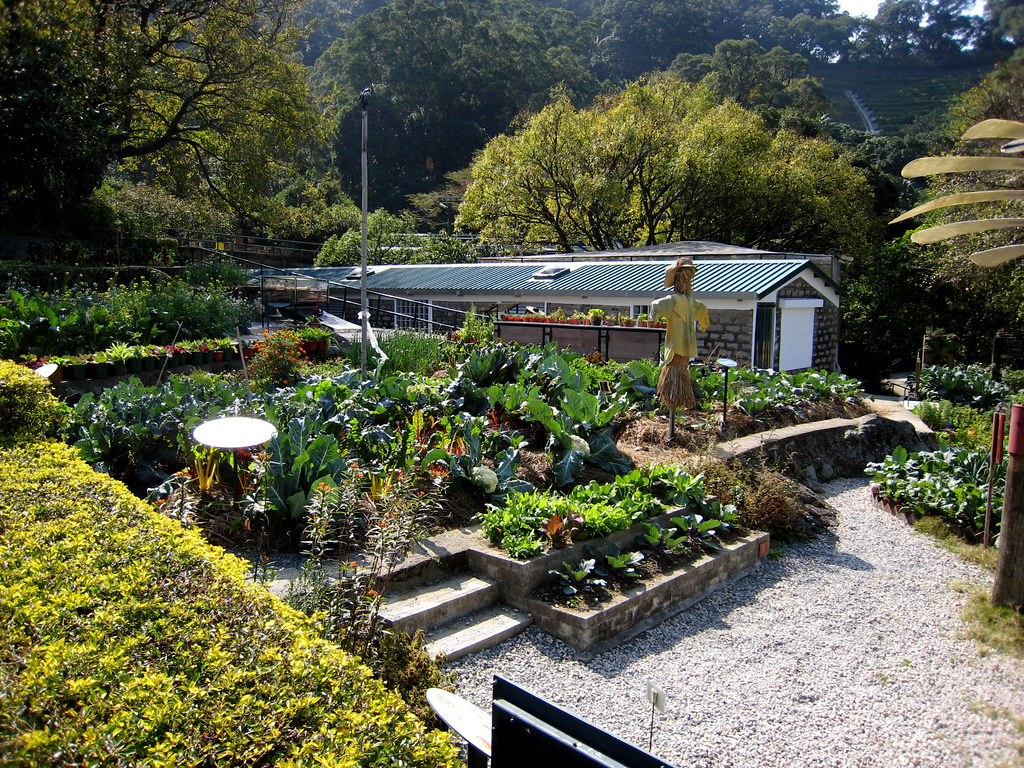
Kadoorie Farm.

Land shortage: an obstacle for agriculture development

It is no doubt that land shortage is the biggest obstacle for local agricultural development. 

According to the Agriculture, Fisheries and Conservation Department, Hong Kong has 4,523 hectares of farm land, but active agricultural land only amounts to 729 hectares, and only 298 of those are used to grow vegetables. 

People who desire to farm could hardly rent land in the New Territories. Although they could reach out to landlords and seek suitable land through the Agricultural Land Rehabilitation Scheme, the average waiting time is five years. Furthermore, the quality of farmland is uneven in quality. 

At present, there are 3,794 hectares of vacant farm land. Land ownership is concentrated among indigineous people and developers who have had no desire to rent the land out to farmers.

Some of the land has been hoarded for developers to purchase for the development of new towns; Some has been repurposed for illegal uses such as outdoor warehouses, container yards, chop shops, and waste recycling yards. 

In addition, Hong Kong has 803 hectares of brownfield sites—farmland that has been destroyed by construction waste and concrete. They could hardly be turned into arable land again as the environment and ecosystem around it have been destroyed.

Non-indigenous farmers also suffer from short-term leases. Most farmland is leased to farmers on a two-to-five-year contract, but building infrastructure like water canals, conducting water and land observations, and adjusting plantation methods take two years, and the instability of renewing a lease leaves people worried about not being able to breakeven before land is taken away from them. 

Under such substantial risk, farmers become reluctant to make long-term investments, indirectly minimizing the potential for agricultural development. 
Policies ignore the root of the problem

The new agriculture policy proposed by former Chief Executive Leung Chun-ying in his 2015 Policy Address comprises four main goals:

The policy’s consultation document advocated the use of technology for sustainable agricultural development. It included several examples of modern agricultural production methods, such as organic farming, greenhouse production, etc., and pointed out how hydroponic farming practices in Singapore and greenhouse farming in London can raise agriculture productivity.

Agricultural organizations and academics believe that the government did not consider the long-term planning of agriculture development in the consultation document.

A major criticism was the absence of a target for self-sufficiency rate. The document mentioned the need for increasing agriculture productivity but it did not set clear metrics for such a goal. It criticises self-sufficiency rate as a metric that values quantity over quality, and setting such a target would instead cause productivity to drop, making it an unrealistic reference for food supply. 

As a matter of fact, many countries around the world have set goals for self-sufficiency. While China’s Ministry of Agriculture had required Guangzhou to set a self-sufficiency target of 50% or above for live pork by 2016, the Hong Kong government is avoiding the self-sufficiency issue that is causing huge ramifications on food safety.

The policy also did not account for the use of the 70 to 80 hectare farmland outside the Agricultural Park. 

Resolving the shortage and the deliberate destruction of farmland are key factors for developing agriculture. The aforementioned 3,000 or so hectares of abandoned farmland should be utilised to increase the area of active agricultural land and the output of crops. Meanwhile, the document did not propose a resolution to the brownfield sites issue that has arisen due to the government’s loose grip on illegal soil dumping, nor has there been any measures to crack down on such illegal behaviour.

Furthermore, the idea of the Agricultural Park has been criticised as unrealistic.

Nowadays, many farmers live in farmhouses next to their land in the New Territories. Such an arrangement allows them to care for their crops any time of the day, which could also reduce the time for travelling to and from the city.

But Agri-Park is an earmarked piece of land that would be leased out to farmers on 5-year contracts, and with no supporting infrastructure, it goes against the customary practice of farmers living and working on the same piece of land. Many problems will arise if the Agri-Park is built.

Academics predict that the agriculture fund would go to industry practitioners who own capital and large-scale vegetable markets, robbing small farmers of chances to improve their livelihood.

The funding scheme aims to reward high-tech agricultural production, such as the introduction of machinery and other modern methods, all of which cost a fortune and are impossible for ordinary farmers to afford.
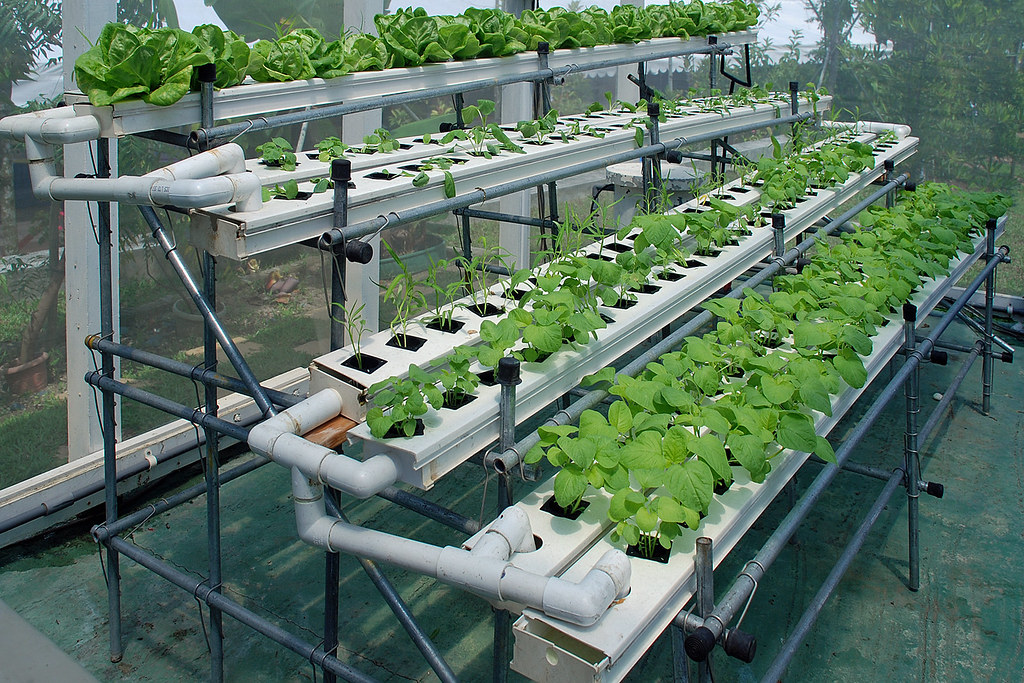
Take hydroponic farming as an example. It is an indoors plantation method which uses nutrient solution and does not require soil. This way, crops can be arranged in vertically stacked layers. However, basic equipment costs $3 million—that is excluding energy costs. Small farmers who could not afford to employ technology in their farming techniques are essentially placed out of reach of funding assistance. 

On the other hand, vegetable farmers who moved up to China in the 1990s to grow their crops and may now have higher economic status may return to Hong Kong to become the main beneficiaries of the scheme.

Furthermore, the two overseas use cases of agricultural technology mentioned in the consultation report are not worthy of reference. 

The hydroponic techniques used in Singapore are highly energy-inefficient and cause destruction to the environment, not to mention their sky-high costs compared to organic farming. 

Hydroponic farming consumes much energy to power water pumping, lighting systems and the production of nutrient solution. If hydroponic farming is to be practiced on farm land in Hong Kong, there is first a need to remodel the land into concrete ground. Industrial farming methods and the use of chemical fertilizers containing heavy metals will then introduced. It is obvious that hydroponic farming is not an environmentally-friendly and sustainable way to grow crops. 

The document also referred to London’s 120-hectare greenhouse and its high GDP value, but the size of farms in the New Territories are only 0.2 hectares on average. Land over a hundred hectares is hard to come by in Hong Kong. 

These two examples are an indication for the government’s top-down mindset for development and ultimately, their ineptness to understand the reality of the agriculture industry.
What are the ways out for agriculture development?

The prospect of increasing agricultural productivity does not lie solely in large-scale plantation. Neither is the goal of Hong Kong’s agriculture development to produce the volumes that would allow for exports. Small-scale agricultural models—community or combined farming—may be more viable.

According to the Trade and Environment Review released by the United Nations in 2013, organic, small-scale farming is the only sustainable mode of agricultural development. 

Unlike industrial farming, the small-scale farming model share a more intimate connection with the natural ecosystem. Agriculture should not be seen solely as an industry that produces food, but rather, one that protects natural scenery, biodiversity, water and land resources.

In addition to resource-recycling, having agriculture in our society can help safeguard local food safety. Fresh crops grown by local farms could be delivered and sold at farmers’ markets on the same day. People could know where their vegetables came. If they were dissatisfied with the quality of vegetables, their feedback could be reflected to farmers directly. Communication between the consumer and producer can be increased.

Reusing residential and commercial food waste as fertilizers not only reduces waste, but it also ensures that the fertilizer is safe to use, which further safeguards the quality of crops. 

Academics predict that farming would resume on more than 3,000 hectares of idle farm land. Based on the degree of food consumption in Hong Kong, a 27% self-sufficiency rate could be attained.

Food waste is a severe problem in Hong Kong. Given that over one third of solid waste produced by the city is food waste, if food waste is reduced, self-sufficiency rate could reach an estimated 40%, which is enough to satisfy a certain degree of Hong Kong’s food supply.

But the new agriculture policies’ focus on modernization technology distances agriculture and the environment, and neglects the consequences of high carbon emissions and environmental pollution. 

Academics describe high-tech agricultural development as nuclear power: both have high production value, but the price of destroying the environment is something that the public can hardly afford to pay.

Agriculture and cities are inseparable; their development requires holistic and clear land planning. Relying on advanced technologies and putting off land issues can only do so much to solve the root problems.

“There’s no agriculture without farmland”
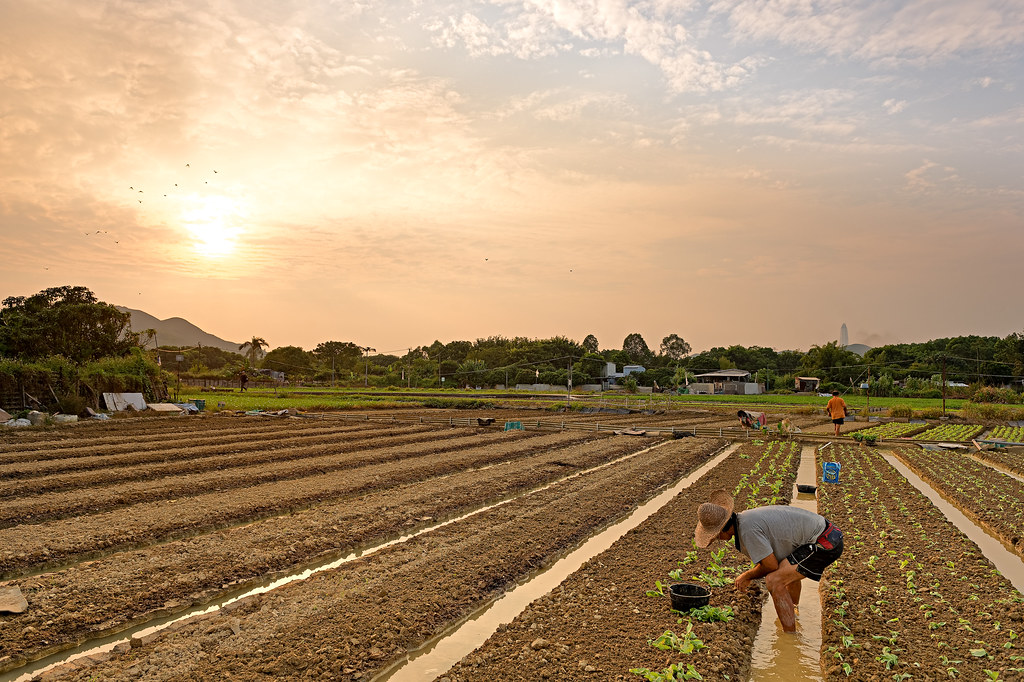
Facing shortage of farmland, some farmers believe the government should adopt policies that would encourage developers to release the hoarded farmland. For example, the Chinese government charges an idle land tax on land that has not been developed or falls short of the required ratio of constructed area to proposed constructed area. They could even reclaim the idle land.

Hong Kong should also adopt similar policies, encouraging developers to lease their land to farmers to avoid penalty. 

In addition, with the copious amounts of farmland being converted to other uses and to brownfield sites, the government should first improve its planning policy.

Each area of land on the plan has one of these two uses: “Column One use” refers to “uses always permitted” and “Column Two use” refers to “uses that would require permission from the Town Planning Board”, so land that has been earmarked as farm land does not necessarily serve the sole purpose of agriculture, but could also be used for housing or clubhouses.

Recently, some developers proposed three applications, including one to build 270 low-density apartment buildings and an international boarding school in the Tsiu Keng agricultural zone in Kwu Tung South. The proposal was accepted because farm land in the area in question has “school” listed under one of its “Column Two use”. 

Academics pointed out that between 1997 and 2002, 1070 of the 1734 applications for land use change were successful, in other words, a 60% success rate. 

The government does not have regulations on the proportion of the land that is used for farming, and with the low threshold on land use change, zoning plans for agriculture exist in name only.

There also exists loopholes in Town Planning Board’s regulations. Private land that has been excluded from the Development Permission Areas Plan (i.e. the first version of the Outline Zoning Plan (OZP) cannot be regulated, leading to the rise of numerous brownfield site issues, such as the fly-tipping in idle farmland in Pui O in 2015. 

As for farmland that has been included in the district plan blueprint, the government has been ineffective in enforcement and tolerant of destructive practices. 

In fact, the above planning problems has been a topic of discussion for a long time, but government has been consistently indifferent, just as it has been in formulating the new agricultural policies.
Who’s gaining under this policy?

In Hong Kong Connection aired on 16 March 2015, the RTHK-produced Chinese TV programme on current affairs, Chairman of the Federation of Agricultural Associations of Hong Kong Chan Kin-yip pointed out that this consultation paper reflects on the feedback given from his group to the government on agriculture policy and the concept of Agricultural Park.

The organization, which was established in 2013 to push for sustainable agricultural development in Hong Kong, comprises all members of the Chief Executive Election Committee from the agricultural and fisheries sector. They make up 60 of the 1200-person committee, and was elected by 159 industry representatives. 

The agricultural and fisheries sector has been receiving subsidy from the Ministry of Agriculture of China since 2009. Between 2009 and 2012, they have received a total of RMB2.2 billion in subsidy. To become eligible for subsidy, fishermen have to hold a fishing permit in China. Successful applicants could receive RMB600,000 to RMB700,000 in fuel subsidy. 

In the second round of consultations on political reforms, the agriculture and fisheries sector supported the August 31st decision by the NPC.

Profiteering in the name of development
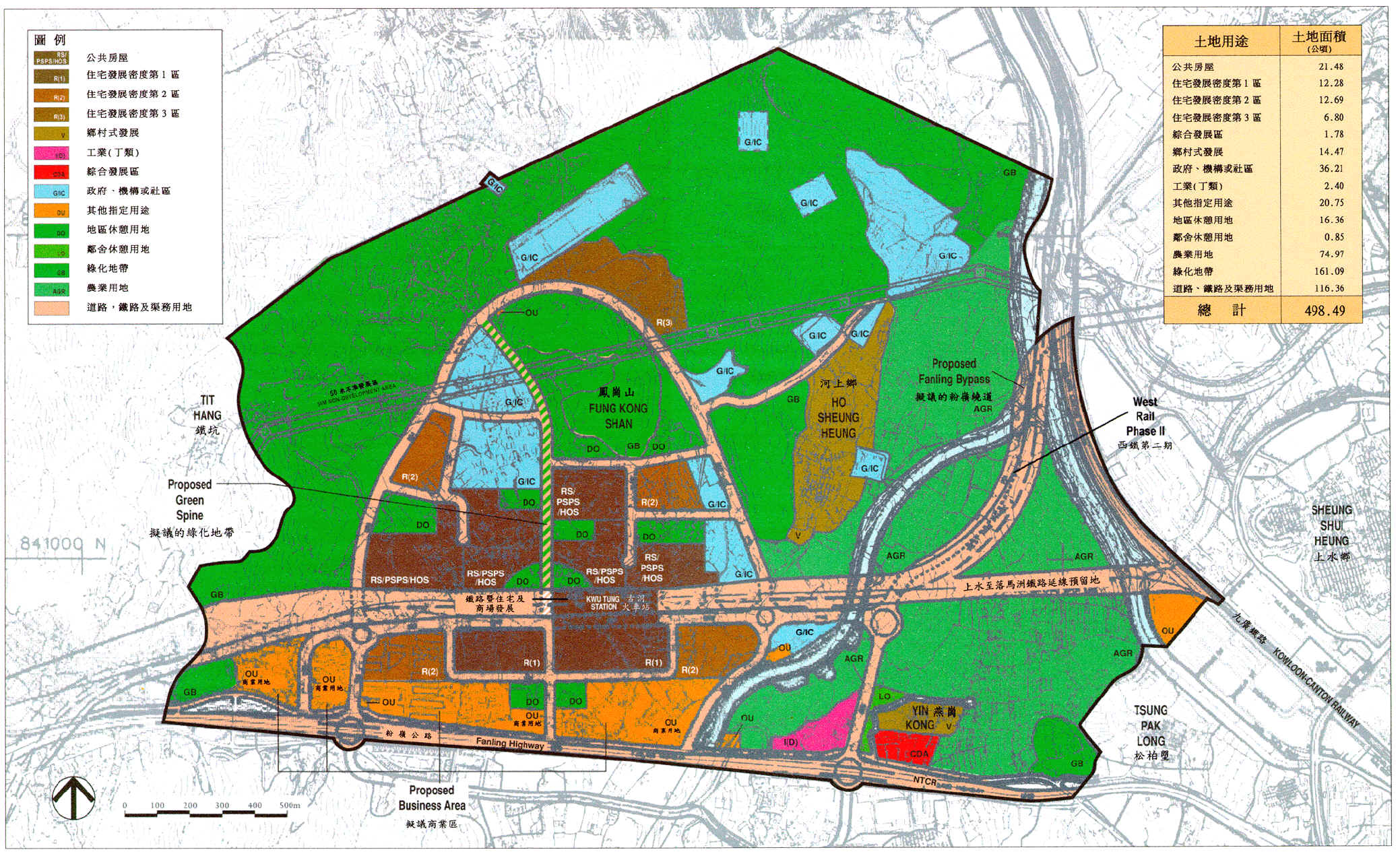
Kwu Tung North development plan.

Plans for the development of the northeastern New Territories started as early as 1996. The government led the application for land-use change of a total of 333 hectares of farmland in Kwu Tung North and Fan Ling North for residential or commercial use, which will be used for the new town extensions of Fan Ling and Sheung Shui. Land was taken away from near ten thousand villagers who were then forced to move away. Former Secretary for Development Paul Chan Mo-po and his wife also became a target for acquisition, and was going to be compensated with over $10 million. The development was an estimated $120 billion project, building 60,000 residential flats, with private housing taking the majority. 

The establishment of this plan had to go through Environmental Impact Assessment, deliberation by the Town Planning Board, and appropriation by the Legislative Council before it could go into action. Since pro-establishment legislators take up the majority seats in LegCo, it is hard to have the real public opinion reflected, hence preparation period is the major battleground for members of the public to prevent the project from going forward.

The Town Planning Board has the power over land use planning but it is chaired by a member of the Development Board, its members are either government officials, government-appointed, or those who do not reveal their identity to the public. 

Despite having 90% opposition rate and a total of 50,000 appeal letters and proposals, the North East New Territories development plan was still approved by the Town Planning Board.

In June 2014, the preliminary budget for the plan was quickly approved as Finance Committee chair Ng Leung-sing was filibustering, the same day on which there were protests and clashes outside LegCo.

In 2015, the government officially moved forward with the North East New Territories in-situ land exchange policy, in which land in two development zones is planned for private development. Under the scheme, if the land is larger than 4,000 sq.m. and is owned by a sole landlord, the landlord could apply for land use change from agriculture to high value-added uses, such as residential or commercial uses, but these land sites have to be vacated before April 2016. 

Land resumption proceedings in North East New Territories was set to begin in 2017, but the establishment of such policy encourages developers to force farmers out as early on as possible. 

It is believed that the Ping Che area, an area that was originally in the NE New Territories development plan but eventually excluded, will be included in the North New Territories development plan. 
Conclusion

Agriculture development does not only concern the interests of rural residents. In fact, it is linked to complex political and economic interests, beneath which lies all sorts of evil and injustice. All we can hope for is unity among people and the courage to challenge the authority to protect our city.


HKBU Editorial Board Facebook Page: www.facebook.com/busueb 

20170503

Guo Wengui: Cross-border law enforcement in HK; PRC uses real estate to manipulate HK’s economy

Guo Wengui: Cross-border law enforcement in HK; PRC uses real estate to manipulate HK’s economy
Original: 1 / 2 / 3 / 4 / 5 

Lau Ping 劉冰 @ Next Magazine, 3 May 2017

(1)
Guo Wengui made the entire CCP Politburo headaches, Interpol issuing a Red Warrant, and China’s Min. of Foreign Affairs to exert pressure to US congress for ending his tip-off programme on VOA. It is only him who will need the entire country’s force to deal with.

Also known as Miles Kwok, Guo said his family foundation controls over US$280 bn, enjoying lots of luxury products, cars, private jets, flats, etc. Challenging the Party is to “save his life, keep his money and revenge”, Guo claimed.

After the VOA programme was terminated, journalists and editors involved were either suspended or brought away by security guards. Guo disappeared in the press. Next Magazine found him, and he tipped off about HK.

Guo was a grass-root with low qualifications, but with good persuasion, he managed to gain a seat in the officialdom and the business world. According to China, he bribed the deputy minister of PRC Min. of State Security, and Party secretaries in Hebei and Henan have to listen to him. With these forces backing, he once called the shot in China.

Guo recently released two astonishing news - (1) President Xi Jinping does not trust CCDI head Wang Qishan and secretly asked deputy minister of public security to investigate Wang’s family and Meng Jianzhu (Secretary of Political and Judiciary Commission, Central Committee of Chinese Communist Party).

(2) Guo also disclosed an implicit relationship of HNA Group. Guo, in the programme, said Wang Qishan’s wife Yao Mingshan, and her nephew Yao Qing, hold shares of HNA Group. Wang Qishan’s father-in-law is Yao Yilin, once the Premier of State Council.

Guo became a globally wanted person, making him famous. China will soon have its 19th Congress. With such power battle, people are focused on whether Guo will keep tipping off.

TIP-OFF 1: MSS & MPS Officers Work in HK for Long Time
Next: You said Min. of State Security and Min. of Public Security have cross-border law enforcement in HK. What are the details?

Guo: Compatriots in HK are too honest. There are so many MSS and MPS officers working and investigating in HK. I know that at least there are long-term offices in China Res. Bldg., Causeway Bay and Fo Tan. At least 300 PRC officers are staying HK for law enforcement on a long term basis. They often go to search houses, knock people’s doors, check information in banks, stalk people, etc. This is already law enforcement in HK.

Some media said Ma Jian (former deputy minister of MSS) received two flats in Taikoo Shing from me. The two flats were opened and searched for times. You can think about that, was that HK police opening the door? Certainly not, who then? They must be from PRC, PRC cops are searching flats everywhere.

Before coming to the US, I was in HK and met these people frequently. Some from Beijing Public Security Bureau, from “Security Ministry”, intel people from General Staff Dept Session 2. At least few thousands work in HK.
- - -
Next Magazine asked him to prove. Guo said he has the info at hand but will disclose that to the public by himself later on.

Next Magazine asked HK police whether MSS and MPS officers have searched for evidence and enforce law in HK. HK police’s reply was “no comment”.

(2)

Guo continued to spill the beans - the high land premium thing by PRC consortia was actually a “sand dilution scheme”. PRC wants to dilute HK people with PRC people, and hope Chinese capital to take over HK’s economy and livelihood.

TIP-OFF 2: High Land Premium = “Sand Dilution Scheme”
Next: HNA Group from China bid lots of land sites with high price in HK in the past 12 months. It won sites in Kai Tak with extremely high prices, surprising the market. (Video clip: Over $27.2 bn spent on sites in Kai Tak)

Guo: They buy land sites in HK but not for development. This is “sand dilution scheme”. Firstly, send more immigrants to HK. Dilute HK people with PRC people, then there will be no more “HKers”.

Secondly, “diluting sand” financially. When PRC real estate tycoons take over, HK developers won’t have a chance, and only PRC will control the entire real estate market. Controlling real estate market is controlling the life of HK. He can make your prices slump by 50%, then HKers will commit suicide. He can also make prices surge to a level you can’t afford. Real estate is a real political conspiracy.

Half of the land premium paid by HNA Group were borrowed from local banks in HK. If they can’t repay, this is tantamount to “hijacking” with PRC banks. That would be “too big to fail”. HK’s economy will be hijacked, and the commoners dare not challenge it.

There will be a very huge catastrophe in HK, financially, politically and in terms of global reputation. There will be huge incident(s).

Next: What is the relationship between HNA Group and Wang Qishan?

Guo: Wang is backing. Wang is a shareholder, or else how can HNA Group bring hundreds of billions out from China? How is that possible? It is certainly abnormal. Of course, Wang’s family is HNA’s shareholder and boss.

In the past you may believe - would Wang and his family do that? No one would believe that. HK is under Secretary Meng Jianzhu’s hands. He can do whatever he wants under Meng’s control.
- - -
Next Magazine asked what proof do Guo have to certify the relationship between HNA Group and Wang, but he did not provide any concrete evidence.

(3)
With a heavy Northeastern accent, this super-billionaire also teased the second-generation rich in HK to please Beijing officials for their shelter. Guo said, “it is too pathetic and selfish, without regarding HK people’s overall interests”. After leaving China, he now lives in the US. He remained luxurious, and often post supercars and flats in the UK and the US. He boasted 29 cars, including McLaren P1, LaFerrari, Koenigsegg CCX, Apollo etc. Benz also designed a bespoke car for his safety.

He said he has three houses in Manhattan, NY. One was bought with US$80mn, with a gym room. Guo claimed that he will do gym 6 days a week, 2 hours a day. He posted a lot of exercise pics on Twitter.

TIP-OFF 3: Pathetic to See HK Billionaires to Please Beijing Officials
Next: Do you know billionaires in HK?
Guo: I knew loads of them. HK billionaires all go to Beijing and please officials, begging for their shelter (figuratively), but don’t forget - they are just used tools.

Second generation rich in HK are very arrogant to the public in HK, but they squat on the floor (figuratively) without dignity. Isn’t it pathetic? I knew a lot of rich men. Rich men in the past were well respected, but for their own benefits, they lost such dignity. It’s too pathetic.
- - -
Next Magazine kept asking about names of these rich men but Guo did not reply.

(4)
HK people believed the outlook is dim, and One Country, Two Systems cannot be realized. HK gradually becomes a normal city in PRC. There are some voices of emigration in recent years. Guo emigrated long ago, but he ridiculed HK people.

Guo said, “You want to emigrate, where do you want to go? Your home was grabbed, and you are leaving. You are not protecting your home and you are leaving. HK people’s minds are problematic. That is escape, not emigration”.

He urged HKers to voice their views and strive, as the situation in HK is sad.

However, Guo has emigrated to lots of countries. It is said that he has given up China’s household registration, and owns 11 passports, including US and UK ones. He also tweeted about having residency in Abu Dhabi. It is learnt that he has an HKID card too, renaming himself as “Guo Haoyun 郭浩雲”. In 2011, through a BVI company, he bought two super big houses in 20 and 22 South Bay Road, Repulse Bay. It is reported that his son, Guo Qiang, once entered the houses.

Guo kept posting his recent status, including his jogs and so on. It seemed that he doesn’t care about CCP’s suppression. Next Magazine contacted Guo through WhatsApp. His profile picture is a photo with him and Dalai Lama.

Guo said “I will, in a certain period of time, be loud about HK, not getting quiet. Just like things on the Mainland, if I speak up, I will be loud”.

His phone can only receive WhatsApp message but can’t be called. The journalist sometimes did not receive his reply even waiting midnight. When the journalist wanted to do a more in-depth interview, he said he will consider it as many media in HK are finding him.

(5, some duplicated parts have been deleted)

South Bay Road houses were reported to have illegal structures. Our journalist went there and discovered construction works are going on. The journalist asked whether Guo’s family is in there, but security guards blocked our coverage and cameras.

Guo can tip off such important intel because he has a strong “shelter” above. Former deputy minister of MSS Ma Jian, Party secretary of Hebei Province Zhang Yue and Henan Party standing committee member Wang Youjie were some of the “shelter sources”. Ma Jian was under probe due to corruption charges. Guo was a friend of secret police chief, so Guo left China and started his life in the US.

According to CCP, Ma was removed in 2015. In a video, Ma said he knew Guo in 2008, and Guo knew if he gets close to Ma, Guo’s business kingdom can be protected.

Ma confessed in the clip, “From 2018 to 2014, I used my authority and duty convenience to help Guo a lot on Guo’s own problem and his company operations”.

What is most ruthless? Guo also used a “shelter” - the secret service system to get rid of people he dislikes. Qu Long, former executive director of Beijing Zenith Real Estate (Zhengquan Zhiye, in Pinyin), was an underling of Guo. Due to business disputes, Qu reported Guo. Guo asked for help from Ma Jian and Zhang Yue. Ma and Zhang removed Qu with their authorities. They contacted Public Security Dept of Hebei Province. Chengde Court of Hebei eventually charged Qu of “illegal possession of guns” for 15 years. It is reported that Qu has been sent to Beijing for helping the probe into Guo Wengui.

Ma took RMB60 mn bribe. Ma confessed that around 2011, Guo bought two flats for me in Taikoo Shing, HK, with an area of nearly 200 sq.m.. He spent over HK$30 mn for that. In order to avert risks, the properties were under the name of my nephew, but the actual owner is Ma himself.

Ma also said I bought something in an old stuff market in HK, and I already paid over HK$90,000. Before I return, Guo’s assistant came by and gave me HK$100,000.

After Ma Jian was arrested, Guo claimed that Central Investigation Unit has sent officers to probe into this for times in HK, and even entered flats in Taikoo Shing. The blatant cross-border law enforcement was known by the property security guards. Next Magazine asked for detailed address.

Caixin Weekly once issued an article titled “Power hunter Guo Wengui”, revealing how he used his power and relationship to accumulate wealth. In turn, Guo argued Caixin’s editor-in-chief Hu Shuli had an unusual relationship with (Founder Group’s former CEO) Li You. Guo also claimed that Caixin Media is Wang Qishan’s camp member.

Guo’s Minzu Securities and Founder Group merged. Founder Group’s (former) CEO Li You and Guo had a good relationship, as they took the same private jet to countries. They became enemies when they are fighting for a director seat. After the break-up, they also revealed more. Guo also disclosed the relation network behind Li, including Hu Shuli and Wang Qishan. In Jan 2015, Li was detained due to insider trading. Two months Li was arrested, CIRC chairman Xiang Junbo was probed early Apr 2017. Xiang was the president of ABC, and it is said that Xiang approved RMB3.2 bn loan to Guo, so Xiang was dragged down and probed too.

The entire tip-off involved so many people, including businessmen and higher-ups, and even Politbuto members. This has become highly complex and sensitive. As Guo has been among the higher-ups’ network, and his backings were gradually arrested, every one became more interested in his tip-offs.

20170305

Cheng Lap: Why Do We Need Our Country?

Why Do We Need Our Country?
Translated by Peggy, edited by Chen-t'ang, written by Cheng Lap
Original: https://sosreader.com/why-you-need-your-own-country/ 


There is something we always cherish. Unfortunately, we cannot protect them alone. Yet, we want to protect them as best as we can. That is the reason we need our own country. If the country cannot protect what you value, that is not your country. 

There is something one always value. They can be our life, our family, our home, our property, our privacy, our freedom of action and speech, our interest in land and our language, our culture, our religion, as well as our collective memory and our lifestyle. 

We always want to live in a stable environment. We want to speak in our own mother tongue. We also want our friends and relatives speaking in mother language. We want our life are adequately protected. We can live in a safe and comfortable home. We can eat what we like to eat. We can earn a living and enjoy leisure. We want our belief and religion are respected and passed on. 

We want to preserve the films, the books, the places and shops that we encountered at our young age. And we hope they are still there when we are old. We want to provide support for our elderly. Although our memories are fading, we still hope they can become legacies. Although life is short, we still hope all the good memories can last much longer than our life. They can last forever. They can tell the times we live and the culture we share. And they will not be all gone and forgotten.  

From wealth to feeling, emotion and memory, these build our “own self”. They are integral to our life. If they are lost, we will be really upset. That is why we do not want to lose them because they are so important to us. 

If we are alone, we are weak. We do not have enough power to protect things we value. Our life will be endangered by violence. Our property will be usurped. Our freedom will be lost under fear and threat. Our native tongue will be losing slowly if we lose control of education and media. 

These are the things we want to protect. Unfortunately, we cannot protect them alone. Yet, we want to protect them as best as we can. That is the reason we need our own country.

 “Our country” is the institution that is established to protect these things we value. Law exists to protect our life and property. Education passes on our mother language and custom to the next generation. Constitution protects our freedom and rights. Country gathers the power little by little from every one of us. It can be in term of tax or duty. In return, the country protects things we cherish, and enable our lifestyle to continue, develop and last forever. 

You may think that “your nationality reflects your country”. But that is just wrong. If the country does not protect things you cherish, it is not your country. You are just ruled by a country that you don’t belong to and you are only subject to its authority. 

Another country might have very good governance, but after all it is not your country. You may emigrate to a developed Western country. However, if your mother tongue is not the official language there, it is hard to ask them to protect and promote your mother tongue. 

If there is a country that despises your mother tongue, and it even deprives you of your property, threatens your life, destroys your family, eliminates your culture and belief, smears your collective memory, makes you feel unsafe and deprives you of the freedom, that country is not your country even you hold the citizenship of that country by birth. Unfortunately, you are just a slave without dignity. You are like consumable resources that can be sacrificed anytime. 

You are weak and you need to be protected. That is the reason you need your own country. If you do not have your country, you have no dignity. The things you value will not be protected. Even you are obedient, you are doomed to have miserable life and live sadly at old age. 

You need a country. Country exists because it is responsible to you.

20170221

[Film Critic] When Hong Kong Laughed at China

[Film Critic] When Hong Kong Laughed at China
Written by Sean Tierney


I recently re-watched Her Fatal Ways, the 1990 comedy starring Carol ‘Dodo’ Cheng as Sister Cheng, a mainland security officer sent to Hong Kong with her cousin, played by writer/director Alfred Cheung, on official police business. Watching the movie now, more than 25 years later, it’s interesting to see the way China and Chinese people from the mainland were, and were portrayed. In 1990, Hong Kong was certainly far ahead of China in many ways. It was easy to look down on mainlanders as uncouth bumpkins, or at least to be benevolently patronizing. Today, the difference gap has closed in many ways.

Her Fatal Ways opens with Sister Cheng and Cousin Shing arriving in Hong Kong by bus. Our first glimpse of Sister Cheng is of her hand, which holds a cigarette. She smokes while singing a patriotic song. A fellow passenger spits on the floor, hitting Cousin Shing’s foot. He responds with profanity. Sister Cheng then chimes in with a brief lesson on the etiquette of spitting, which ends no better than the first incident. In the span of less than a minute, the film has illustrated its protagonists using the stereotypes of the day.  

While simple, bludgeoning parody would have been the easy way out, Albert Cheung (who appears in the film as Cheng’s cousin) lampoons virtually all sides of the political and cultural sphere. Sister Cheng’s Hong Kong professional counterpart is Inspector Wu, played by ‘Big’ Tony Leung (Leung Kar Fai). He’s a young, urbane police detective who dresses stylishly (for the time). It turns out that Wu’s father is an unrepentant Nationalist. Sparks inevitably fly, but so do laughs and the discovery of common ground.
Hong Kong has always been a dynamic city that changes with breathtaking speed. But no one could have foreseen the scope and speed of social and cultural change in China. Sister Cheng seems like the ghost of another age, and indeed she is. I remember meeting people from the Soviet Union in the 1970s, and they were in many ways just like her; marveling at many of the things around them while steadfastly holding to the ideology that told them how wrong it all was. A young person from today’s China would understandably find Her Fatal Ways offensive. They might find the characterization insulting, overblown, or inaccurate. But for people who remember that time, the portrayal is remarkably astute and, in many ways, sympathetic without being patronizing. 

Hong Kong and China shared a common past, a common ethnicity, and in some ways a common culture. But the recent history of the PRC, as well as it’s closed nature for much of its first decades, helped create a large culture gap that language (and food) alone couldn’t reconcile. Today, Hong Kong and China seem in many ways interchangeable, in financial, technological and cultural terms. In other ways, the roles have reversed; Hong Kong cinema now relies on the beneficence of mainland co-productions. And in still other ways, the differences that remain have become markedly acute. Whereas Sister Cheng’s occasional breaches of professional behavior during interrogations were seen as funny or utilitarian, the reality of mainland security officers operating in Hong Kong is now seen as a much more menacing problem. 

In 1990 people could fall back on a belief in One Country Two Systems and thus keep some of the thornier implications of Her Fatal Ways at arms’ length. But that risk is much more prevalent now than it was in 1990. In 2017, a movie about public security running roughshod through the streets of Hong Kong would not be greeted so airily. 

- - -
Also Read:

20170212

A Gentleman’s Guide on Cantonese - Interview with Benjamin Au Yeung by Apertus

This summary is not available. Please click here to view the post.

Ching Cheong: Why does Chinese Liaison Office boost Carrie Lam’s chance in full force?

Why does the Chinese Liaison Office boost Carrie Lam’s chance in full force?
Translated by Chen-t'ang 鎮棠, written by Ching Cheong
Original: https://www.hkcnews.com/article/1540/%E4%B8%AD%E8%81%AF%E8%BE%A6%E7%82%BA%E4%BD%95%E5%85%A8%E5%8A%9B%E5%82%AC%E8%B0%B7%E6%9E%97%E9%84%AD%E6%9C%88%E5%A8%A5%EF%BC%9F 

 林鄭月娥 - 灣仔會展舉行參選特首分享大會(We Connect)

The Chinese Liaison Office has left no stone unturned to boost Carrie Lam’s chances in the chief executive race, and that has caused dissatisfaction all over Hong Kong. The LO even dared to bluff Election Committee (EC) members by pretending it is really representing Beijing. The LO also threatened other candidates who might possibly challenge Carrie Lam. Some even said: “Not voting for Carrie Lam means opposition against Beijing.” The LO also made a 700-strong list of nominations for Carrie Lam, which effectively means the Liaison Office wants to “cherry-pick” Hong Kong's chief executive. It is worthwhile to note this.

FIRST, we must clearly realise: the Chinese Liaison Office by no means represents Beijing.
The most obvious evidence is that the LO was completely on the outside when it came to CY Leung not running for a second term. I wrote an article for HKEJ on 8 December 2016, presenting three pieces of evidence that “Beijing is really developing towards the direction of 'giving up CY Leung'”. On the same day, a friend from the leftist camp asked the LO whether my article was true. A vice-ministerial official of the LO said, “Do not believe in rumours,” stressing that “Beijing's attitude is clear: Beijing will support CY Leung for a second term.” Right after that day, CY Leung announced his decision to not run for a second term. This clearly illustrates that not only does the Liaison Office not represent Beijing, but also shows its “outsiderness” when it comes to key issues.

This is not the only faux pas. Another example was the political reform package in 2012. The Democratic Party put forward the “Super District Council“ proposal.   The Office confidently guaranteed that “Beijing won't accept it.” On 14 June 2012, Hao Tiechuan, the Director-General of the Publicity, Culture and Sports Department of the Chinese Liaison Office, described the Democratic Party's proposal of “universal suffrage of District Council representatives” in very harsh words. “No precedent, no legal grounds, no need to come out from the woodwork.” Hao said the Basic Law has no residual power nor is there an ordinance to allow the functional constituency of the District Council to be applied with universal suffrage. On 21 June, chief executive Donald Tsang announced that Beijing had accepted this proposal. The Liaison Office had to do a U-turn. The embarrassing U-turn even made Lau Nai-keung, from the pro-establishment camp, sigh and remark: “The turn is really ugly.”

These two examples fully illustrate that the Chinese Liaison Office does not represent Beijing, nor does it really understand Beijing's mindset. Therefore, I advise EC members to ignore the pressure of the LO.

SECOND, we should be alert to the reason why the Liaison Office spares no effort to boost Carrie Lam.
I believe that among the four candidates (prior to Leung Kwok-hung’s announcement), Carrie Lam is the best representative of CY Leung's policy direction, as she made clear in her first speech when she announced her candidacy. Therefore, supporting Carrie Lam means supporting CY Leung’s policy direction. Why does the Liaison Office feel it has to continue CY Leung's direction? Because, in the past five years, CY Leung has successfully normalised “the governance of Hong Kong by the Liaison Office” and  “filled his cabinet with people from the leftist camp.” Back in March 2012, when CY Leung was successfully elected but before he assumed office, I foresaw the new chief executive would bring four main crises to Hong Kong. The first being “two systems” merging into “one country”; the “mainlandisation” of the government’s ideology; normalisation of the governance of Hong Kong by the Liaison Office; and filling his Cabinet with people from the leftist camp. (19 April 2012, HKEJ).

The developments of the past five years have been the best evidence of my observations. As CY Leung has successfully allowed the Liaison Office to “participate” (or should I say, “interfere”) in the internal affairs of Hong Kong and appointed a lot of people from the leftist camp, therefore, the Liaison Office has the incentive to support CY Leung for another term.  If that proves unsuccessful, then Carrie Lam, who will support the execution of  CY Leung’s policies as the next chief executive, shall have her electoral prospects boosted.

THIRD, the so-called “power struggle” is ridiculous. 
In order to push Carrie Lam to the top job, the Liaison Office even publicised through pro-Beijing media a so-called “power struggle”.  (17 January 2017, Headline Daily). The author of the article argued that choosing Carrie Lam would be protecting or defending Hong Kong’s regime and voting for others would mean losing Hong Kong's regime. There are several amusing points. First, a CE election supposedly conducted in accordance with the Basic Law is now suddenly a “power struggle”. Then why does the Basic Law stipulate such an election in the first place? Second, HKMAO director Wang Guangya already announced that the pan-democratic camp is part of the establishment, and Home Return Permits have been reissued to pan-democratic lawmakers. So even if other candidates win thanks to pan-democratic votes, that only means a different person in the same political spectrum within the establishment camp becomes chief executive. What, then, is the “power struggle?” People affected by the Liaison Office have lost the ability to distinguish rights from wrongs. 

However, the Liaison Office and its underlings are trying to escalate a normal CE election into a “power struggle”. These kind of conspiracy theories make me feel that there is something unusual going on. Continuing CY Leung’s policies can help normalise the governance of Hong Kong by the Liaison Office and fill the cabinet with people from the leftist camp, but on top of that, there might be a more deep seated reason: the Liaison Office intends to put an obedient person in the top job in order to protect the interests of certain people and their respective factions in Hong Kong. This is the key. My suspicion is not groundless because in the past number of years, there have been many signs that suggest this possibility. Some cases now available to the public can illustrate the problem.

A. The Case of Rafael Hui
Former Chief Secretary (CS) Rafael Hui was involved in a corruption case. People saw that former HKMAO director Liao Hui arranged a sum of $10 million to solve Hui’s debt crisis in order to put him in the CS position, so that Hui could be assured of the job instead of working in the private sector. This might only be Hui’s own rhetoric, but I believe this is true because these statements were made by Hui in court. If they were fabricated, he would be charged with perjury and Liao, who would be framed in this scenario, would surely deny. I believe that no one would dare to frame a ministerial leader from the central authority. Now, there are two questions: Why does Liao have to help Hui (in other words, why must Hui become CS to the point Hui has to be helped with such an extraordinary measure? Where did Liao’s $10 million come from (in other words, how did Liao pay this sum of money to Hui)? This unreasonable phenomenon only renders one reasonable explanation, that is: putting Rafael Hui in the position of CS will help Liao Hui protect the interests of his family or his factions in Hong Kong.

Lessons to be learned from Rafael Hui’s case: In order to achieve their goals or objectives, some people might violate the normal employment terms of civil servants and put obedient people in key seats of the HKSAR government (since Hui took the “aid,” he will surely be obedient). In fact, the $10 million sum already constitutes a bribe to Hui, so how can Hui not repay his benefactor when he is CS?

B. The Case of Song Lin
The former chairman of China Resources Group, Song Lin, was charged in Guangzhou on 8 December 2016. Song Lin's corruption case was already reported by Li Jianjun, a journalist from Shanxi Evening Post, to ICAC and the Commercial Crime Bureau (CCB) of the Hong Kong Police Force (HKPF). However it was later discovered that someone from the mainland authorities contacted ICAC through the Liaison Office, saying that the case involves mainland China and it was hoped that ICAC would not interfere. Li Jianjun said, as a matter of fact, some misconduct had taken place in Hong Kong and Macau, and China Resources Power is listed in Hong Kong, therefore the law enforcement agencies of Hong Kong are responsible for investigating this matter. ICAC and CCB did not do anything and did not handle this report.

It is universally known that Song Lin is a “super fan” of CY Leung. He was president of the Hong Kong Chinese Enterprises Association. The association had sixteen votes in the 2012 CE election and all sixteen votes went to CY Leung. The year after CY Leung was elected, Song Lin was immediately appointed as a Justice of Peace and holds various public posts, including becoming a member of the Economic Development Commission and chairman of the Hong Kong Business Ethics Development Advisory Committee (HKBEADC) under ICAC. These acts were criticised as political rewards. How can ICAC receive a report and do nothing at all? I speculate that this may be because ICAC was scared of Song Lin, who holds the title of chairman of HKBEADC. Prosecuting him is pretty much a joke to ICAC itself.

From this, we can conclude that whether or not the CE is obedient is very important. If the CE is obedient enough (such as CY Leung), ICAC would not interfere. Economic Information Daily’s chief journalist Wang Wenzhi reported to the Central Commission for Discipline Inspection (CCDI) about Song Lin on 15 April 2014, along with the photos taken with Song and his mistress together. If that was not reported, Song is probably off scot-free.

Lessons to be learnt from Song Lin’s case: Whether or not a CE is obedient is very important to the interests of various factions of the Communist Party in Hong Kong.

C. The Case of Xiao Jianhua
The case of Xiao Jianhua is definitely the most shocking news in the political field recently. Rich merchant Xiao, who was handling HK$1 trillion for senior officials on the mainland, was “brought back to China”. The truth behind the incident is yet to be ascertained, but the case led to the surfacing of an organisation founded in 2014, known as the Hong Kong Association of Cultural Industries (HKACI). The vice president of HKACI is Xiao Jianhua and the honorary sponsor is CY Leung. The chairman of the HKACI Executive Council is Peter Lam Kin-ngok. Other directors include Henry Cheng Kar-shun (chairman of New World Development), Robert Ng (chairman of Sino Land), Albert Yeung (chairman of Emperor Group), Charles Ho Tsu-kwok (chairman of Sing Tao Group) and Vicki Zhao (a famous Chinese actress). These facts are worth noting for two reasons: It was unconventional before 1997 for the Governor to hold a post in an organisation with complicated political and commercial ties. Under normal circumstances, this would amount to the CE serving as protection and a promotional tool for this organisation. However, this case may involve the top tier, so the CE can do nothing. Second, many of the directors of the organisation joined Carrie Lam's election office.

Lessons to be learnt from Xiao Jianhua’s case: Putting Carrie Lam in the top job would help strengthen the status and protect the interests of this bloc in Hong Kong. However, this bloc has offended the top tier due to unknown reasons, and thus has exceeded the protection that CY Leung can offer.

D. The Case of Anthony Cheng
The nature of this case is different from the earlier three cases. However, this case can clearly illustrate the direct connection between whether a CE is obedient or not, and whose interests the mainland would like to protect. This case, which was concluded in October 2016, showed that Chief Li and Chief Zhang from the United Front Work Department (UFWD, also known as Tongzhanbu) of the CCP had an appointment with online radio host Anthony Cheng through Peggy Gao, a member of the then CE election office of CY Leung. Cheng was asked to reach out to localists and lure them into contesting about 40 District Council constituencies designated by the UFWD.

The objectives of this were to dilute the votes of pan-democratic candidates and to ensure the “iron votes” of the pro-Beijing candidates. Those localists who accept the offer and contest would get $150,000 per person, and it would not matter whether or not they won. If those bribed localists were to challenge incumbent District Council and Legislative Council members, they could even get $250,000. But the condition would be to get 200 votes. We know that the maximum amount of election expenses prescribed by law in DC elections is $48,000. The UFWD's offer is more than three times the prescribed amount. The intention of the attempted bribery is very clear. Hong Kong Indigenous and Youngspiration, two groups advocating independence, were among the localist organisations that were solicited by the UFWD.

Lessons to be learnt from Anthony Cheng’s case: Some people oppose independence on the surface but support separatist groups privately. This self-contradictory stance can only be explained by the fact that the louder the voice of separatists, the more threats there seem to be to national security. Therefore, more fees for maintaining stability (weiwen) will be needed. Superiors have to acknowledge their subordinates' harsh directions are being executed in Hong Kong, that is, creating non-existent “danger” to strengthen their own political status.

These examples illustrate the fact that some forces in mainland China need to support an obedient CE in Hong Kong so as to serve their factions' interests in the city. These interests are the reason that the Liaison Office is hysterically driven to boosting Carrie Lam with ludicrous rhetoric of “power struggle.”

20161123

Yau Wai-ching: Taiwan should consider if it has sovereignty over the New Territories

Retracted letter by Yau Wai-ching to Taiwanese president Tsai Ing-wen 
Translated by K Li, written by Yau Wai-ching 游蕙禎 (Youngspiration) [Published on Liberty Times' website on 22 Nov 2016, retracted the same day after Yau declared it was only a "draft" not intended for issue]


22 November 2016

Ms Tsai Ing-wen
President
Republic of China

Madam President,

The so-called “interpretation of the Basic Law” issued by the government of the People’s Republic of China (mainland area of the Republic of China) on 7 November 2016 has in effect “changed the law” and seriously intervened the autonomy of Hong Kong. Without the scrutiny of Hong Kong’s legislature, the Chinese Communist Party has changed local laws without consent, and has clearly contravened the agreements made in the Joint Declaration of the Government of the United Kingdom of Great Britain and Northern Ireland and the Government of the People's Republic of China on the Question of Hong Kong (“Joint Declaration”).

My political party and I have sent a letter to the UK government to inform it of the PRC government’s crude means of intervening in the judicial independence and autonomy of HK. By “changing the law”, the CCP’s action has breached the BL’s Articles 22 and 158. A158 states that the Standing Committee of the National People’s Congress of the PRC has the power to “interpret the law” only when HK’s Court of Final Appeal seeks an interpretation from the NPCSC itself on provisions of the BL concerning affairs which are the responsibility of the PRC government or those which concern the relationship between the PRC government and HK.

However, the CCP’s “interpretation of the law” this time has clearly breached the regulation of the BL and therefore relevant provisions of the Joint Declaration, raising questions as to whether the Joint Declaration has been rendered ineffective. The Declaration was a bilateral treaty signed between the UK and the PRC, and both countries are signatories of the Vienna Convention on the Law of Treaties. So if the PRC government rejects what the UK has required it to do in HK according to the Declaration, it has breached the Declaration. The UK should raise the dispute and the validity of the Joint Declaration to the International Court of Justice in accordance with A66 of the Vienna Convention, and consider to re-establish the status of HK before the handover on June 30, 1997.

According to the Treaty of Nanking and the Convention of Peking, the Qing Empire ceased its sovereignty over HK Island and Kowloon Peninsula (south of Boundary Street) permanently to the UK; while the New Territories was only leased to the UK for 99 years by the Qing Empire. The Joint Declaration should only have the power to handle the sovereignty of HKI and Kowloon, but not the New Territories. The Joint Declaration’s decision to treat the New Territories with HKI and Kowloon is itself controversial. The PRC has destroyed the agreements made in the Joint Declaration, the only attestation it has on the sovereignty it claims to “possess” over HK. In addition, the lease of the New Territories should have ended in 1997, which means the PRC has squatted in the New Territories for 19 years. I hope Your Excellency would seriously consider the issue of sovereignty of the New Territories.

On 9 June 1898, 56 years after HKI was ceded by the Qing Empire to the UK, the UK government signed with the Qing government in Peking the Convention for the Extension of Hong Kong Territory, and was leased the territories north of Boundary Street and south of the Sham Chun River, and the surrounding 233 islands for a period of 99 years until 30 June 1997. The Republic of China government still possesses the three treaties regarding the sovereignty of HK. If the Joint Declaration is no longer effective, the ROC government should state clearly its official stance regarding the status of the New Territories under the constitutional framework of the ROC. For instance, is the sovereignty of HKI and Kowloon different from that of the New Territories under the ROC’s constitutional framework? Will Your Excellency negotiate with the UK government on the matter?

May I suggest that Your Excellency give serious consideration to the aforementioned issue, solemnly state your position and follow up on it assiduously.

Yours sincerely,

Yau Wai-ching
Legally and democratically elected representative of the voice of HKers

中華民國
蔡總統英文女士鈞鑒﹕

中華人民共和國政府(中華民國大陸地區政權)於2016年11月7日頒佈所謂的「釋法」,其客觀效果等同「改法」,嚴重干預香港自治。中共在未經香港立法機關審議的情況下,為香港本地法例擅自「修法」,這顯然已違反 《中華人民共和國政府和大不列顛及北愛爾蘭聯合王國政府關於香港問題的聯合聲明》(“中英聯合聲明”)的協議。

就中華人民共和國政府粗暴干涉香港的司法獨立和香港自治之情況,本人與敝黨已去函英國政府陳述此事。中共擅自「修法」違反香港《基本法》第二十二條及第一百五十八條。第一百五十八條提到,香港終審法院要求中華人民共和國全國人民代表大會(“人大”),就《基本法》關於中華人民共和國政府管理的事務或中華人民共和國政府和香港關係的條款進行解釋,人大始有進行「釋法」之權力。然此次中共之「釋法」已明顯違反《基本法》之規定,亦連帶抵觸《中英聯合聲明》之相關條文,致使衍生《中英聯合聲明》失效之虞。該聲明為英國和中華人民共和國所締結之雙邊條約,自應適用《維也納條約法公約》(“公約”)之規定,尚且兩國皆為《維也納條約法公約》之締約國。故若中華人民共和國政府拒絕英國所提有關前者於香港之作為,已違反《中英聯合聲明》之爭端,英國得根據第66條向國際法院提請就此爭議及《中英聯合聲明》之效力作出裁決,並考慮恢復香港主權轉移前之地位,即一九九七年六月三十日。

根據《南京條約》及《北京公約》香港島及九龍半島(界限街以南)的主權是清國永久移交至英國,至於新界則是英國向清國租借99年。理應《中英聯合聲明》只能處理港九主權問題,無權擅自決定新界主權。《中英聯合聲明》逕自將新界和香港島、九龍一併處理,己顯有爭議。加以中華人民共和國破壞《中英聯合聲明》的協議,而該聲明卻為中共「擁有」香港主權所恃之唯一依據。另外,新界租借期早於1997年結束,中華人民共和國竊據新界十九載,本人希望總統閣下能認真關注新界主權問題。

1898年6月9日,香港島從清國割讓予英國的56年,英國政府與清政府在北京簽訂《展拓香港界址專條》,租借由九龍界限街以北,至深圳河以南土地,連同附近233個島嶼,為期99年,到1997年6月30日為止。若《中英聯合聲明》不再有效,中華民國政府仍保留有關香港主權問題之三份條約,中華民國政府宜就新界於中華民國憲法框架下之地位及屬性,表明及陳述官方立場。例如,港九的主權和新界的主權在中華民國憲法框架下有否分別?而總統閣下會否就此與英國政府進行交涉?

建議總統閣下審酌上情,並表達嚴正立場,積極應為處為禱。就上述事宜,本人盼總統閣下予以跟進。專此函達,並頌政安!

經合法民主選舉產生之香港民意代表
游蕙禎 謹啟

二○一六年十一月廿二日

20160905

Marcus Lau: Reflections & Analysis after Election

Reflections & Analysis after Election
Translated by Chen-t'ang 鎮棠, written by Marcus Lau Yee-ching (Former editor-in-chief, Undergrad, HKUSU) [1027, 05 Sept 2016]
Original: https://www.facebook.com/photo.php?fbid=1134648589937655&set=a.122206674515190.20330.100001775756809&type=3 

The outcome of the LegCo election is basically decided. [By the time of writing,] the accurate figures were not released, but looking at the seat distributions, there are some points worth looking at.

1 – The Election in HK Will Soon Become “Malaysian-style” Election
Please bear in mind that there are five candidates being screened out (Edward Leung, Chan Ho-tin, Nakade Hitsujiko, Chan Kwok-keung, Alice Lai) due to their political stances. So no matter what, this election is by no means a democratic one, but an unconstitutional election waiting to be overturned. Ridiculous things happened during the election campaign period showed that the election in Hong Kong will gradually be interfered and manipulated by the government in different ways. First, presiding officers of poll stations can take ballot boxes home, but the luggage boxes with ballot papers were not even sealed. On the election day, some voters saw others using a photocopy of HKID card to vote, some voters “were voted by others”, some votes were considered invalid as they were torn a bit; power outage was seen in a poll station in North District. During vote count period, a presiding officer delayed the vote count result (Kowloon Park station), and a station had some “extra fake votes” in the ballot boxes (Sheung Tak station, Tseung Kwan O), etc. The government has lots of ways to interfere elections. If there are LegCo elections in the future, they would be rather dim.

2 – New Social Activism Bloc is Formed
Three members from the new social activism bloc (or “Demosisto” bloc), Lau Siu-lai (Kowloon West), Eddie Chu Hoi-dick (NT West), Nathan Law (HK Island), won with higher percentages of votes. Three of them gained the most votes in the non-establishment camp in their constituencies, and this is quite surprising to everyone. “Demosisto” bloc supported self-determination and non-violent confrontation. It took a “left-leaning” stance  economically, supporting universal retirement protection and advocating social connections. However, this bloc failed to mention the crux of HK-China relationship, such as the approval right of One-way Permit and the welfare of new mainland immigrants. What do their higher percentages of votes symbolise? Since the Umbrella Movement in 2014, the rise of the new social activism bloc has shown a different image from other traditional activist parties, which emphasised on their connections with workers or the grass root. The young, fresh and reforming image of the new social activism bloc has gained lots of support from the “Umbrella Generation”. Both being first-timers in LegCo Election, “Demosisto” bloc outperformed Youngspiration, and perhaps this is what localists should reflect on. Nathan Law was more known after the Umbrella Revolution, while Eddie Chu has participated in the protest against the removal of Queen Pier back in 2006. Chu kept on revealing the collusion between “government, commercial sector, rural sector and triad gangs”, and Chu's connections and network can never be underestimated. However, Lau Siu-lai has few “groundwork” in her constituency. After “coordinating” with Oscar Lai in less than half a year ago, Lau won with over 30,000 votes, and this is worth noting [Translator's note: final votes obtained – 38,183]. 

With the entry of “Demosisto” bloc, the huge “leftist social activism industry chain” will return. With lots of resources from LegCo, the key would hinge on students' unions across different universities. Opinion leaders around this chain, such as Chow Po-chung and YC Chen, will also return, after a period of silence. For localists or independence supporters, it would be a challenge to strengthen the localist forces formed in the tertiary education sector in the past two years.

3 – More Fragmented Landscape in LegCo
With people recommended by Chinese Liaison Office entering the Council (Junius Ho, Eunice Yung, etc.), the forces of New Pro-Beijing Bloc (NT rural sector, Business and Professionals Alliance for Hong Kong and New People's Party) will be more solid. During an interview with the press, Nathan Law said he will not participate in the pan-dem joint alliance and will be on his own. For localism camp, originally there was only one seat (Raymond Wong), but now there are 2 from Youngspiration (Yau Wai-ching and Baggio Leung) and 1 from Civic Passion (Cheng Chung-tai), totalling 3 seats. Although both camps had some arguments with each other, two organisations share the most similar minds among all first-timers, so it is believed that there are rooms for cooperation in the future. The pan-dem camp has not changed much, so I would not comment for now.

Fragmentation of the Council becomes the trend, and for now, I cannot foresee any figure who can unite people from establishment camp or non-establishment camp, so it is expected that there will be no major breakthrough in the Council for the coming four years. The core of Hong Kong politics will still be “from streets to Council”. With lots of blocs in the council, there will be more variables. I cannot tell whether it is a blessing or a curse as of now, but I believed that a change, no matter a better one or a worse one, must be done to change the current plight in Hong Kong.

4 – Pan-dem's “Backroom Deal” - VotSonar – Plays Vital Role

VotSonar was initially a joke due to its small amount of sample size. However, Apple Daily listed a “support/sacrifice” (S/S) list [棄保名單] from VotSonar and used its media influence to promote such list. Yet, such S/S list was only supported by around 40,000 users and these users do not even know how the list was calculated. No one really knows how the list was generated. When the list was all over Apple Daily, the list became an indicating S/S list for the entire Hong Kong. Many voters who have not vote around the evening voted according to the list. According to the S/S list for NT East, my friend's family gave three votes to separate candidates, Gary Fan, Ray Chan (Fast Beat) and Fernando Cheung. The influence of the S/S list was much stronger then the participants of VotSonar, and there are even suggestions to cast all votes for Slow Beat (Tam Tak-chi) in Kowloon East.

VotSonar has a great excuse – to send as many non-establishment candidates into the council as it can. It used precious votes to support pan-dem candidates, some of which may be at risk, eventually sacrificing localist candidates. Take Kowloon East as an example, as “78% voters do not want to vote for Wong Yeung-tat”, so the plan “does not have to consider Wong”. When this result was spread out by Apple Daily, voters only have to know they have to cast all votes to Slow Beat, but voters would not know Wong Yeung-tat was not considered by VotSonar. Same case for Raymond Wong, Baggio Leung and Horace Chin Wan-kan. This is absolutely misleading voters. Apple Daily has once and again supported pan-dem candidates by using its media influence. These pan-dem councillors are mostly on the position of sinecures. Three decades have passed, do we have more time to waste anymore?

Now, “quitting” strategy. Few days before the election day, Civic Party's Sumly Chan and Labour's Suzanne Wu quitted the election by ending their campaigns. Even if this cannot “transfer” votes, this can show that the situation of the pan-dem is on the brink. With VotSonar S/S list, swing votes will go to non-establishment camp naturally. Candidates from the pan-dem camp quitted nearly at the same time, but is that just a coincidence? The last candidate who quitted was Kwan Wing-yip from Neo Democrats, and he said the “withdrawal” was the “darkest day in his political career”. Sumly Chan said he has spent every cent of his own for the election, and has no idea to pull out. Suddenly he had a press conference with other candidates on the same day. If you link the financial sources behind these parties, you can understand why there is such “collective pull-out”.

VotSonar-Apple Daily-S/S strategy integrated together and boosted pan-dem candidates. The outcome showed that those ranked lower in election polls, such as Ray Chan (Fast Beat), Nathan Law, Ted Hui and Fernando Cheung, got more votes than polls would have expected. It showed that the plan worked out, but the devil in the detail is as dirty as pro-Beijing camp's “number in the palm”.

5 –
I guess you can figure out how localist camp can reflect. But if I put it straight, I believe you will not listen, so I will leave it blank. The only thing I'd say is, we have chosen the easiest yet the most stupid way, and those who share similar ideas were harmed.

Conclusions
There are lots of other things that worth analysing, but I will leave that to others. I would like to encourage those who felt disappointed to this election, especially localists, “Pass on the torch. Never give up the faith. Keep the light burning.” (from The Grandmaster). I cannot say this election is a victory [to localist camp – translator's note], but I can still see the slightest hope in danger. We must not be frustrated, because, we are nothing but the only Hongkongers in the world. We are still the masters of this land.

The world will eventually belong to us.