Showing posts with label national security law. Show all posts

20210101

HKCT Review 2020: Legal Sector & Judiciary

HKCT Review 2020: Legal Sector & Judiciary

Every sector of the city has undergone some sort of earthquake - this is particularly true in the legal sector. 


Hong Kong National Security Law

Hong Kong entered a new era with the announcement and subsequent enactment of the National Security Law (NSL). The resolution for the law was announced in late May by the Standing Committee of the National People’s Congress (NPCSC) (https://www.facebook.com/hkcolumn/posts/2655135518037164) and it was swiftly drafted and passed in late June, notably completely bypassing Hong Kong's existing legislative mechanism. Proponents of the law say it will bring an end to the chaos and rectify the lack of Article 23 legislation, while critics panned the law as a breach of Hong Kong's legal and judicial independence. In its provisions, NSL outlaws sedition, secession, terrorism and collusion with foreign forces, expands the powers of the police, establishes a national security agency in Hong Kong, and gives the Chief Executive the power to designate judges to preside over NSL cases (https://www.facebook.com/hkcolumn/photos/a.1446445815572813/2679594178924631) While some are concerned about the city's independent judiciary, Lam called those raising such fears ignorant. Lam said it was not rare for the CE to designate judges to handle particular cases (https://www.facebook.com/hkcolumn/posts/2682673215283394).


On 1 July, the first day the law went into effect, police declared certain slogans and protest flags to be illegal under the NSL and made multiple arrests (https://www.facebook.com/hkcolumn/posts/2688480601369322, https://www.facebook.com/hkcolumn/posts/2688449334705782). Since then, NSL has effectively snuffed out the already-dwindling momentum of the anti-ELAB protests. In the second half of 2020, a number of additional high-profile arrests have been made under NSL, most notably Jimmy Lai and his associates, causing a chilling effect (https://www.facebook.com/hkcolumn/posts/2835758273308220). As a result, a number of high-profile political activists and protesters awaiting trial have fled or, made attempts to flee, overseas, including Ted Hui, Baggio Leung, Nathan Law, etc. 

NSL was widely criticised by the governments of many Western countries. So far, 10 countries suspended their extradition treaties with Hong Kong (
https://www.facebook.com/hkcolumn/posts/2785550228329025, https://www.facebook.com/hkcolumn/posts/2712891555594893, https://www.facebook.com/hkcolumn/posts/2709786315905417, https://www.facebook.com/hkcolumn/posts/2703772416506807). The Five Eyes (US, UK, New Zealand, Australia and Canada) each suspended extradition arrangements with Hong Kong in response. Many European countries, including France, Germany, the Netherlands, Finland, and Ireland also suspended such arrangements.  Many foreign companies and institutions, including Naver, the New York Times, and the American Political Science Association, decided to relocate part of their offices and workshop to other regions amid concerns over privacy, press freedom and academic freedom (https://www.facebook.com/hkcolumn/posts/2704429929774389).

Bar Association said NSL erodes high degree of autonomy and creates a parallel law enforcement system in Hong Kong (https://www.facebook.com/hkcolumn/photos/a.1446445815572813/2688712881346094/, https://www.facebook.com/hkcolumn/photos/a.1446445815572813/2682220568661992/, https://www.facebook.com/hkcolumn/photos/a.1446445815572813/2679344108949638/, https://www.facebook.com/hkcolumn/posts/2662836333933749, https://www.facebook.com/hkcolumn/photos/a.1489251731292221/2658231381060911/). In a symposium in July, Bar Association member Po Wing-kay said there is a conflict of interest when the CE is simultaneously the chairman of the Committee for Safeguarding National Security and the person designating judges. Po said under the new NSL, there is no more presumption of bail, meaning the arrestee's rights were undermined (https://www.facebook.com/hkcolumn/photos/a.1446445815572813/2690837877800261/).

Senior Hong Kong lawyers expressed alarm at plans for the city’s leader to select judges for national security cases, calling it the most serious challenge to the territory’s vaunted judicial independence since the 1997 handover to Chinese rule. (https://www.facebook.com/hkcolumn/posts/2680461402171242) 

Meanwhile, Law Society's head sided with NSL. Law Society President Melissa Pang said that Hong Kong national security law involves the common interests and security of Hong Kong and the people of China. The general principle of the law stipulates that in safeguarding national security in Hong Kong, human rights should be respected and upheld so as to protect the rights and freedoms of Hongkongers under the Basic Law and international human rights treaties in accordance with law (https://www.facebook.com/hkcolumn/posts/2688343244716391).

Court decision - slammed discourteously?

Hong Kong's court system became the battleground for settling many disputes and controversies that arose from the anti-ELAB protests. Many judges found themselves the subject of numerous complaints, harassment, even death threats, by people from both sides of the protest movement (https://www.facebook.com/hkcolumn/posts/2783242895226425, https://www.facebook.com/hkcolumn/posts/2822920404592007).  Law Society condemned death threats towards judges (https://www.facebook.com/hkcolumn/posts/2824664004417647).

The Hong Kong Bar Association (HKBA) has demanded that Justice Secretary Teresa Cheng take action against pro-Beijing newspaper Ta Kung Pao over its attack on a High Court judge who last week ruled against the police practice of riot officers not displaying their ID numbers at protests (https://www.facebook.com/hkcolumn/posts/2813571615526886).

Months of anti-ELAB protests and numerous incidents of police misconducts resulted in the public clamouring for police accountability. Among the most common grievances were the widespread police practice of not displaying warrants cards and the Independent Police Complaints Council's (IPCC) lack of power to subpoena and investigate complaints. On 19 November, High Court ruled that police accountability mechanisms, namely IPCC and CAPO, are inadequate for investigating complaints against officers, and that front line officers' failure to display ID numbers violates the Bill of Rights (https://www.facebook.com/hkcolumn/posts/2810165149200866).

On 21 December, the Court of Final Appeal ruled that the ban on face masks at unauthorised protests and rallies was proportionate and no more than reasonably necessary to prevent violence; i.e. the pan-democrats lost their case while the government won (https://www.facebook.com/hkcolumn/posts/2834989970051717). 

On 21 December, Court of First Instance dismissed the judicial review lodged by the Hong Kong Journalists Association (HKJA), which aimed to challenge the police's ill-treatment of the press at protests. The judge stressed that the ruling did not reflect whether the police have acted illegally in individual cases, which can only be determined by investigating specific complaints (https://www.facebook.com/hkcolumn/posts/2835297853354262).

On 21 August, Martin Lee, et al. lost the judicial review to challenge police inspecting the contents of their seized mobile phones (https://www.facebook.com/hkcolumn/posts/2730125867204795).

On the eve of the rally against the Government's amendment to the Fugitive Offenders Ordinance on 9 June last year, Justice Patrick Li Hon-leung of the High Court joined a petition on papers to opposing the extradition law amendment. The judiciary said Li was also not allowed to deal with cases related to anti-ELAB. As District Court Judge Kwok Wai-kin called the demonstrations for causing "insecurity" and "depression" in Hong Kong, praised the assailant as with "lofty ideals", and accepted the defendant's plea that he had lost control of his emotions due to economic pressure, Kwok was ordered not to deal with a case involving similar political background. Chief Justice Geoffrey Ma issuing a statement on 25 May, stressing that judges and judicial officers should refrain from expressing inappropriate or unnecessary opinions or political views in public (https://www.facebook.com/hkcolumn/posts/2660539597496756). 

Gov decision controversial too
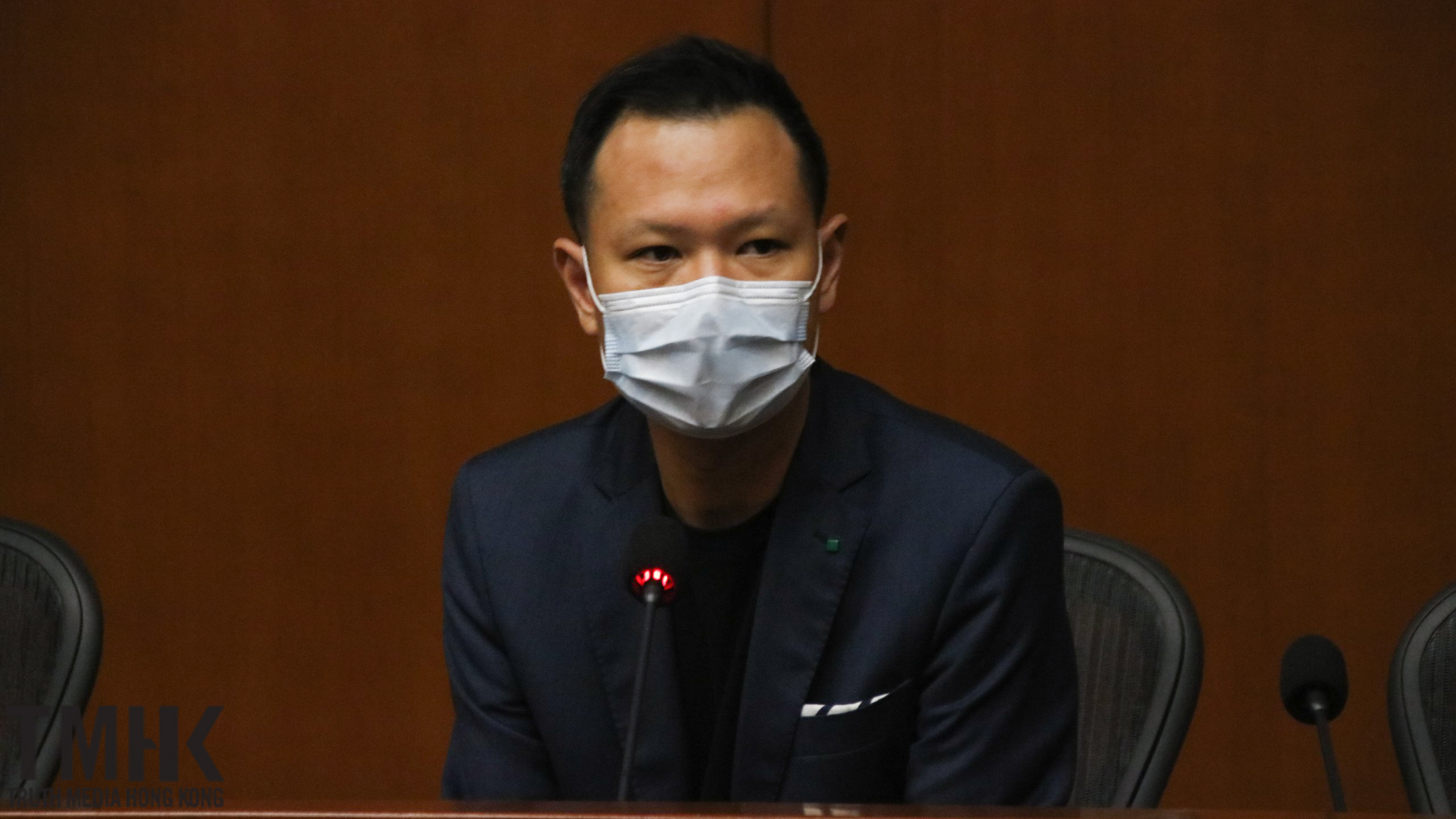

Dennis Kwok stalled for months the proceeding of electing a president for House Committee in LegCo for months in a bid to prevent Starry Lee to win the seat. After months of stalling, Beijing has spoken, including Liaison Office and HKMAO (https://www.facebook.com/hkcolumn/photos/a.1446445815572813/2623978197819563/). SCMA Erick Tsang even said HKMAO and LOCPG represent the Central People's Government in handling Hong Kong affairs and therefore it is normal for the two bodies to have supervisory powers over Hong Kong, and it is also legal and constitutional for them to exercise such powers (https://www.facebook.com/hkcolumn/posts/2667344550149594). When pressed by Citizen News, SCMA and SJ simply could not answer (https://www.facebook.com/hkcolumn/posts/2648998745317508). Bar Association said the remarks from 2 Offices breached BL A22 (https://www.facebook.com/hkcolumn/photos/a.1446445815572813/2630200313864018/). Law Society had no stance whatsoever (https://www.facebook.com/hkcolumn/posts/2641213352762714); they offered no further response afterwards. Secretary for Justice Teresa Cheng even said there was no need to "over-report" when the Hong Kong and Macau Affairs Office and the Liaison Office expressed their views (https://www.facebook.com/hkcolumn/photos/a.1489251731292221/2627419137475469/). 

So are Liaison Office and HKMAO subject to BL A22 that stipulates organs under the Central Government are prohibited from interfering in Hong Kong affairs? Liaison Office said it's a NO (https://www.facebook.com/hkcolumn/photos/a.1446445815572813/2627648277452555/). HKSAR government's statement at the beginning said it's a YES, but later succumbed and changed its wording (https://www.facebook.com/hkcolumn/photos/a.1446445815572813/2628708530679863/).

In June, Johannes Chan, HKU chair professor of public law, said that if someone raises an objection to the National Security Law, this should not be regarded as a reason for disqualification for running for the LegCo elections (https://www.facebook.com/hkcolumn/photos/a.1446445815572813/2674569002760482/). Chan's point was noted, and thus the executioner became NPCSC in November - the reason being: 4 lawmakers were seen as obstructing LegCo meetings from proceeding normally. Administrative decision made to disqualify 4 lawmakers in November led to the resignation en masse by the pan-democrats, marking an end of a real One Country, Two Systems effectively. Bar Association showed huge concerns (https://www.facebook.com/hkcolumn/photos/a.1446445815572813/2804189283131786/). Philip Dykes criticised that the practice of NPCSC was like a king of the ancient times, who imposed the punishment directly, excluding judges and trials; the practice would not be tolerable in this time and age (https://www.facebook.com/hkcolumn/posts/2803654769851904). Law Society's statement said the government has to clear up people's concerns (https://www.facebook.com/hkcolumn/photos/a.1489251731292221/2804895253061189/).

CE Carrie Lam announced that the LegCo election that was supposed to be held this September will be postponed for a year due to COVID-19. Bar Association expressed grave concern regarding postponing the election, and said the government's request to ask Beijing to override the city's provisions "alarming" (https://www.facebook.com/hkcolumn/photos/a.1446445815572813/2714448998772482/).

Separation of Powers?

The separation of powers has become an issue again in September. Most Hongkongers were taught Hong Kong is running under the separation of powers, where we have the executive branch, judiciary and legislature. While Education Bureau has censored through lines of textbooks to ensure "separation of powers" was not used to describe the system in Hong Kong, CE Carrie Lam said some people had ulterior motives to exploit the issue to cause social conflicts. The truth, she said, is that Hong Kong's political system is executive-led, with the Chief Executive as the core, and she hopes it will not become a subject of speculation again (https://www.facebook.com/hkcolumn/photos/a.1489251731292221/2746105335606848/).

Pro-Beijing scholar Albert Chen said the separation of powers was usually used to describe a country’s political system, and Hong Kong as a regional administrative region, “national-level concepts may not be applicable to Hong Kong.” New People’s Party chairman Regina Ip described that the administrative, legislative, and judicial organisations in Hong Kong were “divided” and “separate”, each performing its own duties, but not a separation of powers (https://www.facebook.com/hkcolumn/posts/2828252810725433). However, in 2016 during an interview with Cable News on the oath-taking fiasco, Chen claimed that Hong Kong had a “separation of powers.”

Legislative Council President Andrew Leung said that lawmakers can question officials, while funding for the judiciary and the appointment of judges have to be approved by the LegCo, reflecting a mechanism of mutual checks and balances between the three powers. "Therefore, (the three powers) need to cooperate, but there needs to be checks and balances." (https://www.facebook.com/hkcolumn/posts/2749360945281287)


In a forum in November, former Deputy Director of the Hong Kong and Macao Affairs Office Feng Wei also stated that the political system of Hong Kong is not based on the separation of powers, but those who hold legislative, executive and judicial powers operate in accordance with the concept of separation of powers. Deputy Director of the Basic Law Committee Maria Tam reiterated that when the Basic Law was drafted, some in the legal sector and some judges thought that Hong Kong operated on separation of powers, but it is in fact out of context. She added that Hong Kong's judges were too "romantic", giving the impression that the judiciary has a lot of power. She said she hopes judges will "take public interest into consideration". Elsie Leung Oi-sie, former Deputy Director of the Basic Law Committee, also stated that Hong Kong is "governed through 3 branches", and disagreed with the notion that the Judiciary was not a part of the government (https://www.facebook.com/hkcolumn/posts/2808576982693016). Feng also said the promise of "50 years of no change" after the handover refers to no change in lifestyle.

Devil's Advocate?

The Department of Justice (DOJ) has made a number of politically controversial moves. In June, Secretary for Justice (SJ) proclaimed the power to take over proceedings of private prosecutions, marking the beginning of obstructing justice [also see The Supreme Court in R (on the application of Gujra) v CPS [2012] UKSC 52] (https://www.facebook.com/hkcolumn/posts/2676238719260177) Philip Dykes also wrote about Ted Hui's private prosecutions (https://www.facebook.com/hkcolumn/photos/a.1446445815572813/2687064351510947/).

On 18 August, DOJ intervened Ted Hui's private prosecutions against the police officer who shot a protester in Sai Wan Ho in November 2019 (https://www.facebook.com/hkcolumn/posts/2727919444092104).

On 20 August, DOJ intervened Ted Hui's private prosecution against Cheng Kwok-chuen, the taxi driver who drove into protesters in Sham Shui Po in October 2019 (https://www.facebook.com/hkcolumn/posts/2729408370609878).

On 6 November, DOJ intervened Raymond Chan Chi-chuen's private prosecution against Kwok Wai-keung for assault during a scuffle in the LegCo Chamber several months ago (https://www.facebook.com/hkcolumn/posts/2798288333721881). Even Kwok was seen dragging Chan onto the ground in the Chamber, DOJ still offered no evidence and set him free.

DOJ did not just "act" - its "omission" was clear too. Since anti-ELAB cases were heard, there have been many episodes of self-contradiction in police statements, discrepancies from the live footage of the scene, etc. Many magistrates have sternly criticised police officers giving statements on the court for "lies over lies", "sophistry", "talking through the hat", "self-contradiction", "not due execution of duties", etc. Since the role of the court is rather limited, the responsibility to pursue the case on police officers giving false statements should fall on the DOJ. However, a former prosecutor said during an interview with Stand News that according to his understanding, the DOJ has no internal mechanism to follow up on these matters (https://www.facebook.com/hkcolumn/posts/2747159222168126).

Hodge In, Spigelman Out

In late October, a subcommittee of the Legislative Council discusses the recommendation of the Judicial Officers Recommendation Commission (JORC) for the appointment of Lord Hodge, the Deputy-President of the Supreme Court of the United Kingdom, as a non-permanent judge of the Court of Final Appeal. Lawmaker Junius Ho said he will abstain from voting. Ho questioned why the authorities did not appoint judges from Singapore, Malaysia, India and South Africa, and said they should widen the scope when appointing judges. He said that politicians in the United Kingdom had mobilised to stop Hodge from accepting the appointment, and he was concerned whether the authorities were aware of that and wondered why they still appoint Hodge.

Fernando Cheung of the Labour Party said that James Spigelman's resignation as a non-permanent judge of the Court of Final Appeal (in mid-September) might have something to do with Hong Kong's national security law and the Chief Executive's remarks that there is no separation of powers in Hong Kong, and that Hodge's willingness to take up the post reflects that there is still hope for Hong Kong and emphasises the importance of the rule of law.

Dennis Kwok supported the recommendation of JORC and believed that Hodge is a suitable candidate. Kwok hopes the authorities to keep looking for more senior judges from abroad to Hong Kong.

The Director of Administration said he would not comment on the reasons for Spigelman's resignation, stressing that the appointment had nothing to do with the resignation of previous judges. He said the independence of the Hong Kong judiciary and the right of the courts to adjudicate cases are clearly stipulated in the Basic Law (https://www.facebook.com/hkcolumn/posts/2789791144571600, https://www.facebook.com/hkcolumn/photos/a.1489251731292221/2624836187733764/).

Judiciary targeted
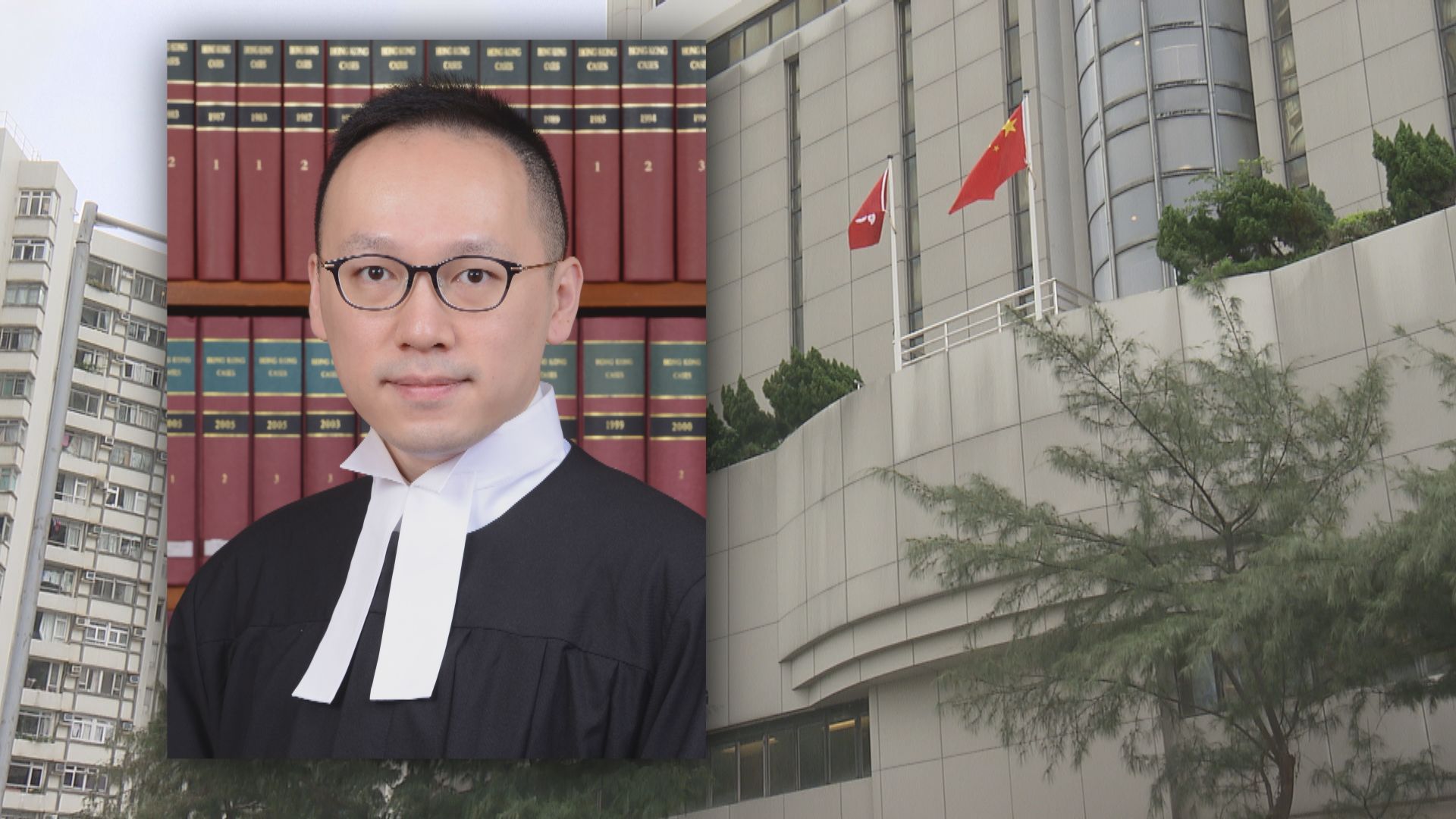
Pro-Beijing figures also made various efforts to influence the judiciary to further the crackdown on dissent. In August, DAB Lawmakers Elizabeth Quat and Holden Chow called on Chief Justice Geoffrey Ma to suspend Magistrate Stanley Ho Chun-yiu, accusing Ho of being biased towards protesters and maligning police officers in the cases he presided over (https://www.facebook.com/hkcolumn/posts/2728478457369536). In early September, Magistrate Stanley Ho was transferred to a new post where he will no longer handle criminal cases. The Judiciary said the transfer had nothing to do with his rulings (https://www.facebook.com/hkcolumn/posts/2745226195694762).

On 23 September, Chief Justice Geoffrey Ma released a statement warning against "politicisation of the Judiciary", saying criticism against courts and judges "must be informed, solidly based and properly made. Otherwise it would be detrimental to public confidence in the administration of justice and ultimately to the rule of law" (https://www.facebook.com/hkcolumn/posts/2759006394316742). CJ Ma is set to retire in early 2021. He will be replaced by Andrew Cheung Kui-nung.


In November, Elizabeth Quat and Holden Chow pushed for a sentencing commission as well as a supervisory committee to monitor the performance of judges, citing sentencing "mistakes" made by judges in protest related-cases (https://www.facebook.com/hkcolumn/posts/2795371417346906). The pro-democracy camp slammed this as “settling scores” of the judiciary, they questioned the pro-Beijing camp of escalating the issues to blame judges and attacking the judicial system. In September, Jasper Tsang Yok-sing, the former chairman of LegCo, believed that the suggestions would affect judicial independence. Tsang said, "I think it really affects the independence of the judiciary. The supervisory committee has ordinary citizens participating in the supervision and exerting pressure on the judges. I think it is very difficult to match with the concept of judicial independence." (https://www.facebook.com/hkcolumn/posts/2761432980740750)

In September, Carrie Lam said there are views on the establishment of a judicial supervisory committee and a sentencing commission, and hopes that the public will not comment on the cases arbitrarily. CE also has the responsibility to ensure that the Basic Law is fully implemented, which states that court trials are free from any interference, especially at this time of political turmoil and polarisation (https://www.facebook.com/hkcolumn/photos/a.1489251731292221/2746105335606848/).

Even the People's Daily in China joined the force to target the judiciary here. People's Daily publishes a commentary article entitled "How can Hong Kong's Judiciary become an 'Independent Kingdom'?" on Weibo. The article pointed out that the judiciary is the last line of defence for upholding social justice, and that only when the Judiciary voluntarily accepts social monitoring can judicial and social justice be better realised (https://www.facebook.com/hkcolumn/posts/2764015520482496).

Other bad news

In Apr, Vivien Chan Man-wai, the barrister of the prosecution in Au Nok-hin's police assault case, is suspected to have made a number of inappropriate comments on Facebook, including publicly commenting on Au's act at the material time in the case, and insulting the judge as "worse than a dog" (https://www.facebook.com/hkcolumn/posts/2619668078250575); she was later found claiming to be a UK lawyer while she was not one (https://www.facebook.com/hkcolumn/photos/a.1446445815572813/2640624459488270/).

On 1 December, a Pakistani lawyer recounted police abuse and mistreatment against him while he was representing an arrestee inside Tsim Sha Tsui Police Station (https://www.facebook.com/hkcolumn/posts/2820013971549317).

In late December, the French police said that Karim Ouali, France’s most wanted man, was in Hong Kong, and would likely commit ‘another gruesome criminal offence’. Ouali was accused of murdering a colleague with an axe (https://www.facebook.com/hkcolumn/posts/2834753376742043).

Good news

Winning the chairman seat of HKBA in January, Philip Dykes said he hopes that the Department of Justice to use public interests as its starting point of any prosecution, considers the severity of the crime and age of the prosecuted before the prosecution and criminally charges only the felons. Dykes also believes that law-breaking police officers should face legal sanctions. Otherwise, the rule of law will be utterly ruined (https://www.facebook.com/hkcolumn/posts/2557688527781864). That month, HKBA also wrote a long letter to Carrie Lam to set up a commission of inquiry to heal rifts in the community after the anti-ELAB movement in 2019, but as always, Lam turned a deaf ear to such advice (https://www.facebook.com/hkcolumn/photos/a.1446445815572813/2549518531932197/).

The American Bar Association (ABA) awards the International Human Rights Award this year to former lawmaker of the legal constituency and Civic Party member, Margaret Ng, to acknowledge her exceptional contribution in defending Hong Kong’s human rights and rule of law. Ng told Ming Pao that she believed this award is awarded to lawyers in Hong Kong, because international society still cares about the human rights situation in Hong Kong, understands the severity of Hong Kong’s situation and that they need more encouragement (https://www.facebook.com/hkcolumn/posts/2694687050748677).

Fu Hualing, a legal scholar deemed open-minded by a student leader, will be the new dean of HKU's law faculty, being the first PRC scholar to take up such post (https://www.facebook.com/hkcolumn/posts/2785509788333069). Fu studied in Canada before while another PRC candidate did not study at a common law jurisdiction and failed to meet the yardstick.

20201219

Allan Au: After the Oath, You Belong to Me

Allan Au: After the Oath, You Belong to Me
Translated by HKCT, written by Allan Au [originally posted on 18 Dec 2020 on Citizen News]
(right) The Government of the Hong Kong Special Administrative Region held an oath-taking ceremony for Under Secretaries and Political Assistants at the Central Government Offices today (December 16). Witnessed by the Chief Executive, Mrs Carrie Lam (centre), all the 12 Under Secretaries and 14 Political Assistants swore to uphold the Basic Law of the Hong Kong Special Administrative Region of the People's Republic of China and swore allegiance to the Hong Kong Special Administrative Region of the People's Republic of China. (original)


On 16 December 2020, all HKSAR government's under secretaries and political assistants lined up and took an oath in front of Carrie Lam to uphold the Basic Law and pledged allegiance to the HKSAR.

This was the government’s Christmas and New Year present for all civil servants. Under the wrapping paper of the oath hid a leash. Soon, similar scenes will probably take place again and gain in scale.

This reminds many of the past when Adolf Hitler rose to power, the German military and civil servants also introduced the requirement of an oath swearing loyalty to Hitler himself with a solemn, grand ceremony. Is this comparison exaggerated?

I still recall in 2017, I read the book “On Tyranny” and wrote “Last Time to Make Love”, in which I used the sentence “When you made love for the last time, you didn’t know it was your last time” as a metaphor to describe history. There were many times when “you voted for the last time, you didn’t know that was your last vote”. Someone asked at that time if it was a bit exaggerated.

After less than 2 years, Hongkongers had their last meaningful vote. It was the 2019 District Council Election. When we voted for the last time, we didn’t know that was already our last fair election.

Everything has been written or said and there is nothing more to add. Seeing all these Hong Kong elite raising their hands and taking the oath, although there could still be some good ones among them, I could only write more reading notes to On Tyranny, and read again those I had written on 2 of the author’s 20 warning lessens to the world:

First lesson: Do not obey in advance

Authoritarian governments’ powers are offered by the citizens. It is humanity to obey, ordinary citizens like guessing the minds of those in power and flattering them. Even before they start to speak, many people already dedicate themselves. These people’s behaviour is often a huge inspiration for those in power. Many dictators are not fully confident with themselves, but when they find out the true humanity that many bow down to the more powerful or even take the initiative to act in obedience, this gives the thugs enough confidence to judge that there is little resistance to carry out tyranny, and they become more determined to do whatever they want. These people who automatically become obedient give authoritarian governments a shot in the arm. (Note: Recently Carrie Lam said, “She regained confidence.”)

Fifth lesson: Remember professional ethics

The professionals always talk about noble dreams, and should be careful not to become accomplices of those in power. The tyranny in the past could not have succeeded without the help of a “professional” team. If lawyers, judges and law enforcers had insisted on open trials and implementing no illegal death penalties, there would not have been 6 million Jews killed; if doctors had insisted on gaining consent on any kinds of operation, there would not have been living people used in medical experiments in concentration camps. Nazi Germany had a quite complete documentation of its killings. If civil servants had been willing to follow regulations and had not handled correspondence related to crimes against the law and constitution, Hitler’s tyranny would not have gone so smoothly.

There were many famous people around Hitler. Coincidentally, they were all trained lawyers. Hans Frank was his personal lawyer and later governed the occupied Poland, millions of Jews and Poles were murdered on his hands. He once said the law served the nation, so everything advantageous to the nation was lawful. In modern China’s way of saying, that means to “use the law as a weapon”. To them law has no noble philosophy, there is no spirit of rule of law and no need for judicial independence. Very often exactly people who are lawyers know how to exploit loopholes most effectively. Today the HKSAR government is desperately looking for “legal resources” to take action against some people, there must be a group of legal elites behind it who have forgotten their professional ethics. (Note: There are now a group of police officers, lawyers, prosecutors and judges behind on all fronts.)

20200613

[Ming Pao] Johannes Chan: Do NPC's Draft Resolutions Comply with Basic Law?

HKU Chair Professor of Public Law Johannes Chan: Do NPC's Draft Resolutions Comply with Basic Law?
Translated by John C., edited by Karen L., written by Johannes Chan Man-mun
Original: https://m.mingpao.com/ins/%e6%96%87%e6%91%98/article/20200525/s00022/1590332595169/%e4%ba%ba%e5%a4%a7%e6%b1%ba%e8%ad%b0%e8%8d%89%e6%a1%88%e6%98%af%e5%90%a6%e7%ac%a6%e5%90%88%e5%9f%ba%e6%9c%ac%e6%b3%95-%ef%bc%88%e6%96%87-%e9%99%b3%e6%96%87%e6%95%8f%ef%bc%89 


The current draft resolution of the National People’s Congress (NPC) mandates the Standing Committee of the National People's Congress (NPCSC) to enact the National Security Law in Hong Kong. Here we are to explore whether this draft resolution complies with the Basic Law. Perhaps, it is, to some people, a self-explanatory case that needs no further clarification. Yet, as long as China intends to maintain the integrity of the rule of law, and the NPC inclines to abide by the law, but not to override it, the legislation shall not violate the Basic Law. Such is the seriousness of this subject.

There are at least 5 points to indicate why the draft resolutions of NPC do not comply with the Basic Law under the jurisprudence context.

The Basic Law Article 23 Clearly Specifies HKSAR ‘Shall Enact Laws on Its Own’

The then-proposed Basic Law Article 23 designates Hong Kong Special Administrative Region (HKSAR) ‘shall enact laws on its own’ when it comes to National Security legislations, namely that HKSAR shall enact laws according to the tradition of common law and its own legislative process. Given that Hong Kong and mainland China have separate legal systems, values, and legal concepts, the principle of the Basic Law is to allow HKSAR itself to enact laws with relevance to personal liberty and criminal liability for any highly political and sensitive situations. It should be noted that laws relating to the matter of national security have always been considered highly sensitive, and ‘shall enact laws on its own’ serves the precise purpose of protecting the completeness of the HKSAR’s common law. 

There were lots of concerns in the Hong Kong society when the Basic Law article 23 was being drafted, especially to the vague concept of national security in mainland China: the ‘counter-revolution’ charges on Wei Jingsheng were still very fresh in people’s mind as he was sentenced to 15 years’ imprisonment simply because of his speech yearning for democracy. ‘Shall enact laws on its own’ in Article 23 was then established under this historical background.

Some people suggested the possibility of coexistence between the National Security Law and the Article 23 in attempt to justify the legitimacy of the NPCSC's decision, to which they might not notice that it poses a challenge on the meaning of the presence of an Article 23 (‘shall enact laws on its own’). It's like a father giving a child $10 to buy whatever sweets he likes, but then decides to take away $4 and asks him to get chocolate, while at the same time telling the child he isn't breaking his promise to let the child make his own decision. It is in Hong Kong's duty to legislate an Article 23, but it does not inherently support the idea that NPCSC can enact laws for Hong Kong directly.

Article 18s ‘Generic Power’ Shouldnt Extend to Article 23

Some leap to a hasty conclusion that there is no conflict between self-legislation and the implementation of national laws in Hong Kong, whereas this is a blatant violation of the general principles of legislative interpretation. Article 18, as a generic law, allows NPCSC to apply certain national laws in Hong Kong through Annex III, while Article 23, as a concrete law, specifies that laws within its scope shall be enacted by Hong Kong itself. Under the general principles of interpretation, concrete provisions are superior to generic provisions. Thus, the generic power in Article 18 shall not extend to the legal provision stipulated in Article 23. Otherwise, Article 23 would be superfluous.

Furthermore, Article 18 Annex III is only applicable in national laws, to which some people irresponsibly claimed that they refer to all the laws passed by NPC or NPCSC, but not the ones passed by provinces and municipalities. This, under normal circumstances, could be a reasonable interpretation, but not under in Article 18. The 'national laws' in Article 18 Annex III must be relevant to national defense, foreign affairs, and outside of the sphere of autonomy. While the drafting of such national laws has not been within the power of provincial and municipal districts, national laws should be dependent on the nature of the law being applicable nationwide rather than which political body is responsible for the drafting. Under the Basic Law, Hong Kong legislature is vested with legislative power: Article 23 requires the laws within the scope of the article should be enacted by Hong Kong itself; Article 18 states the central government could apply laws related to national defense, foreign affairs, and outside of the sphere of autonomy to Hong Kong. The combined purpose of these laws and articles is to illustrate clearly that only when the matter concerned is of ‘national defense, foreign affairs, and outside of Hong Kong autonomy’ will the central government pass laws for Hong Kong. On top of that, the laws should be applicable to Hong Kong and nationwide, hence, to secure and protect different legal systems in Hong Kong and in mainland China. Thus, the central government shall not enact laws for Hong Kong under these legal conditions.

Some may argue that the Garrison Law is a precedent for the central government to enact laws specifically for Hong Kong, but they must have missed this: People’s Liberation Army Hong Kong Garrison is the key stakeholder of the Garrison Law. This article declares the responsibility of PLA personnel in Hong Kong, which is not an applicable article to the general public in Hong Kong. This time, the NPCSC's enactment of the National Security Law in Hong Kong is against the human rights and freedom of Hong Kong people, and these are what the Basic Law is meant to protect.

Constitution Article 31 & 62 Do not Empower the NPC to Disregard the Basic Law

NPC’s draft resolution on the Nation Security Law refers to its legal basis in Article 31 & Article 62 (Item 2, [13] and [15]) of the Constitution of the People’s Republic of China. Article 31 of China's Constitution Law is the legal basis of establishing Special Administrative Region (SAR), and Article 11 of the Basic Law clearly states that the SAR’s system, protection of freedom, legislative and judicial system are all based on the Basic Law. The Basic Law Article 11 is applicable on the NPC as well—NPC’s decision ought not to contravene the provisions of the Basic Law. In Article 62 of China's Constitution Law, item 2 refers to the NPC’s power ‘to supervise the enforcement of the Constitution’; Item [13] refers NPC’s power ‘to decide on the establishment of special administrative regions, and systems to be instituted there’; Item [15] refers NPC’s power ‘to exercise such other functions and powers as the highest organ of state powers should exercise’. These generic provisions do not empower NPC to disregard the Basic Law. True, it is within the NPC's power to propose amendments on the Basic Law—abolishing the provisions on ‘shall enact laws on its own’ stated in Article 23 and conferring NPC the power to legislate directly for Hong Kong—but it involves following certain procedures, not by mere decision.

The Unsettling Future of the Courts' Role

Some worrying view suggested that the NPCSC’s scope of legislation does not completely overlap with Article 23. In the NPC’s drafted resolution, NPCSC is authorised to legislate on ‘acts that seriously threaten national security, such as secession, subversion of state power, and organising terrorist activities, as well as foreign and overseas forces interfering affairs of HKSAR’. These are quite vague in scope, which could potentially cause impacts on financial, economic, and network communication, on the links between religious groups and their foreign counterparts, on the cooperation between local NGOs and foreign NGOs, on the cooperation between universities and foreign organisations, etc. As the lines that divide national security and civic rights blur, what is to be done if NPCSC passes laws that are conflicted with the protection of human rights in the Basic Law? Can the courts in Hong Kong declare that the laws passed by NPCSC shall be revoked due to the violation of the protection of human rights in the Basic Law?

What's more distressing is the role of the Courts. According to the Basic Law Article 18, provisions in Annex III shall relate to national defense, foreign affairs and outside of Hong Kong’s autonomy. All these matters are outside of the scope of the Hong Kong Courts' power of review. Unless the laws that NPCSC enacts specifically authorise the Hong Kong Courts the power of review on the matters, the Courts in Hong Kong may not have jurisdiction over cases of this kind. Even if Hong Kong Courts were to have the power of review, how would they interpret this national law? The way how mainland China drafts and interprets law is disparate from the principle of the common law. Mainland’s legal interpretation is primarily based on political consideration over legal provisions. From NPCSC's conversion of the oath-of-office requirement in the Basic Law to the eligibility for election to the Liaison Office reinterpretation of 'mainland government departments' in Article 22, mainland’s stance on legal interpretations is manifest.

I, for 100%, believe that the courts in Hong Kong will not adopt the mainland-China way to interpret or execute the Hong Kong National Security Law. However, another question arises: what if the Hong Kong courts’ interpretation of the law is not in line with that of NPCSC? Precisely, if the Hong Kong courts narrow the scope of related offence in the law in order to protect human rights, or consider certain charges as violating the protection of human rights under the Bill of Rights or the Basic Law, would NPCSC applaud or interfere? 

Beijing has time and again blasted the judgement by the Hong Kong courts, including the severe criticism on the Court of First Instance’s judgement on Emergency Regulation Ordinance. Can NPCSC intervene arbitrarily if the Hong Kong courts’ judgement is contrary to NPCSC's stance of legislative intent? Moreover, NPCSC has the power of interpretation for the Hong Kong National Security Law since it is a national law. While it is still in doubt whether such interpretation has any restrictions on the Hong Kong courts, it is possible for the Courts to bypass the NPCSC’s interpretations on the law in reality?

Establishing New Agency of National Security in SAR Do not Comply with the Basic Law

In the NPC’s draft resolution, the Central People’s Government is given permission to establish certain agencies that are related to national security in SAR, to fulfil the duty of safeguarding national security in accordance with the law. So, what exactly is this agency? It is feared that this state agency does not fall into the category of the Central Government’s 'department' in Article 22, and is thus not subject to Article 22, which only adds to more uncertainty: what power do these state agencies have? And under what supervision? Can the agency exercise the right of investigation, right to arrest, and right of interrogation in Hong Kong? The Ministry of State Security in mainland China is known to have a very wide range of power with little transparency; how does it comply with the Basic Law by allowing state agencies to carry out law enforcement activities in Hong Kong?

The Oppression Will Only Aggravates

In just a few weeks, the Liaison Office declared that it is not, in the ordinary sense of words, a ‘department of the Central People’s Government’, whilst having the power to supervise the implementation of the Basic Law. What followed was the Education Bureau pressured Hong Kong Examinations and Assessment Authority (HKEAA) to delete a question on the HKDSE history paper due to political grounds. After that, the Communication Authority (CA) ruled The Headliner, a satirical TV programme produced by RTHK, for breaching the Broadcast Code of Practice, and afterwards a direct law enactment for Hong Kong by Beijing. This series of moves naturally makes one wonder how much more autonomy is left in Hong Kong.

In retrospect, some people think: had the legislation on Article 23 passed, the present situation would not have arisen. Wishful thinking it is. There are many factors causing the current disheartening situation. Years ago, ex-Premier Wen Jiabao enjoined the then HKSAR government to deal with the deep-rooted conflicts in Hong Kong, but rather the government ignored it and stirred up the troubles, aggravating the inner conflicts. Fast forward to today, the self-opinionated government pays no heed to public opinion, and has missed the opportunities to resolve social conflicts over and over. Nonetheless, added with the ongoing trading and political contest between China and the US, this is how today's situation has become what it is. Even if the legislation on Article 23 were passed, the nowadays conflicts and clashes would be inevitable due to the clumsy handling of the most recent two governments. To most Hong Kong people, the now major issue concerns social order, and has nothing to do with national security.

To Beijing, however, whatever happens is always plots and conspiracies organised by external forces (i.e. foreign countries). Instead of holding successive SAR governments to account, it inclines to escalate the issues to the level of national security, and even adopts the approaches which will demolish ‘One Country Two Systems’. Is Beijing’s decision, at what degree, based on alarmist’s talk and people’s act of adding fuel to the fire? It is probably all down to the judgement of history. 

At the end of the day, the power lies with Beijing: such issues will not be resolved after NPCSC's passing of the National Security Law. It will be only followed by a series of prosecutions, suppressions, and restraints, with a view to turning Hong Kong into a submissive society where no one thinks and dares to question authorities. Possibly, in Beijing’s eyes, what 'One Country Two Systems' stands for is merely allowing two economic systems in a country—not enabling a civil society with independent thoughts or values that would question those with power. After all these, Hong Kong’s public freedom will be narrower and narrower with overwhelming stress of political correctness at all times. The high degree of autonomy will then exist in name only. History has taught us a lesson: oppression will only aggravate, and will never enlighten. This is an elegy of 'One Country, Two Systems'.


20200528

[Ming Pao] National Security Law Expert Fu Hualing: Whole Society to Pay If Relying on Courts to Solve Political Matters

National Security Law Expert Fu Hualing: Whole Society to Pay If Relying on Courts to Solve Political Matters
Co-translated by AH and Karen Leung, written by Tsang Hiu-ling (printed on 3 May 2020 on Ming Pao) 
Original: https://news.mingpao.com/pns/%e5%89%af%e5%88%8a/article/20200503/s00005/1588444459382/%e5%9c%8b%e5%ae%89%e6%b3%95%e9%81%94%e4%ba%ba%e5%82%85%e8%8f%af%e4%bc%b6-%e4%be%9d%e9%9d%a0%e6%b3%95%e5%ba%ad%e8%a7%a3%e6%b1%ba%e6%94%bf%e6%b2%bb%e5%95%8f%e9%a1%8c-%e6%95%b4%e5%80%8b%e7%a4%be%e6%9c%83%e4%bb%98%e4%bb%a3%e5%83%b9 


The Core Value of Article 23 is against Secession

Named after the 2017 conference 'China's National Security: Endangering Hong Kong's Rule of Law?' launched by HKU Centre for Comparative and Public Law, the book included Professor Fu Hualing's article (titled 'China's Imperatives for National Security Legislation'), which, as its name suggested, probes China's desperation to enact a national security law.

The year 2017 marked the 20th anniversary of the transfer of sovereignty over Hong Kong to China; President Xi Jinping gave a speech in which he stressed the importance of “One country” in “One Country, Two Systems”, saying that, “'One country' is like the roots of a tree. For a tree to grow tall and luxuriant, its roots must run deep and strong. The concept of 'One Country, Two Systems' was advanced, first and foremost, to realise and uphold national unity,” and that “Any attempt to endanger China’s sovereignty and security, challenge the power of the central government and the authority of the Basic Law of the HKSAR or use Hong Kong to carry out infiltration and sabotage activities against the mainland is an act that crosses the red line, and is absolutely impermissible.” From there, Professor Fu who specialises in constitutional law, legal institutions, and human rights with a focus on China explained the existence of Article 23 in the context of China politics and Hong Kong's constitutional framework for the legal system, and he said, "While Article 23 mentions prohibiting acts of 'subversion' and 'secession', I think the core is more about the latter."

The Systematic Legalisation of Power

“To CCP, the connotations of national security have two aspects—politics and nationality. The ferment of such issues regarding the former translates to the subversion of the CCP-led socialism, of which I wouldn't regard as a big concern in the party's point of view.” Hong Kong is known to have a tradition of being the “base of subversion”, from Sun Yat-sen's revolutionary campaign to overthrowing the Qing dynasty, to the strategic transportation hub in the Chinese Civil War, followed by the surge of political refugees from mainland China between the 1960s and 1970s. “Hong Kong has long been considered a place for subversion. It was, during the Qing dynasty and the Republic of China, acting as a haven for the resistance.” Fu believed that the CCP understands well the denunciation it received from Hong Kong, “Socialism isn't mainstream in the global world after all; the criticism over the system has never ceased to exist.” Yet, the alert of “secession”, as he pointed out in the article, differs from that of “subversion”, for the reason that it interconnects with the matter of “nationality”. CCP premises its political logic on the historical burden it inherited—to maintaining territorial integrity—and on that account, the talks surrounding Hong Kong independence since the Umbrella Movement agitate Beijing the most.

The Target of Article 23 IS “Hong Kong Independence”  

From CCP's standpoint, the main threat to national security is “the infiltration of external forces”. Starting from 2013, Weiquan lawyers and activists [Translator's note: “Weiquan” is a non-centralised movement in mainland China that seeks to protect and defend the civil rights of the citizenry through litigation and legal activism; some translate as "right activist.] have been prosecuted in rapid succession. In 2015's 709 Crackdown, on the charge sheets were repeated emphasis on their alleged affiliation with organisations in Hong Kong and foreign countries, as well as the foreign-aid funding they were said to receive. In an attempt to unravel CCP's timeline on the course, Fu mentioned that it was in the same year of the nationwide crackdown when the Standing Committee of the National People's Congress (NPCSC) adopted the new national security law. One by one, the Counterespionage Law, Cybersecurity Law, Foreign NGO Law (so as to regulate their activities in mainland China) and Counterterrorism Law have been implemented since Xi Jinping assumed office, of which Fu commented, “The institutionalisation and legalisation of CCP's power are unprecedented. At no time was its power demonstrated through legal measures; the Xi regime's approach is rather definite.”

Thenceforth the path of Hong Kong and that of mainland China intersect. In 2018, under the Societies Ordinance, Hong Kong government banned the operation of the Hong Kong National Party. In Fu's understanding, Beijing has recognised it an opportunity to enact Article 23 as this imaginary enemy (aka “Hong Kong independence”) arises. Fu added, “The then attempt (the National Security Bill 2003) was a symbolic gesture: The Central Government of China said to give it a go, so Hong Kong government gave it a go; the people in Hong Kong didn't turn out to be pleased with it, so they accepted the result and withdrew it. Now is different, the bill serves an actual purpose for Beijing—Those advocate independence shall, from now on, be punishable by the Article. That's the clear target.”

Has the Perfect Timing for Legislation Passed? 

“In a sense, perhaps we should reflect why we were to reject the bill, and if such a move we made was right.” Fu added, “I personally felt that the wordings of the withdrawn bill were perfectly inclusive. The offence of subversion, for instance, had had enough measure to safeguarding the interests of defence on every single detail. We could either exclude the bill from the system or... Let's just say, further adjustment was not much needed.” Now that the police citing the dust-laden section 9 (seditious intention) and section 10 (offences) of the Crimes Ordinance, both of which have not been exercised for 68 years, Fu said, “The step next is to see whether the Department of Justice and the Courts will accept this. If yes, it will pose a much greater challenge to Hong Kong's rule of law than Article 23 of the Basic Law. In this case, we might as well have the latter.”

“The Law of our society is not ideal as some people deem to be. Refinement should have been made long ago; in retrospect, it would have been a better time to do it back then than now.” Fu went on to say, “A huge restriction on freedom of speech or freedom itself was it (the 2003 draft of Article 23) generally perceived. But at the same time, none of the thoughts and alterations was intended for some of the harshest provisions adopted from the colonial times.” He envisaged that if only with physical violence were to be guilty of an offence regarding seditious intention, “many people would not have been convicted.” After 17 years, once again the enactment of Hong Kong's controversial national security law is on the table. How should the starting point and the bottom line be this time around? To answer the question, Fu indicated the feasibility to use the 2003 draft as the basis, while he said, “It depends where our persuasiveness lies in the end if we are to demand higher threshold of conviction from the Hong Kong government or the Central Government of China, and to convince them to relinquish such convenient and effective governing tool.”

The Criteria for the Offence of Secession 

“Setting side by side our existing laws and a new one, I would prefer the former as a more beneficial way to maintaining the intactness of Hong Kong's legal system, especially on the protection for freedom of speech.” Fu continued, “What worries me most about such a new law is the uncertainty over the offence for succession. Back when 2003, it was stated the acts of which resisting the Central People's Government in its exercise of sovereignty over a part of the People's Republic of China “by force”, “threat of force”, or “other serious unlawful means” would make an offence, whereas in today's circumstances, as to whether or not the previous requirements fit, I'd rather not say.”

Dialogue over fights on Solving HK's Predicament

Fu examined in his article the relationship between the Basic Law and the Constitution of the People's Republic of China, “The Basic Law is not a part of the Constitution of the People's Republic of China, but it is clear to have been mandated a special constitutional status.” Today, in addition to the controversy over the re-introduction of Article 23, there is a heated debate on the interpretation of Article 22.

Does the Liaison Office of the Central People's Government in the Hong Kong Special Administrative Region (LOCPG) fall under the description “department of the Central People's Government” written on Article 22, which is specified to have no authority to “interfere in the affairs which the Hong Kong Special Administrative Region administers on its own in accordance with this Law.”? LOCPG repudiated the framework, and asserted to have supervisory power over Hong Kong, to which Martin Lee Chu-ming, the “grandfather of democracy” said the late Lu Ping would have bitten its head off, whereas Teresa Cheng Yeuk-wah, Secretary for Justice, sided with the LOCPG, and said that the office represents Beijing in Hong Kong not as a form of “central government department”.

“That should not be the focus of the discussion,” Fu commented, “The key is not whether the LOCPG is bound by Article 22. The key is to clarify what they could do or say on certain issues, and in which sense it is interfering, and in which sense it is supervising.” He elaborated, “Be the LOCPG a department defined by Article 22 or not, it does not change the fact that it is assigned by the Central People's Government, namely that it represents the Central People's Government. The Hong Kong and Macau Affairs Office of the State Council and any other institutions under the Central People's Government, as well, apply to the same implication. What's on point is whether their speeches and actions fall within the framework of the Basic Law.”

The Regime's Self-restraint

Since the NPCSC has the power of final interpretation of the Basic Law, doesn't it inherently spell the “settlement” of the dispute? “Not entirely so. The Central government has the say, but this doesn't necessarily end the case.” Fu argued that such issue is not to be explained on a legal ground, and it largely depends on the regime's self-restraint, “It involves the relationship between the Central government and the province. To Beijing, it is a matter of self-restraint. That is to say, we are not, in any way, allowed to force the process, meaning that a compromise from the Central government through legal means is not accessible. Any variation concerning the positioning of the regime is only affected by the political economy of the global environment.”

When asked wouldn't it be crying for the moon to anticipate the regime's self-restraint, Fu's advise was to “be realistic”. “The Basic Law is formulated not by us citizens, Hong Kong itself or the UK, but the National People's Congress, which equals China's sovereignty. Bearing in mind of this fact, we'll realise many such issues arise merely as the political ones.” He then added, “There will be some price to pay if any regime is to disrespect its own law. The question now is whether it is willing to pay the price and weather the aftermath.”

“One Country, Two Systems”, in Fu's views, is still alive. “The Central government has made it clear that 'One Country, Two Systems' is a mandate, and thus it is in its power to withdraw it,” he continued, “In a sense, it suggests that the future of Hong Kong will still be in our hands.” What is within our grasp? “The very concept of 'One Country, Two Systems' is established as it provides China with value. I believe it serves as a viable direction or model for China's future development. Many ethnic Chinese, including the vast majority of mainland Chinese, consider it a worthwhile pursuit for China. If China is not to adopt the Western model of separation of powers, then where should it go? The existing structure of China's system has got to evolve. It wouldn't be possible to stay the same forever simply because there's no practical solution to the predicament of internal regime change.” Fu added, “I wouldn't say 'One Country, Two Systems' is a lost cause. Some of the mechanics of political system design in Today's Hong Kong is still very much a useful reference for mainland China. I guess Hongkongers would be more likely to disagree with the practice of the constitutional principle in question than the mainland Chinese.”

In 1989, Jiang Zemin, the then Chinese President, once used the analogy “river water and well water should not mix”. [Translator's note: It was to indicate that the Chinese socialist system should not be subjected to subversive interference from Hong Kong, especially pro-democracy activities, and China would also not interfere in Hong Kong's political system.] Fu thinks the times are “long over”, and holding dialogues is the only way out. “Generally, the key to resolve the argument over constitutional theories is by 'dialogues'... The judiciary have 'dialogues' with the legislative branch of government, and vice versa: Legislators would picture how the Courts perceive the proposed bills and adjust the draft so that it isn't of no avail; the Judges would picture the implications to the LegCo if they are to declare certain laws as invalid.” Applying this to the relationship between China and Hong Kong, “Perhaps Hong Kong Courts and the NPCSC are alike, both constantly trying to avoid complications that might have arisen when exercising its own power, hence creating self-constraint of power and constructive dialogue in the process. It's like playing chess—strategising by thinking a few moves ahead.”

“Being Able to Maintain the Status Quo is a Blessing Already”

In 1983, Fu graduated from Southwest University of Political Science and Law, one of the most prestigious law schools in mainland China (alumni including Zhou Qiang, current president of the Supreme People's Court, the equivalent of China's chief justice.) He received his Master's degree from the University of Toronto in 1988 and his Juris Doctorate five years later from Osgoode Hall, a century-old renowned law school in Canada.

“My views differ from those of my colleagues,” Fu explained, “I have the greatest respect for them. Perhaps they think I'm setting the standard too low, but my understanding of the situation refers to my background.” He then continued, “Another reason is I'm a bit too realistic. For all, I think, being able to maintain the status quo is a blessing already.”

In terms of the rule of law, Fu is more optimistic than his colleague Benny Tai Yiu-ting. Comparing the disqualifications of lawmakers and the sentencing of Occupy Central leaders, Fu thinks that the Courts “had no other choice than to disqualify” after Beijing gave its interpretations of the Basic Law. However, though Beijing wanted severe punishments for the Occupy Central leaders, the judicial system in general, and the Court of Final Appeal in particular, still showed its independence and defiance and willingness to embrace liberal values… and to view Occupy Central as similar to acts of civil disobedience seen in other places with democratic systems”. It seemed that the Court of Final Appeal held the view that protesters and their leaders are worthy of sympathy and lenience, as long as the protests do not involve violence.

Too Much Political Responsibility on Judges' Shoulders

Nowadays, when the prosecution and the police are both on the government's side, many people wonder if justice can still be done. “This is the biggest problem in Hong Kong, which leads to the real worry for the future of the Law. We have put so much weight on the shoulders of judges, who are also human beings. It's not very fair to the Court for one to put all the political responsibility on the judges' shoulders and impute the unsatisfactory outcome to them. The series of events about disqualification is a case in point: Why didn't the Chief Executive or the then President of the Legislative Council take any action? With that much power, they did nothing and let all the responsibility fall on one judge. In fact, they were passing the buck in such a mindset: No one could solve it anyway, just let the judge do the job. So long as the judge decides, we will execute.” On top of that, legally speaking, Fu pointed out there is a price to pay for civil disobedience.

How did Fu see the role of judges from the Lennon Wall stabbing case in Tseung Kwan O? “Judges do have their own personal feelings. It's possible for them to sometimes mingle their political stance to the verdict. Whatever the system is, there will be bugs, errors, mistakes, and it's acceptable as long as there is room for correction. Rather than saying that the whole system is broken when one mistake is discovered, it's more preferable to deduce whether the entire system is still trustworthy.”

“Given Hong Kong's system, it's unlikely for the Court to decide that a person's not guilty out of noble intentions.” Fu supposed that pushing the Courts to the forefront of solving political problems will result in unfavourable consequences for the whole community to bear. “With the element of violence in the movement, participants are expected to face criminal liability. Considering that a fair appreciable proportion of the people have taken part in it, the entire community, together, will suffer—the Courts are up against the upcoming waves of challenges over its credibility and the possibility of losing people's trust.” Fu reminded, “It is to be noted that by the time famous figures like Martin Lee Chu-ming and Margaret Ng Ngoi-yee go to court, it is the complete political system which stands trial, not only them. Nobody has hoped for such a condition. All of them had tried to evade this political backdrop, and it is a tragedy for our society that it inevitably caught them.”

There is an unhealthy tendency to deify Laws and legal systems in us, Fu said, “The law is, in fact, a conservative, backward mechanism that only gives people basic protection provided that it can smoothly function.” As a native of Anxiang County in Hunan Province, he grew up in a rural village which “cannot be found on a map”. Having lived through the Cultural Revolution, he initially believed that “society can be changed through laws”. “A lot of us assumed the reason mainland China had the Cultural Revolution was that there was no rule of law, and conversely, with the rule of law there would be no Cultural Revolution. It was a naive conclusion. The truth is it was the lack of any concept of democracy that contributed to the Cultural Revolution.” Fu then expressed the way he approaches the law now, “Where the law can play its role uninterrupted, there is a fine system. It is good enough to have room to perfect the legal system itself; it is good enough to be able to solve problems in the relationships between individuals, maintain a balance between economic development and citizens' livelihood, keep the government rule within bounds, through the legal system. But let's not forgive that the law is under politics, and constructed by the politics. It is not very practical to  think that one can change the way politics works.

After Dr. Li Wen-liang's death, he participated in the joint signature petition of the open letter titled “Only Change is the Best Remembrance for Dr. Li Wen-liang - A Letter to the National People's Congress, the State Council and Compatriots of the People's Republic of China”, in which he and a group of mainland scholars put forward six major demands, including the comprehensive reviews of domestic and foreign policies in recent years, of party-government relations, of government-public relations, of government-business relations, of Taiwan–Mainland China and Hong Kong-Mainland China relations and of US-China relations. Throughout the interview, Fu managed to strike a balance, without exception, by adding the angle of neutrality. He said that in hindsight it might have shown that the system of mainland China “has its own advantages” for its more effective ways in fighting the epidemic than the democratic countries, however, “The mainlander public outcry is not to be ignored, which offers a glimpse of their thoughts: The people, when being put in a critical moment,  do recognise what the real problem is. Still, in the their minds, there is a yardstick for measuring the good or bad of the government.”

Oust the Democracy alongside the Rule of Law

From the beginning to the end of the interview, Fu reiterated that an Article 23 and all social dilemmas must rely on the solutions achieved by the means of dialogue. He described himself a conservative, and said, “Benny (Tai Yiu-ting) considers it impossible for the rule of law to survive without democracy (Tai once referred the rule of law in Hong Kong as a zombie, and compared democracy to the one serum that can turn the zombie back to normal.). I tend to think that this is arguable. The worst that could happen is when the democracy is not acquired to the equation and at the same time the rule of law is out of the game.”

Under what circumstance would you determine that the rule of law is demolished? Taking a deep breath, Fu lowered his voice rather unconsciously as if he was visualising that particular moment, “Perhaps it'd be an instinct come by a certain verdict or decision... in a relatively slow process. The day when the international community gave up on Hong Kong would basically be it.” More concretely, he went on to say, “Big companies moving out of Hong Kong. Evident political control in an overwhelming manner... When the embodiment of 'rule of law' is no longer upheld within the law, but out of it. Just as birds take flight before the earthquakes even happen; that's the best sign for human beings.”

Hasn't the time come? “Not yet,” Fu continued, “I'm confident still that the rule of law is of importance to China, not so much in terms of how much the principle has been delivered by the government, but that it is essential to maintaining the country's socio-economic well-being in the long run. The regime allows the rule of law not out of love, but out of its indispensability; that, at least, the regime has awareness of.”