20150929

Cheng Lap: A Country Exists for "Barbarians"

A Country Exists for "Barbarians"
Translated by Karen L., Written by Cheng Lap
Original: http://opinion.udn.com/opinion/story/6777/739442 

Source: Dennis Jarvis (CC BY-SA 2.0)

Regardless whoever you are or whatever ethnic group you are in, you, like anybody else, are born with a nationality. We have taken it for granted, membership of a country as an inborn package, that we somewhat forget to leave room wondering why it exists.

Outwardly it does not bother us at all without a stance of the existence of countries, while delving into the matter will you find an opposite answer to the initial expectation. It is expressly so since we have been in a democratic government -- though everyone of us is not directly holding the governance of one's country, every statement one voices and each vote one casts are influencing the country little by little.

Putting forward the idea, if we choose to ignore the consideration why countries are countries, it is natural for us to confuse with the roles for governmental positions. From the legislator to the president, how do we determine the right person -- functioning component of a country? Politicians, as well as bureaucracy are gearing and bearing -- with fair quality can they perform better.

We sometimes vote for a politician out of our perception of him/her being good, kind, competent, smart, or his/her healthy image, or the mutual stance with ourselves. Truly these are virtues, however here is the twist: embracing these advantages does not necessarily represent he/she is the proper one. Traditionally, being honest and having good manners are on our list of an able candidate, yet is it authentic? The answer to the presence of country lies on this question.

Western countries, if not all, refer to a country as "she" -- a goddess or a mother. It's not my intention to deny such figure of speech, but in my opinion, "it" would be more appropriate.

You mush have heard, more or less, the condition of international world remains anarchic where law is an empty recommendation. International law helps distinguishing right from wrong at most, whereas we could only pray to God for the effective implementation. Let's untie our mind shackles: What would happen if the entire judiciary, police together with judges, disappeared one day? If somebody was killed then, given that police existed no more, what could you possibly do?

The state of anarchy gives us the very answer. Politeness, reasoning, law, dogma, order of an international society -- EVERY social norm, natural as air, becomes faintly discernible. They are still there somewhere, yet no one is authoritative enough to enforce them. Yes, if someone simply wants your head down or wants to take over your possession, they should be wrong. But sadly the case in anarchy is that this someone could succeed and could get away from any of the punishment that he/she is supposed to receive.

Mere civilisation is unlikely to function in an anarchic world. Barbarity, inevitably as a consequence of such a world, can only be dealt with a new set of survival rule.

In a society of civilisation, you read and learn, in order to be qualified to meet certain criteria for a job. Then you make money in order to exchange for necessities of life, and if conflicts beyond personal level arises, you settle it rationally through lawful methods. One is regarded civilised to fulfill these situations.

In a barbaric world, reading and learning though available to one, there will be no examination to test one's capability. Conflicts are being settled not by reasoning and law, but by minimizing others' threat through conquering or governing. No one, in this case, will be hired for a job. It becomes one's responsibility to fight against each other by all means for resources so as to survive. Even so, dejectedly enough, law, if there is, does not provide you protection over your possession and anything else. Thus it narrows to the one and only way to let people know the price if they ever lay hands on you -- that is, violence, sufficient violence.

Those succeed in a barbaric world does not necessarily act in a barbarian manner, but it's a must for them to understand barbarity -- to use it as a means, to compete against it, to arrive at the level of barbarity as their counterparts. Anyone who could come through life in such environment must possess the ability to live despite the fact that the legal protection ceases to exist. These people are open-minded enough to realise that civilisation only stands when they can maintain their lives from barbarity.

Many of them who play by the rules and master the rules in a civilised society are talent, whereas they still could not get rid of the tag of "men in civilisation". To lead a country or excel in diplomacy, on a contrary, is more like hunting in the wild forest or fishing in the sea.

There is one thing about civilisation - either it stays through proper preservation measures obviously, or it will suffer, particularly so under the circumstance of barbarity. It is vital to understand how this barbaric world works. In other words, countries are there in the interest of the people's lives, their culture and dignity under the anarchic international environment. Or, we can put it this way -- Countries exist for barbarity.

This explains a country's need for violence. As a tiger protecting its cubs, a country has to be ready for others' deceitfulness, rampage or sneak attack from time to time and acts decisively to protect its people from harm. Two opposed measures are adopted, internally and externally -- one soft, one precautious and harsh, or else fatal aftermath will follow. The smaller country, the more resourceful it needs to be.

As a result of it, one will gain an insight into the origin why western culture describes a country with a feminine pronoun. But then if the object isn't within the inner circle, the soft side has to make way for the beastly nature -- it is monstrous creatures that it has to face. That is what we need for the leader of a country, not some perfectly graceful gentlemen.

Extraordinary leaders, if not all, are far from "normality": Napoleon was sort of a "bodgie"in the days of military school if we depict him in today's terminology, and the artilleries he led back in the days did not start off as the best given that cavalry dominated; Adolf Hitler was an unemployed young man living below the poverty threshold and failed to get into his dream school; Emperor Gaozu of Han was a hooligan until his mid-life kicks in; Bill Clinton was a draft dodger and enjoyed Mary Ann.

In the eye of mainstream, the background of these figures are out of orthodoxy, but it happens to be this unique personality formed -- disobedience to the general thought -- that make them stand out from the crowd and be able to deal with the outside world.

We have seen many successful figures who start off impish or mischievous and end up being owners of companies while those behaved turns out to be senior employees. Somehow our society gets overly attentive to the latter one, but for the former one, it has not given weight to foster certain talents. It throws light upon the phenomenon in our society -- everyone wants to get a job, and no one creates enough jobs to balance the demand. One started to lose count of conformity, but it remains short of leaders. The ones who attempted to be leader and failed should reflect on their customary being in the comfort zone of a highly civilised society.

In the core value of mainstream, ironically, it is conveniently found that those challenged the norms are labelled as worthless. The leaders of the future are screened out too early before we realise.

20150916

Chan Ya-ming: Liaison Office's Belligerent, Local Awareness Raised

Liaison Office's Belligerent, Local Awareness Raised
Translated by Chen-t'ang 鎮棠, written by Chan Ya-ming
Chan Ya-ming is the former editor-in-chief in The Undergrad, HKUSU.
Original: http://hk.apple.nextmedia.com/news/art/20150916/19297233 


Zhang Xiaoming overtly belittled the legislature and judiciary and lifted the status of the CE - this is in line with the policy of "Sai Wan/Western district ruling Hong Kong" (西環治港). But those Communists did not realise that what they did has just worsened the situation.

Before 1997, the Communist Party had a plan of three "reunifications": sovereignty, jurisdiction and people's hearts. The sovereignty was transferred in 1997, but the jurisdiction has not. Lots of measures have been done to "reform the jurisdiction": tightening of "high degree of autonomy" since 1997, "Hong Kong people ruling Hong Kong" became "Party's people ruling Hong Kong" and the establishment of the Second Ruling Core.

As to people's hearts, or "youth work" in CY's words, refers to changing the mindsets of Hongkongers. It might take a few generation but this is what worries the Communist most. Since 2012, the Second Ruling Core of Chinese Liaison Office has floated to the surface in interfering the politics in Hong Kong. CY Leung is but a puppet carrying Sai Wan's order. The establishment camp is not managed by the CE either, instead, Sai Wan again. After the constitutional reform saga on 18th June 2015, the pro-Beijing camp directly went to Sai Wan and explain it to Zhang, not even explaining to CY Leung. Since a thoroughly-red person became a CE, the jurisdiction has been shifted to Sai Wan. The Second Ruling Core actually became the first.

By lifting the status of Leung, Zhang trampled upon the legislature and judiciary, as to further alter the jurisdiction. Now, the bête noire of Beijing is the right of denial in the hands of pan-dem in LegCo, or the bigger one being, not yet exercising control over the judiciary. In the eyes of Communists, the Judiciary is the political tool of the ruling class, and must be held in the hands of the Party. But in a short period of time, Sai Wan cannot control the judiciary. Belittling legislature and judiciary and lifting the status of CE to "being superior over the powers" is the way of Sai Wan in altering the jurisdiction. At the end, lifting the status of a puppet is to remove the autonomy and transfer the authority to the Party.

The main reason of doing so is because CY performed badly in opinion polls, and he has no friends in the establishment camp, and therefore has to rely on the Liaison Office to keep his post. But no only is he having a poor performance in public opinion, the pro-Beijing camp is dissatisfied by him. The Liberal Party recently became the antagonists of CY's opinion of "appropriately proactive". James Tien has become an opponent after saying Leung should resign. Leung reaps what he sows - after firing Tsang Tak-sing, the brother of Jasper Tsang (both are traditional leftists), Leung caused the schism within the pro-Beijing camp. This is something what Sai Wan did not foresee.

To the Party, "winning the hearts and minds" is the real reunification. Leung's governance is extremely in line with this, from National Education to using his authority against The Undergrad. After the Umbrella Revolution, Leung did not respond with carrot, but a bigger rod instead, and even said youngsters should leave Hong Kong for further development.

After almost a year, Sai Wan still keeps on lifting the status of a CE without legitimacy, causing further abhorrence among the millennials. The democracy path is completely blocked as Sai Wan rules. Youngsters are not the puppets of the Communists. By experiencing so much, they will think "One Country, Two Systems" is but a failure. Some softer pan-dem groups have their local discourse, and some others promoted Hong Kong Reform Discourse. Some non-localist students also wanted a referendum, as a reflection over the issue of the deadline in 2047. These are trends towards localism.

The Communist Party keeps on suppressing Hong Kong's democracy, and the failure of One Country, Two Systems by Sai Wan ruling Hong Kong are reasons of resistance among youngsters who support democracy, and thus strong localist sentiment has grown as a response. What a karma!

20150910

[Undergrad/HKUSU] What Are You Laughing At? You Are Chinese Too!

What Are You Laughing At? You Are Chinese Too!
On the Origin of the Chinese Nation and Hong Kong Subjectivity
Translated by Gordon Cheung, edited by Chen-tang, written by Kyle Chung Wai-kin 鍾偉健 (Aug 2015)
Original: https://drive.google.com/file/d/0B0nrPotOynIFLUdMbFFRbjlaZE0/view
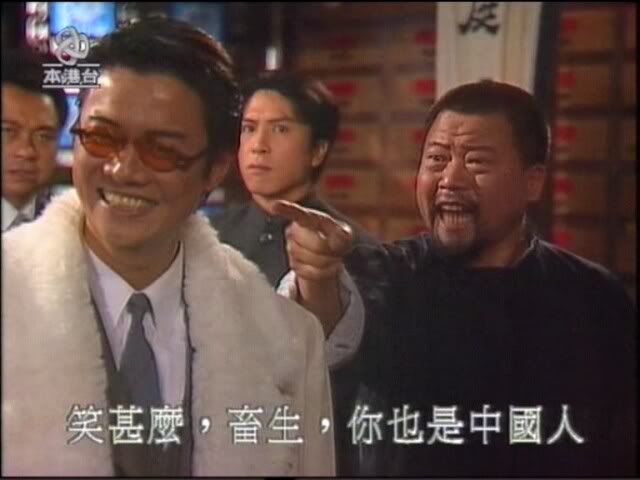
(What are you laughing at? Bastard, you are Chinese too!)

The very core element in constructing a national identity is the shaping of an ethnic identity. The subjectivity of a people lies in how a group of people primarily identify themselves. To construct a Hong Kong national identity, therefore, is to establish an ethnic identity through historical narratives, public affairs and popular culture. When establishing the subjectivity of a people, multiple identities inevitably clash with each other, and in the case of Hong Kong, the Chinese identity (Zhonghua Minzu) is the first and foremost obstacle in establishing the subjectivity of Hongkonger. This essay aims to manifest the historical track where the concept of Chinese-ness evolves from “diverse/pluralistic” to “unified/singular”, to point out the singularity of the Chinese identity is neither certain nor necessary, and hence to enable reflections on the possible future of a Hong Kong subjectivity.

“What are you laughing at? You are Chinese too!” If we were to encounter such accusations one day, the first thing that comes to my mind would be, “What are you even talking about? What is a Chinese anyway?” “China”… “Since ancient times”… Ironically, China has always been an ambiguous concept since ancient times. Let us start from the definition in a broader sense, where “China” represents a political and cultural community since Zhou Dynasty, and where being a Chinese means the consciousness one is a member of such community. Such consciousness is an inevitable product in human society as humans seek to co-govern and co-exist. A quote from the Commentary of Zuo goes, “A different race entails a different mind,” where “race” means the same ethnicity, but how we define “race” nowadays remains a problem unsolved. Fei Hsiao-tung’s The Pattern of Diversity in Unity of the Zhonghua Minzu reviewed and restated the mainstream opinion of the Chinese academia, where he used “Zhonghua Minzu” to refer to the some billion people living within Chinese national boundary, who have a national identity.  He described the community as a “diverse unity”, which means that the Han race absorbed a lot of minor races (or “ethnic minorities”), and minor races also absorbed a lot of Han members during the course of history. However, what is worth noting is, where does this “unity” of a national identity come from? Is it really “unified” national identity? 

The Genesis of China: A Cultural and Living Community

As Yu Ying-shih pointed out, ancient Chinese seldom distinguished “a different race” according to their biological ethnicity, which means the difference between Chinese and non-Chinese was not biological but cultural and ethical.  As the saying goes, “if the feudal princes obey the barbarians’ conduct, they are barbarians; if they obey the Chinese ones, they are Chinese,” which means the real difference between Chinese and barbarians is li, rituals and ethical conduct, which is prominent of the upper classes.  For the lower classes, on the other hand, a “race” is a way of life and a mode of production. For example, those who herded sheep and cattle by the day and live by a fire at night were called Di (狄), the fishermen and hunters who equipped themselves with longbows were called Yi (夷), those who planted rice and practiced slash-and-burn would be called Lieshan Shi (烈山氏), Shennong (神農), or the descendants of Houji (后稷之後).  After Yin and Zhou Dynasties, as well as the Spring and Autumn and Warring States period, the concept of a state came to be, it was until then groups of people were no longer distinguished as social communities “by people” but geopolitical communities “by land”.  Ever since Confucianism became the orthodox belief system of the central kingdom, “cultural distinction between Chinese and barbarians” came to be widely accepted by the Han Chinese.

In general, Chinese scholars explain the nationalistic concept of ancient Chinese using the theory of tianxia (“under the heaven”, 天下), which means China is the centre of the World, and other races scatter around China, who can be further classified into Yi (barbarians, 夷) and Fan (tributary states, 藩, barbarians who submit themselves to the superior rule of China); such is called Sino-centrism (huaxia zhongxin zhuyi), which contains the elements of modern-day cultural nationalism, as it differentiates “our race” and “the other” in terms of cultural customs and ethical conduct.  Sino-centrism, in practice, is Han-centrism.  For two millennia, different other races migrated to China proper and became a member of the Han race, as they adopted the Han costume, language, writing system and way of life.  However, as Ge Jianxiong (a Chinese historian) pointed out, such kind of Han-supremacist Sino-centrism is unequal in itself, as it develops at the price of other races’ demise, while at the same time it keeps an unrealistic sense of superiority among Chinese people.  It was when European intruders came to China and scattered the dream of using Chinese cultural superiority as a symbol of their national identity that Chinese intellectuals came up with ethnic nationalism to fill up the great void they had in national identity.

The Fickle Chinese Nationalism

In fact, as Hung Ho-fung pointed out, the meaning of Chinese nationalism has always been changing and shifting between civic nationalism and ethnic nationalism.  In late Ming to early Qing Dynasty, Wang Fu-chi (王夫之) raised the notion of “segregation between Chinese and barbarians (yi xia zhi fang, 夷夏之防)”, which was geared towards the Manchurians, and was the very example of extreme ethnic nationalism.  Later, when the Manchurians took over China and underwent Sinification themselves, they were considered a member of the Chinese cultural community.

After the Opium War, the development of the thought on Chinese nationalism took on two different routes, one of them being the Self-strengthening Movement as proposed by high-rank government officials and intellectuals, such as Tseng Kuo-fan, Li Hung-chang, Tso Tsung-t'ang and Chang Chih-tung, who saw Manchurians as a member of China, and suggested a China-versus-West dichotomy, since it was only through which could these Han-Chinese officials, who worked for the Manchurian Qing government, avoid the conflict between their nationalism and their career in the government.  The other route was a continuation of Wang’s Han-versus-Manchurian ethnic view, such as when the leaders from Taiping Heavenly Kingdom (太平天囯) announced the Manchurians were misfits and demons to be destroyed.

The term “Chinese nation” (Zhonghua Minzu) was first used by Liang Chi-chao, who borrowed the theory of nation-state from Swiss jurist and politician Johann Kaspar Bluntschli.  Believing that “there are only tribal men but no citizens in China”, and that Chinese people had no sense of statehood, Liang deliberately put strong emphasis on the supreme authority of the “reason of state”, a concept where the state is the top priority of its people, due to the fact that China was being coveted by imperialism and was under survival threat.  Liang stated that on top of the Han-centric “micro-nationalism”, China should focus more on “macro-nationalism”, which was the macro-nation formed by combining all the races in the state.

At the beginning of the Revolution, Manchurians were seen as foreigners by Dr. Sun Yat-sen, who founded the Revive China Society (Hsing Chung Hui, 興中會), with the oath of “expel Manchu, revive China (Zhonghua)”.   However, as Sun assumed the position as Temporary President of the Republic of China on 1st January 1912, he announced that “the territories of peoples of Han, Manchurians, Mongolians, Huis and Tibetans shall be combined to form one single country” and the notion of “expelling the Manchus” had been abolished.  But again, in 1920, he stopped advocating China’s role as a republic of five races, as he would like to adopt the melting-pot policy in United States of America, and incorporate all races in China to form a “Chinese nation” (Zhonghua Minzu), while later, he explicated that such a nationalism is “Han nationalism” in practice.

The Chinese Communist Party (CCP) had once adopted the theory of self-determination from the USSR, and supported the five races to freely align and unite with each other to fight against imperialism and oppression.  The 1934 draft of Outline Constitution of Chinese Soviet Republic had Verse 14, which stated that “the Chinese Soviet regime recognises the right to self-determination of ethnic minorities in the territories of China, to the extent where ethnic minorities are endowed with the right to secede from China and form their own independent countries.”  In 1945, on the 7th National Congress of the CCP, the report submitted by Mao Zedong, On Coalition Government, stated the necessity of forming a federal-based central government: “to improve the treatment of ethnic minorities in the state, and to endow them with the rights to self-determination, as well as the rights to form a united federal state with Han people under the principle of consent.” [Translation discrepancy appeared in its official translation: “Give the minority nationalities in China better and grant them autonomous rights”]

However, immediately after the establishment of the Communist regime, the self-determination issue was downplayed by the government.  In the telegraph issued by the Central Committee of CCP on 5 October 1949, “the issue of ‘self-determination’ of ethnic minorities should not be brought up again.  During the civil war, the Party used such slogan to gain support from ethnic minorities to fight against the reactionary rule of the Nationalist Party (as they were Han chauvinists to the ethnic minorities), which was totally right in that particular situation.  However, the situation has changed nowadays.” From this we can see the CCP advocates different racial theories just to serve their political agenda: when it was to resist the Nationalist government, they advocated self-determination; when it has established its own regime and came to power, they shifted to advocating ethnic assimilation. (Note)

Reflections on the Chinese Nation and the Pursuit of an Identity

In his work Banal Nationalism, Michael Billig pointed out the similarity between nationalism and a flag: rolled up when not in use; but when in need, it would be taken out for display again. The notion of “Chinese nation” has been taken out and given a wag for so many times, ranging from Sun Yat-sen to the Communist regime: sometimes the notion is adopted to advocate racism, sometimes it is used to advocate a melting-pot policy; “Chinese nation” is but a flag used to suit different political regimes and their agendas.  The meaning of “Chinese” has undergone 2000 years of Sino-centrism (huaxia zhongxin zhuyi), which is at the same time Han-centrism, all the way until now, where we have the “Chinese nation”, from which doctrines such as “diverse unity” and “the Han in turn enriched other races” derived. With the economic and demographic privilege enjoyed by the Han people of the country, as well as the single-party system dominated by the Han people, there is hardly a unity of Chinese races.  The most critical time for the peoples of China was also the time when Chinese nationalism was being manipulated to the fullest. Although there is a growing consciousness of the Communist government concerning the use of terms “children of the Yellow Emperor” or “descendants of the Dragon”, which are replaced by a broader term “the peoples of China”, few Chinese people can get rid of the ethnic-nationalistic framework. The European-Asian dichotomy since late Qing Dynasty reinforces the concept where Chinese-ness merely equals the biological features as having yellow skin and black hair, and as such concept fused with Han chauvinism, minor races with their own languages and customs find it difficult to fit in as a people of China.

Under the current political context in Hong Kong, those who would agree on defining a people by its ethnicity and culture would be labeled as “Greater China morons”.  While I agree that the Sinocentric mindset, rooted in Han-centrism, is full of contradiction, I also understand the genesis of such a complex under a Chinese cultural context.  A culture links to history, and history links to the communal imagination of a people.  Such linkage is especially evident in the 2000-year-old Chinese languages, where idioms are a direct reflection of a common history, unlike Western ones (for example, “pointing a deer and saying it's a horse” [distort rights and wrongs] has a root from Qin dynasty).  It is a common saying in the Chinese intelligentsia, “there is no separation of literature from history”, which means literature and history are intertwined.  Chinese languages are the very vehicle of Chinese history, which is a history of separation and reunification through dynasties, of the yearning for a unified empire as its ultimate goal, which is why so many Chinese people sense a feeling of diaspora, a feeling where “flowers and fruits scatter” [from the trunk of China], as Tang Chün-i put it.

Lastly, let us go back to a very basic question: “Who am I?”  According to the
(Robert Chung, chief in HKUPOP; aTV News)
results from the Public Opinion Programme by the University of Hong Kong (HKUPOP) since 1997, when given the options “Hongkonger”, “Chinese”, “Hong Kong Chinese” and “Hongkonger of China”, only 18.1% of the interviewees identified themselves as “Hongkongers” in 2008, whereas 35.9% and 36.5% were recorded in second half of 1997 and first half of 2015 respectively.  In other words, there are generally more than 60% Hongkongers who would identify themselves as being Chinese.  However, these figures only show Hongkongers’ affiliation with a Chinese identity in its broadest sense, as whether Hongkongers’ identification with China is cultural or political remains unreported in these figures.   According to an investigation delegated to HKUPOP (by an academic study task force where a public announcement is yet to be made), citizens still identify very much with “the Chinese nation”, “China as a motherland” and “People’s Republic of China as a motherland”; the data also shows Hongkongers agree there are close historical and ancestral ties between Hongkongers and Mainland Chinese people, but they also emphasise that they hold a different set of values from Mainlanders. 

Brian Fong claimed the data show that Hongkongers have, in turn, a “hybrid” national identity, which Chan Chi-kit calls as “Hong Kong-style nationalism”, a nationalism constituted mainly by “civil values”, while including some elements of “ethnic identity”.  According to Chan, “Hong Kong-style nationalism” never rejected the common ancestral, cultural and historical lineage to start with; in the past, Hongkongers resented Beijing’s iron-fist policy, which caused damaged Hong Kong’s autonomous status and core values.  After the Occupy Movement, Hong Kong undoubtedly sees a slimmer and slimmer chance of regaining autonomy from the hands of Beijing.  In order to resolve the inner struggles between embracing and resisting China, as well as to avoid Beijing’s further damage of Hong Kong’s core values, it is necessary to move on from the myth of “same ethnicity, same culture, and same destiny” and reconstruct the citizenship and subjectivity of the Hong Kong people.

I hope there are more thoughts on our self-identification through understanding the historical context of the genesis of “the Chinese people”.  First, “the Chinese nation” has never been a consistent concept throughout history; instead it is an official nationalism generated by political needs of different regimes. Second, “the Chinese nation” describes both the ethnicity and the citizenship, considering “the Chinese nation” or “Chinese” as merely having yellow skin and black hair is actually a Han-centric ethnic nationalistic notion, which in turn denies China as a multi-ethnic country and its possibility of achieving racial equality.   If “Chinese nation” is to be perceived as the greater nationalism of citizenship, then the right to self-determination should also be respected.  If one is to regard ethnicity as the ultimate resort to define a people, under the condition of not causing any harm to the rights and freedom of others because of it, then one is also free to believe in such ethnic nationalism.  It is when one overlooks people’s agency and welfare as citizens due to one’s over-emphasis on the ethnic sense of belonging; it becomes unacceptable (to believe in ethnic nationalism).  Thirdly, one’s identity comes with multiple layers, including familial, geographical, cultural and national ones.  There is no need for Hongkongers to shy away from Chinese culture, or for them to struggle between Chinese culture and their national identity, as Hong Kong is flexible and diverse to start with.  Hong Kong’s football, television productions, etc. all support the identity of Hongkongers. 

Hong Kong has historically been a migrant society.  People land here, but without taking root.  Xu Xu, who himself was a migrant from China, described the psyche of rootlessness of Hongkongers, and used it to explain why Hong Kong didn’t emerge with its own literature and culture: “if a place was to have its own culture, there ought to be, at least, ‘nationals’ who live there.  People who live in Hong Kong are temporary and fluid, and nobody really treats it as a permanent home.  Businessmen would only limit their vision in the 5 years to come at best, and students who’ve got better places to go after graduation would certainly leave.  In this situation, it’s hard for a culture to develop.” In fact, the notion is also an apt description about Hong Kong’s lack of subjectivity.  As time flows by, and with people born and brought up here, there are certainly the ones who wish to simply leave the city, but there are also the ones who are willing to stay and share responsibility and obligations.  I have no intention in advocating “de-Sinification”; instead I advocate, as Lung Ying-tai puts it, “de-Chauvinisation”.  There is no doubt about the effect of Chinese culture on our lives.  But as we live in a place called “Hong Kong”, instead of asking “what are you laughing at? You’re Chinese too”…Think, I’m a Hongkonger. 


Note: Materials regarding the fickleness of racial theories posted by CCP:
“CCP is the Biggest Advocate for Self-Determination”. Hung H.F. Ming Pao 2 Feb 2015, and;
“The Crippled Nation and the Self-Determination of the City-State: the Hong Kong Question under the Plight of Construction of the Chinese Nation State in 20th Century”, On the Hong Kong Nation, 2014.
20150902

Yukikm: Is Hong Kong worse than Qing?

Is Hong Kong worse than Qing?
Translated by Chen-t'ang 鎮棠, written by Yukikm, edited by Vivian L.
Original: http://polymerhk.com/articles/2015/08/24/20005/

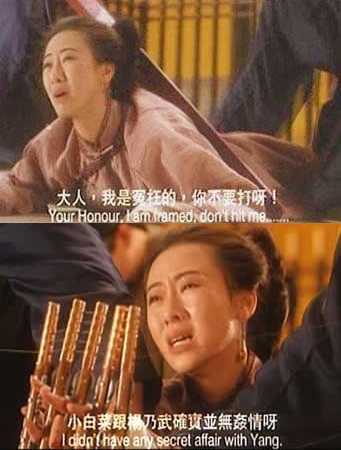
(Little Cabbage and Yang Nai-wu in Chinese Torture Chamber Story)
In late Qing, in the year of 1873, 12th October marked the beginning of the redress of a famous case of injustice in late imperial Chinese history as the drum of magistrate of Yuhang County rung. The case went through all levels of court in the imperial justice system, originating from the county level, then to prefectural level (also known as fu), and brought all the way up to the Chief Justice, the provincial level court and the Justice Department. Seven times the courts dismissed the case, and it was only because of the direct intervention of Empress Dowager that the case was redressed after she commissioned some important ministers to oversee the matter. At the end, a large number of officials involved in the misjudgement were removed. The incident was later known as the famous case of "Yang Nai-wu and Little Cabbage" (alternatively transliterated as Yang Nai-wu and Hsiao Pai Tsai).

Nicknamed Little Cabbage, Pi Hsiu-ku was married to tofu seller Ko Pin-lien at the age of 16. The couple once rented a house that belonged to Yang Nai-wu, who taught Little Cabbage to read and write. Therefore the neighbours had rumoured that they had been having an affair. In fact, Yang was deeply in love with his wife, so the rumour was indeed unfounded. Subsequently, Ko and Little Cabbage moved out, and Yang had not seen Little Cabbage since. Later, Ko got sick and died, but Ko’s mother suspected he was poisoned, and went to the county's magistrate, Liu Hsi-tung, who had held a personal grudge against Yang. Though according to the coroner's report Ko did not die of intoxication, and Yang had an alibi at the time of Ko’s death, Liu simply dismissed those evidences, and insisted Yang and Little Cabbage killed Ko because of their affair. Liu even falsified "evidences" and physically coerced Little Cabbage into confessing to the crime (as Yang was an imperial scholar whose title excluded him from being punished by the court, Liu plotted to have Yang’s title removed, so that he could to force a confession out of Yang with his own means).

Without a confession from Yang, Liu handed down his sentence nonetheless. He then sent the verdict denouncing both Yang and Little Cabbage as guilty to the chief of Hangchow, Chen Lu. Chen was a soldier who contributed in the suppression of the Taiping Rebellion, and was prejudiced against scholars. He thought that Yang’s behaviour was out of line by having too much to say about current affairs. Therefore, Chen took great pains including physical torture to force a confession out of Yang. He finally concluded the case as a lovers’ quarrel went sour where Yang allegedly "murdered the husband to get the wife". Little Cabbage was sentenced to be killed by slow slicing, and Yang was to be beheaded. When the case was sent to the upper court for approval, Chief Justice Kuai He-sun and governor of Chekiang Yang Chang-chün, who were in the same faction with Liu and Chen, approved the ruling despite they were dubious, because overturning Liu and Chen’s decision would have caused harm in Liu and Chan’s careers. Perhaps, officials collusion is something that is as old as time. And it should be no stranger to today’s society, where thuggish and corrupt cops were well protected by the HKSARG.

Luckily, the fourth estate was there — independent from influence of the Qing regime, Shun Pao, also known in English as Shanghai News played a pivot role in holding the authorities in check. The English language newspaper had been following Yang and Little Cabbage’s story from the very beginning and had found a lot of instances of injustice during the trials. This had given Yang's family slightest glimmer of hope, thus they went from pillar to post to petition Yang’s case. Hu Xue-yan, a rich merchant, was sympathetic to Yang’s situation, so he funded Yang's family to appeal. What's worth mentioning is Hu was in General Tso's faction, whose member included Chen Lu. Despite sharing the same affiliation with the prime antagonist in the case, Hu still showed solidarity with Yang’s family through action. What a great difference when it's compared to the so-called rich men in Hong Kong. With the necessary resources provided by Hu, Yang's family went to Peking to petition for Yang’s innocence. After all, Qing was not as bad as the Communists who brutally suppress petitioners "to maintain stability". Meanwhile, Emperor Tung-chi died. Kuang-hsü ascended to the throne and granted clemency to all. But since Yang's case had been brought to Peking, it was excluded from the pardon and was held back "as the case was serious".

But Wang Shu-ruei from the Justice Department thought that those magistrates/officials were procrastinating deliberately, so that the two defendants—who had suffered severe injuries from repeated torture—would die in jail, giving them another closed case that would serve as a merit on their report cards. Same as the magistrates now in Hong Kong, counting their career by the number of cases closed. Wang reported his concern to the Empress Dowager, who agreed with Wang. She then appointed Hu Ruei-lan, the Chekiang Minister for Education, to rehear the case. Hu continued to use severe corporal punishment on Yang and Little Cabbage. All of Little Cabbage’s fingers were shattered, and Yang's legs were broken. And they continued to be forced to confess. Hu Ruei-lan was a learned scholar in Confucianism, but apparently he had little, if not no, knowledge in the justice system – not unlike the "Yi Jin graduates" in the case of Hong Kong’s law enforcement officers.
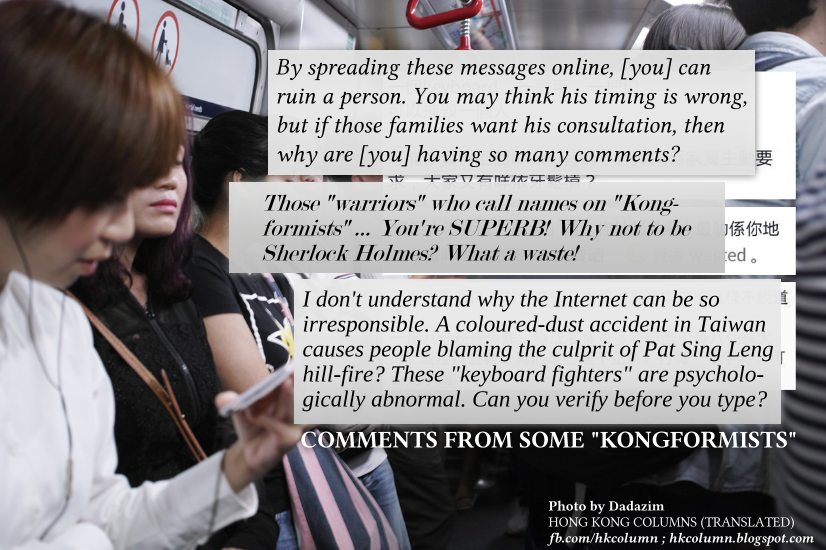
To be a policeman, one has to at least pass the HKDSE exam, or join the Project Yi Jin, a project for students with less...
Posted by Hong Kong Columns - Translated on Tuesday, 10 March 2015
On one hand, Hu submitted a faked testimony polished in his favour to the Imperial Court, on the other hand, he also submitted the original testimony to credit himself as being "fair". When Shanghai News gathered and published both versions of the testimony, readers and the authorities were stunned by the absurdity.

After the wide coverage of Shanghai News, many scholars and local officials submitted a joint petition raising the obvious doubts of the case. The seven trials held on the imperial order had been a hoax. The Peking Investigating Censor Pien Pao-chüan also impeached Hu Ruei-lan and Yang Chang-chün in accusation of the unfair trials. At last, Empress Dowager decided to commission an interdepartmental panel consisting of the Justice Department, the Censorate and the Supreme Court to hear the case. Ko's corpse was excavated and re-examined, upon which no sign of intoxication was found, showing that the initial "evidences" had been fabricated by Liu.

Back in the Imperial Court, ministers were divided: some thought officials involved in the shenanigans shall be severely punished; while others thought that the Imperial Court shall not sacrifice a large number of its elites merely because of two civilians (Wow, such patronising authoritarian crap! Just like some officials in Hong Kong who think they are high-and-mighty, but never think for a moment who’s paying their paychecks). Finally, it was Empress Dowager who decided to depose officials involved in great number—a rarity in Qing history.

The last few decades of Qing bore resemblance to present-day Hong Kong—dominated by an authoritarian regime, collusion abound and rule of law under constant threat. Yet a century ago there were still Shanghai News revealing the truth, upholding justice for the society. And now in Hong Kong, mainstream media "castrate themselves" by ceding the power to criticise the authority or are even jump at the opportunity to be the government’s mouthpiece. Journalists have to distort the truth to save their jobs. The fact that those Qing officials were mindful of public outrage and spoke against their colleagues stood in stark contrast with the elites in our city today. Now the HKSARG simply ignored public opinion, and felt good while protecting each other. While rich men in Qing would stand up against injustice, rich men in Hong Kong are but bloodsucking vampires who profit off of deceiving civilians. Hongkongers seem to have grown numb about injustice in the society. Perhaps we are in a state where progress actually moved backwards, making today's Hongkongers worse than the people in Qing, who could tell right from wrong. Are Hongkongers worse in insisting on justice when compared to people back in Qing?

(This article mainly transliterate names in Wade-Giles as it happened before 1949.)

20150731

Lewis Loud: Stanley Cheung Incident Unveils Ethnic Mentality of HK (with BG)

Stanley Cheung Incident Unveils Ethnic Mentality of HK
Translated by Chen-t'ang 鎮棠, written by Lewis Loud
Original: http://dadazim.com/journal/2015/07/national-mental-illness/ 

Basic info about Stanley Cheung Incident. In 1996, Stanley Cheung Yun-hang, his classmates and two teachers went to Pat Sin Leng for hiking. A cigarette butt was found, and had caused Pat Sin Leng hill fire, which caused the deaths of two teachers and three students from HKCWC Fung Yiu King Memorial Secondary School and left 13 others injured. Cheung himself was severely burned. Recently [in late June/early July], there are a lot of discussion as there was a dust blast incident in Taiwan, causing over 500 injuries, with most victims seriously burned. Stanley Cheung claimed that he was invited by Taiwan organisations and he hoped that he can encourage the victims with his past experience, yet it has caused a serious rebounce on the Internet. People also cast doubt on him, as he again tries to use his fame to promote himself even when a Taiwan netizen asked him not to go. Yet, on 30th June, Cheung brought the camera team from TVB programme The Scoop to Taiwan, which contradicts to what he said before -- "no camera during hospital visits". There were certain classmates saying that Cheung was the one who left the cigarette butt and caused the hillfire and left their comments on Facebook, but soon they were deleted by Cheung. After being accused, Cheung finally admitted he smoked back then on an interview by Apple Daily (3rd July), but denied leaving a cigarette butt, and even said "so what even if you find the truth", further aggravating the emotions of his former classmates and netizens.


===================
The controversy over Stanley Cheung incident unveils the ethnic mentality of Hong Kong.

First, it shows the superstition towards professionals, which was bred since the 1970s. Many people think that reconstructing the news reports, Coroner's report and statements are "just a few sentences by the netizens" or "there's no cost of doing that", so they disdain such articles.

These people will share the posts from journalists, and believe in the spin doctors for Cheung in Ming Pao or Apple Daily, and disdain the evidence or reconstruction. These are superstition towards professionals. When reporters say something, the mass believes in them; but for "commoners" or online media, even if they spend lots of time to investigate on the hill-fire and to prove the discrepancy between what Cheung has said and what the victims said back then, these people will still think "it's just a few sentences by the netizens". They have the exact same attitude as Cheung, "So what if you find out the truth?"

Those who blindly follows the "professional journalists" will automatically filter the voices from "the netizens".

Education aims to make complete men. After the industrial revolution, men are divided into different streams and professions, with intellectual barriers -- you don't know much about mine, I don't know much about you. As a result, people are more professional than before, and have fewer common sense than before. 

With fewer common sense, there are also superstitions towards other professions: Stanley Cheung studied social work, psychology and counselling. With a burnt face and his rehab experience, he becomes the "professional" and has the final say. It becomes a matter of course for him to visit the victims in Taiwan. So, they have simply neglected the common sense that victims should not be interfered by others when they were in the initial stage (not to mention Stanly Cheung's face).

A friend of mine studies journalism. He told me many of his classmates liked the spinning "coverage" from Ming Pao, which criticised netizens "writing a few sentences which involve no cost". Those journalists-to-be are, as usual, very arrogant.

As journalists think highly of themselves, those senior lecturers could make their students to believe that "the truth will and only will be shown to the world by journalists". So what they blindly support is their say. They don't understand the Internet is growing so rapidly that information is easily obtainable. We are now in 2015, not 1996, an era when people used IE or Yahoo, or "journalists" could impact people's minds with their pens.

Big channels or newspapers are not God. The truth does not necessarily have to be shown by their hands. Mainstream media no longer have the authority they used to enjoy, thanks to self-censorship and brown-nosing Beijing.

Second, the controversy has shown the "mediocrity" which a lot of Hongkongers crave for. Blue-ribbon uncles or market aunties bash the Occupy Movement because they hate "noises". Those who oppose to unveil the truth of the Pat Sin Leng Hill Fire hate the "Internet noises". They do not care about the truth nor justice, nor whether this "life warrior" has caused others' death. These people 
just want the world "look peaceful" or listen only to good deeds by others. No in-depth investigation, no "noises".

You don't want noises, don't you? You just want your good old days, living happily forever, is that so? You are just like "Blue Ribbons". Don't tease at them. They listen to TVB, you listen to the "Big Stage". Stop calling the pot black, you kettle.

Ching Wing See: Conscience in Sale

Conscience in Sale
Translated by Chen-t'ang 鎮棠, written by Ching Wing See
Original: https://www.facebook.com/CemeteryNew/photos/a.729801777127442.1073741829.729586907148929/860745910699694


Do you think the "psychic" hired by Blind Sports Federation know that she fails Mr Lam Wing-shun, the victim in BSF's scandal? Do you think the staff in Kei Chun Primary School will not see the female victim in their dreams? They know it. They might be kind, but they sell the conscience for money.

Nowadays, doctors, judges, teachers in Hong Kong sell their conscience too. They lied in front of everyone for the sake of money. They are so ludicrous that no one would believe in them. But they are still lying shamelessly. Why? After fame, fortune and authority.

Will we sell our conscience because of these? Or in other words, how much is your conscience?

I am not confident enough to answer for you. The world today no longer praises people with conscience, and instead, brings villains to the shiny stage. But should we still have conscience?

I can tell you, karma is slow but sure. Villains are often long-lived, or enjoy enviable lives. The world seems unfair. But if every one is without conscience, then this city will be tantamount to the country across the border.

Conscience is "calling a spade a spade"; speak for the truth and righteousness. Conscience is our best quality.

They sell cheaply their conscience for position or property. But do you want these money? Are you trading the future of Hong Kong with this amount of money? There are a lot of jerks, but would you be one of them?

My dear friends, you are conscious. Professionalism and conscience might be exchanged by money, but as long as you still love Hong Kong, please be upright with us.

20150718

The Fate of The One and Only Martyr's Shrine in Hong Kong

The Fate of One and Only Martyr's Shrine in Hong Kong: Po Yin Fat Yuen, Tiu Keng Leng
Info: Begonia ROC History and Geography; Integration and Translation: Hong Kong Columns – Translated

(by Begonia ROC History and Geography)
Founded in 1952, Po Yin Fat Yuen was located at 78, Area 3, Tiu Keng Leng by a guru from Yonghe Temple, Peking. Before coming to Hong Kong, he had collected photos of the 72 Martyrs' in the Second Guangzhou Uprising, and wished to build a Martyr's Shrine in Hong Kong for those martyrs who have sacrificed in the 1911 Uprising and Second Sino-Japanese War. He provided psychological support for those Kuomintang Army in TKL who could not go to Taiwan.

In 1949, the People's Liberation Army aggressed southward, and the KMT army could only retreat to Hong Kong, which was then a British territory. In order to avoid any clashes with the underground Communist party members, they were relocated to Rennie's Mill (now Tiu Keng Leng). The Hong Kong Government waited the some 8,000 soldiers and officials for Taiwan to collect, but most of them could not go to Taiwan, so they started their lives in Tiu Keng Leng then. Most of the KMT army directly participated in the war against Japan, and after their death, they will be worshipped in this Fat Yuen by the alive with offerings and incense sticks.

In 1996, Tiu Keng Leng was demolished by the Government. Po Yin refused to leave, so the Government rent them the former Tiu Keng Leng Police Station with nominal costs. In June 2015, after 75 years since the end of the War, the HKSARG sent riot police to force the Shrine to leave. Lau Kin-kwok, the person-in-charge, burnt his hand as a form of protest.

Lau told reporters that the Fat Yuen will very likely be allocated to Heaven of Hope Christian Services (HOHCS) for building a hotel, as part of the development plan in District Council. His Fat Yuen did not receive any bid invitation, but only the HOHCS did. Lau doubted that there might be advantage conferment.

The Sai Kung District Council decided to force the Fat Yuen away without consulting the victim, nor the public. Even if they receive so much letters supporting the Fat Yuen, they simply neglected them, and only sent bid invitation to HOHCS. Is this still Hong Kong?

20150715

Polymer: Enlightenment to Hongkongers through the Korean farmers

Enlightenment to Hongkongers through the Korean farmers
Translated by S. Lai, edited by Chen-tang, written by Polymer HK Editorial Team
Original: http://polymerhk.com/articles/2015/07/04/17846/ (Originally on Issue 21, PolymerHK) 

‘Down! Down! WTO!’ Can you still hear any echo of this slogan in your mind? The World Trade Organisation (WTO) Ministerial Conference was held from 11 to 18 December 2005 in Hong Kong when a group of foreign protesters, mostly South Korean farmers, protested against globalisation. Not only did their struggle seize everyone’s attention, they even inspired all Hongkongers’ vision, sowing the seed towards civil disobedience. Our protest and struggle are never the same hitherto.

Before the Korean farmers came...
In the past, there is only one mode in demonstrating; Setting off from the Victoria Park, the crowd would march according to the designated route orderly, or even robotically, leaving no rubbish on the streets. As the pan-democrats led the march and the chanting, they made their speeches when the crowd eventually arrive at the Government headquarter in the evening, followed by people leaving and heading back home. This was the monotonous ceremony following the tradition of the1st July demonstration.

As Lau Sai-leung once said, “Mainstream middle-class people were the pivot of the 1st July Demonstration in 2003 together with barristers and professionals. They have a “fetish with order”, or are even in a state of indulgence. They fear physical conflicts, troubles and criticisms from the media, resulting in such a strolling protest. Protesters would walk around the venue and leave, forgetting the real target behind demonstrations and protests. As social movements are belittled to a way of living, they now lose their due impact, castrated by the host of the rally.’

Leung Man-tao (Translator's note: a leftard Hong Kong columnist renowned in China) also criticised such demonstration culture. He commented in  “They are almost burnt to death. We are yet still only the audience”, “ever since the 1st July Demonstration in 2003, “rationality” has become a phrase in a standard account of Hong Kong democratic movement. To those who study collective action, collective action confers a sense of identity to all participants, uniting them and even creating a brand new collective identity. For everyone who has gone to this rally, most of them must agree that “while we Hongkongers are determined to pursue democracy, we are too rational in our action.” “Rationality” thus becomes a Hongkongers’ proof of our own identity and a standard in determining whether protests are good or bad. Under such logic, “rationality”, under the eyes of Hongkongers, is afterall mere observance of orders. Unruly walking and running on the streets is not in accordance to order and thus irrational; demonstrating on stilts or skateboards are thus of course unruly and irrational as well. In case (just in case) when one makes use of self-immolation in protest, it shall be undoubtedly opposite to rationality, an act of complete insanity. In the other way round, it is absurd that we still find ourselves ‘rational’ when we generalise people as “irrationality” given that we don’t understand their reasons to protest or adopt totally different means in protest.’

‘Public intellectuals’ might be unsatisfied, but the general public took such practice for granted, or were even proud of it, until the Korean farmers shocked everyone.

A Moral Appeal: Protest through Performing Arts
Korean farmers might still go on demonstration and followed assigned routes to the protest areas, but they were not like the Hongkongers who had only made use of their mouths and their legs. As a blogger has once stated, the demonstration culture in Hong Kong limits the possibility and creativity of body movements to mere ‘walking’, restraining us from breaking through the current spacial settings.

The Korean farmers never confined themselves. They knew their aim to seek as much attention as they could in order to make their demands concerned by the general public. The classic three-step-and-a-kowtow is the most well-known act of the Korean farmers, which was somehow an impersonation of worshippers paying respect to buddhas at Tibet and showing an utmost pious attitude. Putting on knee pads and gloves and under the lead of the drum, for every three strides they took while shouting ‘Down Down WTO’, they kowtowed at the ground with their hands clapped together. These scenes were truly striking and moving to Hongkongers then. The media unanimously reported such protesting means from a positive perspective, i.e. the Oriental Daily described such asceticism as ‘The Moving Jang-geum Spirit’ in its headline, inducing Hongkongers’ reflection on the pros and cons of globalised trade.

Apart from asceticism, music was played, Korean ‘aunties’ danced in traditional Korean style and sang to raise the morale amid the rythme of the hand drums. According to report of ‘Cool Loud Web’,‘ another group of female Korean farmers held colourful sticks up high while two of them pushing the speakers and props forward. With their self-written songs, one led the crowd to sing with a microphone, the other followed and made their moves. During the bridge, on one hand, they chanted slogans of “Down Down WTO”, “Down Down FTA”, “Bye Bye USA” and “Bye Bye Bush”, or, on the other, yelled “We love Hong Kong” to the citizens energetically. Though I could never understand the speeches made by the one holding the microphone during the bridge or performance, the speeches are more like jokes among them, delighting everyone.’

As the ‘Cool Loud Web’ commented, chanting  in demonstrations in Hong Kong and Taiwan were mostly led by the leaders on stage and followed by the rest of the participants. Not only did it lack interaction among different groups, it failed to influence or interact with the general public or passers-by. Therefore, while people might have tried to mobilise as many people as they could for the demonstration, their chanting caused a totally opposite result. As the old Chinese saying goes, “Their spirit was aroused by the first roll or the drums, but was depleted by the second. And it was completely exhausted by the third”. The inability to gain an official promise from the government eventually exhausted the morale of the crowd. The Korean farmers’ demonstration yet allowed everyone to be starred, enhancing the camaraderie and even influencing the general public through interactions. The course of the demonstration manifested their aims.
The asceticism of Korean farmers moved many Hongkongers back then. (Apple Daily)

Dauntless towards bloodshed: militant protest and struggle
Still, it is afterall the intense physical confrontation that attracted the most flashlights. The Korean farmers had never given up on using physical confrontation ever since the start of the protest. The following are only some of  the ‘moves’ that were used:
  1. Pulling down rods from metal barricades and sharpening bamboo sticks to attack police
  2. Protesting through jumping into the sea and attempting to swim to the Hong Kong Convention and Exhibition Centre (HKCEC) (venue of the WTO Ministerial Conference)
  3. Using cling wrap and umbrellas to protect themselves from pepper spray
  4. Spraying extinguisher at the police
  5. Using metal barricades to form a L-shape bulwark for charging at the police cordon
  6. Burning coffins
  7. Attempting to push police cars over
  8. Occupying the Gloucester Road
  9. Seizing police shields (returned after the protest)
  10. Damaging public properties and charging through roadblocks

While these were only moves in 2005, can the level of protest in Hong Kong get closer to the Korean farmers’ today after 10 long years?

The protest entered its climax on 17th December. The Korean farmers upgraded their protest at Wan Chai that afternoon. A series of charging enabled them to go through the police cordon and attempt to intrude the new wing of HKCEC to stop the WTO Ministerial Conference. They eventually forced the police to shoot 34 gas grenades and mobilise armoured carriers and shoot super sock rounds. Unlike the original positive report, the media described the incident as ‘tumult’ or ‘uprising’, shifting the focus from anti-globalisation to violent confrontation.

Police using OC foam, commonly known as pepperspray (Apple Daily)

The several physical confrontations between the farmers and the police force allows Hongkongers the audience to discern the difference in level between  ‘violent protest’ and ‘physical confrontation’. As Lau Sai-leung explained in his article “The Logic Behind Mass Movement -- the Physical Showcase of Korean Farmers”, violent protest is to create the most chaotic effect with the major aim being disturbing social order through various means, namely: burning vehicles, throwing stones and assaulting shops, looting and attacking police with violence; another kind of violent protest has clear demands, attempting to put people’s political demands on the social agenda through the protest and inducing much discussion through the media. Physical confrontation then becomes a ‘theatrical performance’ in a mass movement. Farmers are required to be focused and passionate. Physical confrontation has to be vibrant from a journalist perspective and is thus capable to be starred in the headlines on the coming day. Still, when it is a mere showcase, one must recognises its bottom line. One cannot seriously damage the body of the opponent with offensive weapons, disturb the social order and attack other parties.

Protesters attempted to push over the police patrol car. (Cable News)
Farmers attacked police with fire extinguisher (TVB News)

The incident ended in peace at last, but the farmers’ protest shocked the youngsters participating in social movements then, giving rise to much opinion concerning the 1st July Demonstration and peaceful demonstrations. Such mode in protesting also gradually blends into the local protests.

How the Hong Kong "students" copied it
Quite a few of post-80s youngsters either directly participated in the anti-WTO protest, or witnessed their protesting means through the television. The influence from the farmers can thus be clearly seen in these youngsters’ participation in social movements.

The Korean "teachers" showed Hong Kong two ways out: peaceful protest for moral appeal with the element of performing arts, or militant protest to attract public concerns through physical confrontation.

We could clearly see the Korean influence from the protest against High Speed Railway in 2009. Post-80s youngsters impersonated "asceticism", initiating the 15-hour-per-day "5-constituency asceticism" in which participants knelt for every 26 steps they took, symbolising the 26-kilometre-long high speed rail (XRL). Protesters held rice and seeds with hands, representing public money and Tsoi Yuen Tsuen. It lasted for four days and three nights, from Sheung Shui Metropolis Plaza to LegCo until 8th January, the day of vote on the XRL appropriation, en route five Legislative Council geographical constituencies.

Anti-XRL movement is the beginning of the localisation of asceticism. (Apple Daily)
In subsequent social movements, i.e. strike at the container terminal, protest over the constitutional reform controversies, asceticism was also made use of by youngsters in showing their demands, in hope of raising people awareness on the issue as a result of such moral appeal.

Youngsters supported workers in the strike in the container terminal (2013; Apple Daily)
Some university students knelt and walked in Causeway Bay, asking people to join the 1st July Demonstration. (2014)
Apart from long kowtow, asceticism ‘had gradually mutated’, with examples of standing in silence, protest through reading or even throwing eggs on themselves. They are similar in the sense that they try to influence the indifferent people to beware of the concerned issues through afflicting their own bodies (long period standing, kneeling, dirtying the bodies). In doing so, they could expand their influence and have more people participating in social movements.

A "reading confrontation" by 21st Century Youth, with the meaning to defend independent thinking and be in pursuit of knowledge - said to be following an Italian movement, Sentinelle In Piedi.
A mother of two threw herself with 1,000 eggs, "to express the helplessness and guilt of not being able to change the future for the next generation", outside LegCo. (15 Jan 2015)

Yvonne Leung, president of 2014 cabinet of HKUSU, and other university students stood in silence in MTR stations and platforms to urge passengers not to forget the Tian'anmen Massacre. The placards they held read: "4th June 1989/Too sorrowful to remember/Dare not to forget".
Besides, singing is also an important item in performing protest in Hong Kong.

Such performing protest was once dubbed as ‘happy protest’ by Wan Chin, a political commentator, who said in his article,‘in terms of its modus operandi, happy protest is to face hardship, inspire and gather a crowd with contentment. It shall utilise the power of the crowd to make the suppressors fear, it shall spread the happy lifestyle of the public and thus make the suppressors ashamed and give in. By then we shall be freed.’ He disagreed with forced revolution back then,‘any beginning with forced protest would only make the disadvantaged even more frustrated: when the weaponry are so scanty and meagre as compared to the authority, it is a must to stir up an irrational hatred and an unprecedented war to annihilate humanity (e.g. terrorist attack), which shall only sacrifice many fellows. The authority would only put together an even more well-knitted ideology and implement even more brutal means.

‘Happy protest’ had quite a good impact at the first place, namely the much awareness raised after the 5-constituency asceticism during the protest against the XRL. Some of its participants are still pivots in social movements nowadays. But as time goes by, doubts have been casted on the effectiveness of such peaceful protesting means. People who are in favour of such means may even be called as ‘retards’.

The farmers’ image of militant charging has been influencing our local social movements bit by bit. While it was asceticism on this side, seizure of metal barricades and siege of the LegCo building were exactly the other side of the scene. There was even suggestion of occupying streets and roads (though it was rejected eventually).

After the WTOMC protest, grabbing barricades become one of the must-do in social activism, and is a symbol of "being radical". (left: Apple Daily)
The League of Social Democrats was formed in 2006 representing the proportion of radical democrats in Hong Kong politics. Three members of the League even became legislative councillors in 2008, enabling struggle with cooperation inside and outside of the Council.

Member of the League have had various so-called ‘radical’ actions over the years, namely ‘hurling bananas’or‘throwing eggs’at government officials. Apart from such radicalness in action, the League also initiated the ‘Five Constituencies Referendum’ with the Civic Party in 2010, which was regarded as a new attempt in Hong Kong democratic development. Though the League was split into two and led to the formation of the People Power in 2011, radical actions in the council and struggles on streets have never come to an end with ever growing support. In 2012, the People Power, the League and some independent councillors initiated a filibuster, shelving the new ministerial line-up proposal. Filibuster has also been adopted ever since by radical councillors as a usual practice in protest in the Council.

Hong Kong politics has only gone more gloomy after CY Leung took office. The Umbrella Revolution was the only result when the Hong Kong government ordered the police force to shoot tear gas grenades at the crowd gathering around the government headquarters on 28th September 2015 due to their opposition to the 31st August framework.

The Umbrella Revolution was regarded by quite a number as a milestone in Hong Kong social movement due to the various rare or even unprecedented protesting means adopted ever since the transfer of sovereignty of Hong Kong. Examples include self-initated blockade of roads leading to the total paralysis of all major highways in Admiralty, Mong Kok and Causeway Bay and roadblocks reinforced with concrete and bamboo scaffolding.

Left: Breaking the glass of LegCo complex with barricade in Umbrella Revolution, 2014;
Right: Scrambling over barricades and shields in Korean farmers' protest, 2005.

Besides, protesters started to beware of the importance of self-defence. They purchased helmets, home-made shields and protective gears for cycling to defend against batons. They also protected their eyes from pepper spray with umbrellas, goggles or cling wrap. Face masks or even gas masks were used against tear gases.

Protesters even started having a sense to ‘attack’ instead of mere defending. Of course it was not like how the Korean farmers fought with the police in hand-to-hand combat or attacked with metal rods, but they did form L-shape bulwark and pressed against the police as how the Korean farmers had done. When the LegCo complex was charged, even though it stirred up much controversy, some might even criticise those initiators as ‘spies’, it shows that quite a number of people were no longer satisfied with symbolic radical actions like ‘hurling bananas’. They demanded and initiated more direct actions.
Left: Barricade bulwark in Umbrella Revolution; Right: by Korean farmers (Apple Daily)


These were never possible in the past ‘strolling demonstration’.

Localism has been on the rise since 2011 which even raised criticisms on traditional pan-democrats demonstration or even social movements led by the left wing. Wan Chin, the proposer of the City-state Discourse, said,‘the failure of the anti-XRL protest in 2009 was mostly due to its difficulty in carrying out populist promotion as a result of its relation with China's assimilation in Hong Kong, forced relocation of Tsoi Yuen Tsuen and agricultural conservation. Even though various means, i.e. filibustering, asceticism and conservation participation (I also assisted the post-80s social movement and proposed tactics in the ‘happy protest’) were used, it still ended in failure. I reflected for quite a while after that and made use of my own populist method in handling conflicts on China's assimilation in Hong Kong. Since then I went separate ways with the Post-80s social movement leaders. I made my decisions in 2012 on various matters -- to use populism or not, to summarise my discourse or uphold all truth, to succeed or fail and to protect Hongkongers’ livelihood or my own reputation. Many people has since recognised my changes. I am no longer all kind.’

He gradually constructed his own localist discourse since the start of the incident concerning the‘Action Plan for Livable Bay Area of the Pearl River Estuary’ and proposed the brand-new ‘valorous struggle’. Such is certainly a backlash to his formerly proposed ‘happy protest’, a criticism on past social movements which were only ‘peaceful, rational, non-violent and non-swearing’ (PRNN). People now must make a change in society through threatening the government with blood shed on and conflict with the police and the government.

Theory on valorous struggle has gained widespread support from youngsters. The direct confrontation between the crowd and the police force at Mong Kok during the Umbrella Revolution is regarded as an example of ‘valorous struggle’. Apart from that, one can also see light of valorous struggle from the restoration activities against parallel trading.

There is yet criticism on the bad impression on citizens that militant struggle may create and its damage on the image of democratic movement. Some also claimed that while the proposers of militant struggle never took the lead at the front and led the charge, they stirred up supporters to be mere ‘pawns’.


Saying Korean farmers enlighten the protection awareness of Hongkongers directly might not be so accurate, as Hongkongers already know what to do when the cops are pepperspraying. (Apple Daily)


Taking separate ways, or it is ‘all roads leading to Rome’?
Supporters of ‘happy protest’ and ‘valorous struggle’ have been criticising, teasing or being hostile towards each other in current social movements. The animosity may even be deeper than with the pro-Beijing camp. Both criticise one another’s tactics to be useless or may be counter-productive. Yet looking back at the display of the anti-WTOMC movement by the Korean farmers, we can see a total combination of ‘peacefulness, rationality and non-violence’ and ‘valour’: Korean 'aunties' gave out flowers and balloons to the police on one hand, digressed from the designated route when the police were inattentive or even assaulted them on the other; they influenced the passers-by with the pathetic asceticism, and attracted the media attention through physical confrontation at the same time.

Besides, a controversy over whether the crowd need any organisation or a stage with a leader has always been raised during the Umbrella Revolution. The Korean farmers’ manoeuvres were well organised and trained, who had even examined the venue and street environment before the WTO Ministerial Conference was held, according to the information from a participant; they also rehearsed their manoeuvres in their residing holiday camps during their period of protest in Hong Kong. Their actions were all well planned and drafted, considering the reaction from the locals. As Dae Jang-geum was then popular in Hong Kong, they thus played its theme song.

Both soft and hard approaches were adopted by the Korean farmers. While seizing the shields from the police, they returned right after the demonstration; flowers were given on one hand, fight was in the air on the other. They took different means according to the situation. No matter it was the militant or conciliatory side, they never criticised one another and cooperated closely together.

Militancy and peacefulness may seem to be two separate ways, they actually go back to one single path. Struggles in Hong kong yet further divide the two. Will there ever be a day when the two can be joint and their might can be fully manifested?